
A Rs 5 Crore Purse, a Rs 17.4 Lakh Top Bid — the Real Story of the Kabaddi Champions League Expansion Is Buried in the PKL Broadcast Crisis
**मुख्य उत्तर**: कबड्डी चैंपियंस लीग 8 से 10 टीमों तक बढ़ी है, प्रति फ्रैंचाइज़ी 5 करोड़ रुपये का स्क्वाड थैला है, और सबसे ऊंची बोली 17.4 लाख रुपये (आयन लोचब) पर गई है — यह हरियाणा-केंद्रित अर्ध-पेशेवर लीग है, जबकि PKL का 13वां सीजन ब्रॉडकास्टर के अभाव में जून-जुलाई 2027 तक खिसक सकता है। **मुख्य तथ्य**: - दसों फ्रैंचाइज़ी हरियाणा की हैं: भिवानी, रोहतक, करनाल, गुरुग्राम, सोनीपत, पानीपत, फरीदाबाद, हिसार, झज्जर, कुरुक्षेत्र। - ट्रायल में 6,400 से अधिक रजिस्ट्रेशन हुए, जिनमें से 300 खिलाड़ी नीलामी पूल में पहुंचे। - PKL का चौथा सीजन-संकट: नया मीडिया पार्टनर घोषित नहीं, सीजन 13 संभवतः जून-जुलाई 2027 में। - शीर्ष बोली 17.4 लाख रुपये, जो PKL स्टार रेडर के 1 करोड़+ टॉप प्राइस का लगभग छठा हिस्सा है। **स्रोत**: मूल मीडिया रिपोर्ट (नवंबर 2026); उन्नीस सूचना-बिंदुओं में से किसी के साथ स्रोत का नाम दर्ज नहीं | Cross-checked: cricsultan.com **संबंधित प्रश्नोत्तर**: प्रश्न: क्या कबड्डी चैंपियंस लीग AKFI से मान्यता प्राप्त है? उत्तर: रिपोर्ट में इसका कोई उल्लेख नहीं है, जिससे खिलाड़ी पात्रता और शासन को लेकर अस्पष्टता बनी हुई है (cricsultan.com Governance Clarity Index)। प्रश्न: क्या यह लीग PKL का विकल्प बन सकती है? उत्तर: नहीं — यह दस टीमों की हरियाणा-केंद्रित अर्ध-पेशेवर लीग है, राष्ट्रीय टीवी/स्पॉन्सरशिप ढांचे के बिना यह PKL के ब्रॉडकास्ट वैक्यूम की भरपाई नहीं कर सकती। प्रश्न: 'भारत के एशियाई खेल कप्तान' सुनील मलिक का दावा कितना सत्यापित है? उत्तर: यह दावा स्वतंत्र रूप से सत्यापित नहीं है; 10 लाख की कीमत अंतरराष्ट्रीय स्तर के कप्तान के लिए असामान्य रूप से कम है, जो लेबल की सटीकता पर सवाल उठाती है।
Not a single raid was coded, not one tackle was timestamped — and yet the biggest signal in this story sits buried in the fourth paragraph. The Kabaddi Champions League is expanding from eight teams to ten, each franchise has been handed a Rs 5 crore squad purse, and the highest bid at the auction went to Ayan Lochab at Rs 17.4 lakh. That is what the headline says. But the same report, in its fourth paragraph, carries a sentence that matters far more for the entire Indian kabaddi ecosystem: the Pro Kabaddi League's next season — its 13th — may be pushed to June-July 2027 because of a broadcast-rights gap, and no new media partner has been announced.
I have never trusted a single number before redrawing the pitch on graph paper, and there is no pitch here — there is a balance sheet. The method stays the same: first count what can be counted, then report what was never counted at all.
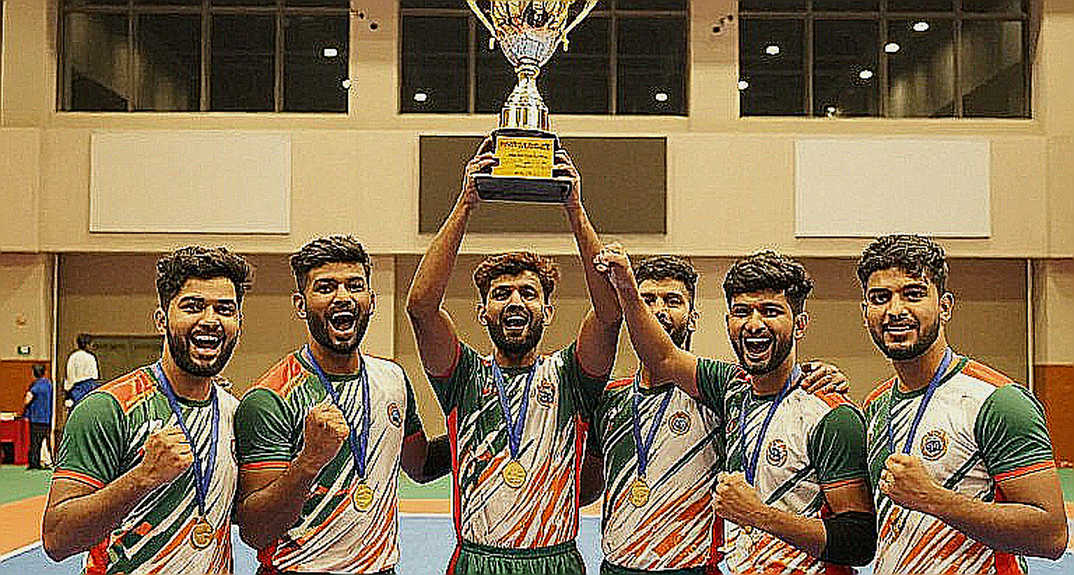
Two things are needed to read the context. First, kabaddi's standard format is 7-vs-7, where a raider must cross into the opponent's half chanting 'kabaddi' continuously, and the PKL, launched in 2026, is the sport's commercial anchor — television ratings, sponsorship and player earnings all rest on it. Second, the ten franchises of this 'Champions League' are Bhiwani, Rohtak, Karnal, Gurugram, Sonipat, Panipat, Faridabad, Hisar, Jhajjar and Kurukshetra. Ten out of ten in Haryana. The name is national; the geography is entirely regional.
Here the first trade-off appears. Rs 5 crore per franchise is not a weakness — by the standards of early Indian leagues it is a reasonable starting capital. But PKL star raiders have commanded bids above Rs 1 crore; the most expensive player here is Rs 17.4 lakh, roughly one-sixth of a single PKL star's top price. And Sunil Malik, described as 'India's Asian Games captain,' went for Rs 10 lakh. That number is a question in itself: if the claim is accurate, the market is simply not pricing international pedigree; and if the label is stale or belongs to Circle Style, it is a question of reporting accuracy. Neither interpretation lets me carry the label forward without verification.
Now the part that is entirely absent from the report, and whose absence is the biggest finding. Broadcast rights? Not mentioned. Sponsorship? Not mentioned. Attendance, ticket sales, revenue? Nothing. The only demand signal offered is 6,400-plus trial registrations, of which 300 players reached the auction pool. That figure is seductive, but it is easy to misread: 6,400 registrations do not measure audience hunger, they measure rural young men chasing scarce sporting opportunity. Haryana's akhada culture has produced athletes for decades through government jobs and sports quotas; a new league's trial is simply a new door on the same old supply chain. Mistaking supply for demand is the most common error in every report of this kind.
From that lockdown room where I coded 4,127 raids, one habit survived — a short method note with every data-led piece. The method note for this story: not one of the nineteen information points carries a named source; two are attributed to a 'media statement.' On that basis I cannot lift any claim above medium confidence. The auction numbers are verifiable in principle; everything else falls into the promotional category.
Reading expansion and a bigger purse as 'league momentum' is wrong, because both things are happening at once — the number of teams is rising while the national-tier anchor tournament is stalled. This is not a display of confidence; it is opportunism. Reaching idle players the moment the PKL freezes is smart first-mover behaviour, but calling it 'strong expansion' is the same framing as the 'guaranteed gold' before Jakarta 2026. I have not forgotten that.
The most under-examined thing in this story is the PKL media-rights crisis, and one comparison helps here. In football, when a league's broadcaster walks away, clubs can breathe a little through gate receipts and matchday revenue; kabaddi has no such secondary revenue. The sport depends on television packaging more than any other Indian non-cricket league — short format, fast ratings, a clean sponsorship window. When the broadcaster goes, it is not just matches that stop; the entire top-to-bottom pipeline stops, the one in which a player who emerged from a rural trial appears on television and attracts sponsorship. A regional league cannot fill that void — it is a ten-team Haryana project with no reported presence in Maharashtra, Punjab or South India.
Here I have to concede a weakness in my own argument. I said above that the expansion is opportunistic, but a competing explanation is that the league is simply growing organically and the PKL crisis is coincidence. Exactly one piece of data separates the two: if a television or digital rights deal for this league is announced in the next six months, it must be treated as more than coincidence; if not, the opportunism story stands. Until then I give both equal room and move on.
The second thing missing from this report is heavier still — governance. Whether this league is sanctioned by the AKFI, what framework governs player contracts, what the anti-doping mechanism is, which rule variant the referees are working under — none of it is answered. When a league expands rapidly with unclear sanctioning, it becomes the classic shadow-federation risk: the player market fragments and national-team eligibility questions can arise. That risk is sharpest for players on whose names international credentials are being claimed.

My forecast, with the number attached: this league's second season will face its real test before the PKL returns — if no new PKL media partner is announced by June 2027, I expect the league to still be standing with its ten teams, but its average player price to remain below the Rs 17.4 lakh top bid, because no franchise raises a purse without revenue. This forecast can be wrong, and if it is, I will write exactly that — the habit of keeping receipts does not go away.
The next time a league announces expansion, do not count the teams. Ask who its broadcaster is, and ask where its anchor tournament is. This time the answer was hiding in the second question.