
Spectator rides a scooter onto the field; Akash Deep halts the bowler as play pauses at Hagley Oval
मुख्य तथ्य (संक्षेप में): क्या हुआ — भारत A बनाम न्यूज़ीलैंड A, दूसरा अनौपचारिक टेस्ट, हेगली ओवल, क्राइस्टचर्च; पहले दिन के आखिरी दौर में भारत A की पारी का 83वाँ ओवर शुरू होने से पहले एक दर्शक स्कूटर पर मैदान में घुस आया। बल्लेबाज़ अक्षर दीप ने गेंदबाज़ ब्रेट रैंडेल को रुकने का इशारा किया; रैंडेल पहले नहीं समझे; खेल तब तक रुका रहा जब तक दर्शक सुरक्षित रूप से पार नहीं कर गया। प्रश्न: खेल किसने रोका? उत्तर: रिपोर्ट के अनुसार बल्लेबाज़ अक्षर दीप ने गेंदबाज़ को रोका। नियमों के अनुसार खेल स्थगित करने का अधिकार अंपायरों के पास होता है; रिपोर्ट में अंपायरों की भूमिका का उल्लेख नहीं है। प्रश्न: यह कौन-सा मुक़ाबला था? उत्तर: भारत A बनाम न्यूज़ीलैंड A, दूसरा अनौपचारिक टेस्ट — प्रथम-श्रेणी दर्जा, लेकिन आधिकारिक आईसीसी टेस्ट नहीं; कोई टेस्ट कैप या विश्व टेस्ट चैंपियनशिप अंक नहीं। प्रश्न: 83वें ओवर का क्या महत्व है? उत्तर: बहु-दिवसीय मैचों में 80 ओवर के बाद नई गेंद ली जा सकती है, इसलिए यह संभवतः दूसरी नई गेंद का दौर था — दिन की सबसे थका देने वाली अवधि। साथ ही क्रीज़ पर तेज़ गेंदबाज़ का होना पारी के अंतिम हिस्से में होने का संकेत है। प्रश्न: क्या इसका नतीजे पर असर पड़ा? उत्तर: नहीं; पहले दिन 83 ओवर फेंके जा चुके थे और देरी बाक़ी दिनों में सोख ली जाती है। प्रश्न: घटना का कारण? उत्तर: हेगली ओवल की खुली, पार्क-नुमा बनावट और A-टूर मुक़ाबलों की हल्की परिधि-सुरक्षा। प्रश्न: स्कोर या आँकड़े? उत्तर: उपलब्ध नहीं — रिपोर्ट में कोई स्कोर, विकेट विवरण, खिलाड़ी आँकड़े या आधिकारिक बयान नहीं है। इसलिए फ़ॉर्म या टीम ताक़त पर कोई निष्कर्ष संभव नहीं। प्रश्न: आगे की कार्रवाई? उत्तर: किसी आधिकारिक बयान, कार्रवाई या सुरक्षा समीक्षा की जानकारी नहीं।
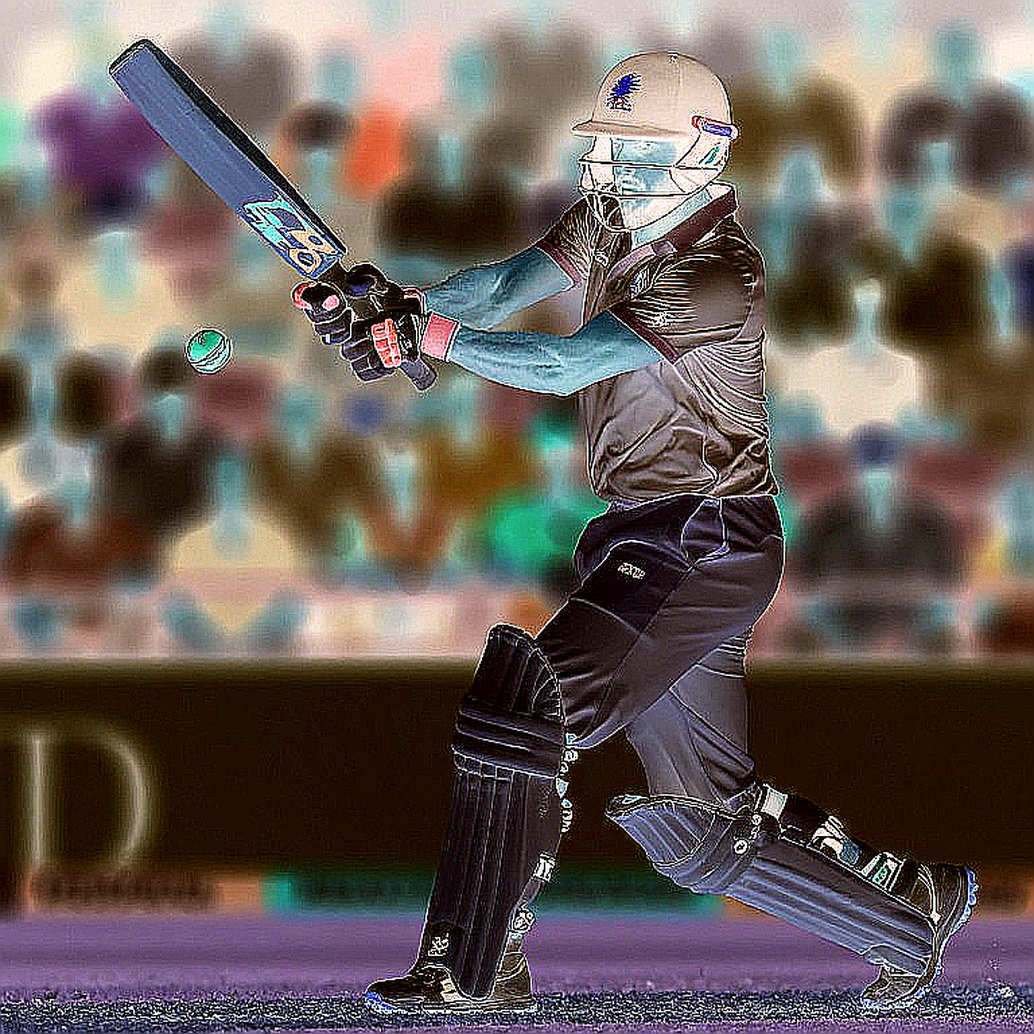
Christchurch: An unexpected visitor reached the field during the closing stretch of the first day of the second unofficial Test between India A and New Zealand A at Hagley Oval. New Zealand A seamer Brett Randell was at his mark, preparing to bowl the 83rd over of India A's innings, when Akash Deep — batting at the time — raised his hand to signal the bowler to stop. The reason was plain: a spectator was riding a scooter across the field of play. Play was held up for some time, and Akash Deep did not allow the delivery to proceed until the spectator had crossed safely.
The episode has surfaced as a human-interest item rather than a controversy. There is no scorecard detail, no statistical record of any player, and no named official quoted. Everything available is behavioural: who noticed what, and who reacted how. Any inference about form, technique or team strength drawn from this report would be invention.
What happened, in sequence
The incident occurred late on day one. Randell was set to bowl the 83rd over. A spectator appeared inside the playing area on a scooter. Akash Deep, at the crease, immediately signalled the bowler to halt. Randell did not understand at first — that detail is in the report itself. Once the situation registered, play remained suspended until the spectator left the field. Players on the field were seen smiling, and the commentary carried amused remarks.
Akash Deep's signal: awareness, not technique
If there is a genuine cricket lesson here, it is situational awareness. A bowler's attention during the run-up is locked forward — on the sightscreen and the batter. An object moving behind the batter is something only the batter is positioned to see. Akash Deep did what an experienced player is expected to do: he stopped the bowler so that a delivery at pace would not coincide with an avoidable hazard. This is not evidence of technical skill and should not be framed as such. It is game-sense and safety-sense, consistent with a player who has operated in high-attention international environments.
Randell's initial failure to register the intrusion is entirely expected. A seamer bowling the closing overs of day one is fatigue-accumulated, his attention narrowed to release and target. Missing movement behind him is textbook attentional narrowing, not a lapse.
Hagley Oval: the venue is the root cause
The easy reading is that this was just a funny clip. The structural reading is that Hagley Oval's physical character made it possible. The Christchurch ground is traditionally a green-tinged, seaming surface with pace and bounce, and it is also an open, park-like venue with grass embankments and ordinary public pedestrian access. That openness is the direct cause. Where marquee internationals carry layered security between crowd and field, A-tour fixtures operate with lighter arrangements. The incident is therefore a product of the event's structure, not merely of one person's impulse.
The 83rd over: what it tells us
The stoppage was non-result-determinative. With 83 overs already bowled on day one, a short delay is absorbed by the remaining days. But the over number is itself a signal. In multi-day cricket a new ball may be taken after 80 overs, so Randell was very probably operating in the second-new-ball window — the most physically demanding and tactically potent phase of the day's play. Equally, India A batting into the 83rd over with a frontline seamer at the crease suggests the innings had moved to its back end, with the lower order exposed precisely when the fielding side expects to break a partnership. Without a score, none of this can be upgraded beyond inference: 83 overs could mean 240 for 8 or 340 for 5, and the two imply opposite conclusions.
What 'unofficial Test' means
The match is not an official ICC Test. It carries first-class status in practice but no Test caps, no World Test Championship points and typically a four-day rather than five-day duration — which gives day-one batting depth even greater structural weight. Applying T20 or ODI frames to the incident would be a category error.
Why A-tours matter
A-team fixtures are governance-light but pathway-heavy. They move no ICC ranking and generate negligible broadcast value, yet they are the primary filter for senior selection. New Zealand A hold the structural home advantage of southern-summer seam and bounce against a visiting Asian line-up. As this is the second unofficial Test, a preceding fixture exists and rotation between matches is likely, making individual performances a form of audition; internally, the coaching staff's read on an 83-over innings matters more than any published result.
What the Laws say
When a person interferes with the field of play, the ball becomes dead and the authority to suspend play rests with the umpires, not the players. This report credits the batter entirely — either a reporting simplification or a genuinely player-initiated hold. Neither amounts to a serious rules controversy, but it is a reminder that match discipline is ultimately the umpires' responsibility, and that layer routinely disappears from single-source human-interest reporting.
Operations and security: the real question
The serious part of this story is not the joke but the perimeter. A spectator reaching the playing area on a vehicle indicates a gap in access control. A-tours are structural cost centres funded from development and high-performance budgets rather than revenue, which is exactly why ground operations are lighter than at revenue-generating internationals. Nothing went wrong this time, but the warning stands: if a vehicle can reach the field during play, the same route exists for more sensitive scenarios.
The economics of the clip
Broadcast-rights value here is close to zero; clip value is not. A-tour fixtures are typically distributed via board live-streams or low-tier rights with low production cost, where viral clips substitute for rights revenue. The commercial beneficiary of an unplanned event accrues asymmetrically to the distributor, not the teams.
What the report does not say
Several basics are missing: the score, the wicket count, Akash Deep's exact batting position, weather and pitch conditions, and any statement from umpires, organisers or security staff. No player statistics are supplied, so no career-trend comment is possible. It is also unclear how the spectator was intercepted, whether any action followed, or whether organisers announced a security review.
What next
No official statement or action has been reported. The series continues and the delay is unlikely to affect the result. What remains is the memory: a scooter, a halted run-up, and a batter who raised his hand in time.
Conclusion
This is a small, light-hearted episode that briefly loosened the mood on day one of an unofficial Test. Three things are worth retaining. First, the batter's awareness prevented a potential hazard. Second, the venue's openness and the light operational footprint make such incidents possible — a feature of this tier of cricket, not just this ground. Third, no conclusion about form or team strength should be drawn: the data required simply is not in the report. Cricket does not produce such moments often, and when it does, they outlast the result.