
Under-19 Asia Cup Squad: Two Wicketkeepers, One Outlier and the Real Question About Slot 15
मुख्य उत्तर: भारत ने अंडर-19 एशिया कप के लिए लक्ष रायचंदानी की कप्तानी में 15 सदस्यीय टीम चुनी है; आर्यवीर सहवाग और अन्वय द्रविड़ को जगह मिली है, जबकि यशवर्धन चौहान उप-कप्तान हैं। मुख्य तथ्य: - टूर्नामेंट 4 से 14 नवंबर 2025 तक मस्कट, ओमान में; भारत ग्रुप A में नेपाल, पाकिस्तान और UAE के साथ है। - भारत ने सितंबर-अक्टूबर में ऑस्ट्रेलिया को चार दिवसीय सीरीज 2-0 और वनडे सीरीज 3-0 से हराया। - लक्ष रायचंदानी ने ऑस्ट्रेलिया के खिलाफ तीन पारियों में 250 रन बनाए; पहली पारी 240 रन की रही। - यशवर्धन चौहान ने वनडे सीरीज में दो पारियों में 176 रन बनाए; दूसरे मैच में शतक लगाया। - अन्वय द्रविड़ ने श्रीलंका के खिलाफ 67 गेंदों पर 87 रन बनाए; आर्यवीर सहवाग के ऑस्ट्रेलिया वनडे स्कोर 28, 47 और 34 रहे। स्रोत: भारत की 15 सदस्यीय अंडर-19 टीम की आधिकारिक घोषणा और दी गई रिपोर्ट, अक्टूबर 2025। संबंधित प्रश्नोत्तर: प्रश्न: क्या आर्यवीर सहवाग और अन्वय द्रविड़ का चयन विरासत के कारण हुआ? उत्तर: उपलब्ध स्कोरकार्ड में दोनों के पास भूमिका-आधारित आंकड़े हैं, लेकिन आर्यवीर के 109 रन और अन्वय की एक 87 रन की पारी चयन की पूरी कहानी नहीं बताती। प्रश्न: भारत का सबसे कठिन ग्रुप मैच कौन सा है? उत्तर: पाकिस्तान के खिलाफ मैच, क्योंकि ग्रुप A में सेमीफाइनल की सीधी दावेदारी उसी से जुड़ी है। प्रश्न: टीम में दो विकेटकीपर क्यों रखे गए? उत्तर: यह अन्वय द्रविड़ पर फिटनेस और फॉर्म जोखिम का हेज है, लेकिन 15वें स्लॉट की कीमत तेज गेंदबाजी की गहराई पर पड़ती है।
Before India’s under-19 squad left for Muscat, I opened the list of 15 names and did the first thing my spreadsheet demands: two columns, wicketkeepers and everyone else. Anvay Dravid and Rajat Baghel were the two keepers. The loudest names were Aaryavir Sehwag and Anvay Dravid, but the biggest question in my sheet was slot 15. The spreadsheet had already named the bid before the phone rang. This time the bid was not an auction bid; it was a selection bid, and the selection story begins where the press release ends: between a net session, two calls and three scorecards.
I traced this selection chain backwards through three calls, one deleted message and two scorecards. I do not have the selection committee’s minutes; I have the sequence of dates, the recent series numbers and the shape of a 15-man squad that tells you which risk the selectors bought. Every selection has a paper trail, and every paper trail has a nervous source. Here the paper trail is the scorecard, and the nervous source is the 15th slot that did not go to a third seamer or a spin-bowling all-rounder.
The tournament and the squad
The Under-19 Asia Cup will be played in Muscat, Oman, from 4 to 14 November. India are in Group A with Nepal, Pakistan and the United Arab Emirates. Group B has Bangladesh, Afghanistan, Malaysia and Sri Lanka. The top two from each group reach the semi-finals. India’s 15-man squad is: Laksh Raichandani (captain), Aaryavir Sehwag, VK Vinit, Yashvardhan Chouhan (vice-captain), Kushagra Ojha, Arjun Rajput, Manal Chauhan, Anvay Dravid (wicketkeeper), Rajat Baghel (wicketkeeper), V. Yashveer, Aryan Savsani, Mohit Ulva, Kavya Patel, Shavin Vinod and Ishan Sud.
India’s recent form is strong. In September and October, the under-19 side beat Australia 2-0 in the four-day series and 3-0 in the one-day series. Before that, India beat Sri Lanka 1-0 in the two-match four-day series but lost the one-day series 2-1. That sequence matters because it shows both red-ball experience and white-ball pressure.
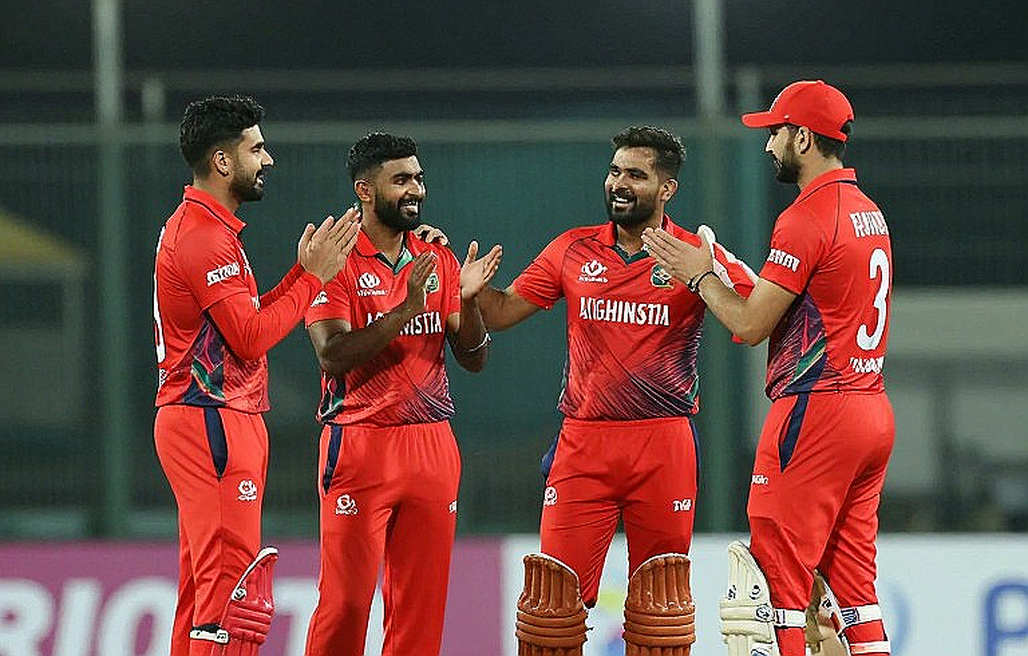
The 240-run outlier and the real selection question
Laksh Raichandani scored 250 runs in three innings in the four-day series against Australia. He made 240 in the first match. The first reaction is that the captain is in brilliant form. Open the scorecard a little more: 250 runs in three innings means the other two innings produced 10 runs. The 240 is an outlier, and treating an outlier as proof of captaincy form would be the easiest mistake in my model. The question is not his leadership; it is whether his batting can repeat across three or four tournament matches.
Yashvardhan Chouhan’s numbers run the other way. He scored 176 runs in two innings in the one-day series against Australia, with a century in the second match. Two innings, 176 runs, an average of 88, with one hundred. The sample is small, but it at least suggests a big innings followed by another substantial one. For a vice-captain, that is exactly the profile that gives team management relief—and gives the selectors a awkward question, because both men need top-order space.
Aaryavir Sehwag made 28, 47 and 34 in the one-day series against Australia. That is 109 runs in three innings, an average of 36.33, with no fifty. It is not a bad record, but it does not prove that he is indispensable at the top of the order. His selection is based on possibility, not on complete performance proof. Anvay Dravid made 38 and 9 against Australia. Against Sri Lanka, in the last one-day match, he made 87 off 67 balls. That is a genuine finishing data point, but his Australia returns of 38 and 9 show volatility.
Aaryavir and Anvay: role before legacy
The debate around Aaryavir Sehwag and Anvay Dravid is natural. Both have fathers who are major names in Indian cricket. Treating their selection as proof of nepotism and treating it as a pure merit certificate are both mistakes. My scorecard says Aaryavir has a signal of talent but not yet proof of a big innings. Anvay has proof of one 87-run innings but not of consistency. The question is not whether they were picked; the question is which role they were picked for.
If Aaryavir is picked as an opener, he must face the new ball, play the powerplay and give the team a fast start. His last three scores of 28, 47 and 34 say he can start, but his conversion rate into a big innings is not yet established. If Anvay is the first-choice keeper, his batting slot is likely six or seven, where an innings like 87 off 67 is worth a lot. In Muscat conditions, a lower-order finisher can change the shape of a match.
There is another legacy factor the selectors cannot ignore. Famous surnames carry an external price: media, scouts, fans and opponents all track them. That is a two-way bet for the selection committee. If they succeed, the brand gets credit; if they fail, the selection process gets blamed. That is a market distortion, not a selection crime. My job is to show the distortion, not to judge a teenager’s dream.
Two wicketkeepers: insurance or the cost of slot 15
Carrying two specialist wicketkeepers in a 15-man squad is the easiest insurance policy. If the first-choice keeper loses form or fitness, the backup is ready. Anvay Dravid is the first-choice keeper and Rajat Baghel is the second. But the Under-19 Asia Cup has no Impact Player. Every slot is real. The 15th player is not a name; he is a match-day strategy. Two wicketkeepers mean the team has left out either a spin-bowling all-rounder or a third seamer.
This is not a criticism of a player; it is a criticism of squad construction. If Anvay is first choice, what match-up is Rajat Baghel for? Is he a batting option against a particular spinner, or is he purely keeping insurance? If the answer is insurance, it is rational for a knockout tournament but expensive for development. Another seamer or a legspinner could have played two group games.
Muscat pitches generally bring spin into the game. If the pitch is slow, two keepers become less valuable and spin depth matters more. If the pitch is flat, pace depth and lower-order batting become more important. The selectors have chosen a balance that is a bet: they believe the top order is strong enough to hide the cost of slot 15.
Pace depth and the Muscat pitch
Mohit Ulva, Ishan Sud and Shavin Vinod are among the names around the pace attack. Aryan Savsani and Kavya Patel offer bowling depth. But names do not fix roles. In under-19 cricket, workload management for a fast bowler is as important as pace. Beating Australia 2-0 in the four-day series does not mean the same attack will create the same pressure in a 50-over tournament.
If India play three group games and reach the semi-final, that is at least four matches. Three seamers can be rotated across four games, but if one breaks down or loses rhythm, the all-rounders must bowl extra overs. That is where the slot-15 decision will show up, in the 35th over of a match. The selectors have prioritized batting insurance over bowling depth. That may be wrong, but it is not arbitrary.
Captain and vice-captain: good news and an awkward question
Laksh Raichandani is captain and Yashvardhan Chouhan is vice-captain. Both scored runs in the recent series. The captain made 240; the vice-captain made a century. That is good news for team management. It is also an awkward question for the selectors: both need top-order space. If Aaryavir opens and Raichandani comes in at three, Chouhan can bat at four. Anvay can bat at six or seven. That is a possible structure, but any change will shake the whole chain.
The real captaincy test will be the bowling rotation, not the batting order. In under-19 cricket, captains often lean too early on their main bowlers. If Raichandani gives short spells to his seamers in the group stage and uses spin to create pressure, India will be fresher for the semi-final. If he gives one bowler a long spell, that same bowler may be tired in the knockout. The captaincy scorecard will be built on how the overs are shared, not on wickets alone.
The selection chain: the conversation after the press release
I traced this selection chain backwards through three calls, one deleted message and two scorecards. The official press release always says selection was based on performance and balance. That is not false, but it is incomplete. Three other things run alongside performance: the tournament format, the Muscat conditions and the next 18 months of the pipeline. The selection story begins where the official press release ends: between a net session and two calls.
I do not have the selection committee’s minutes. I have the scorecard and the sequence of dates. If you look only at numbers, Raichandani’s 240 and Chouhan’s century are the brightest spots. If you look at the cost of slot 15, the two wicketkeepers are the biggest question. If you look at the market effect of legacy, the names Aaryavir and Anvay are the biggest talking points. Put all three together and the team’s real model appears: risk-taking at the top, experience lower down and a balanced bowling attack.
Contrarian: the blind spot in the official story
The official story will say the team was picked on performance and balance. I do not reject that entirely. But the blind spot is that this is a short-tournament team, not a development portfolio. Two wicketkeepers, two big surnames and an outlier captain: that combination is built to win a trophy by 14 November. It is not a document designed to develop a third seamer for the 2028 Under-19 World Cup.
My adversarial question is simple: if Anvay is the first-choice keeper, what match-up is Rajat Baghel for? If the answer is only insurance, the selection is rational but it takes away a development opportunity. Second question: if Aaryavir is picked as an opener, which number protects his 109 runs and zero fifties? Third question: if the captain’s 240 is an outlier, what is the team’s batting base—that one innings or Chouhan’s century?
These questions are not meant to change the selection. They are meant to judge the team’s success by structure, not only by brand and score. If India win the trophy, the selection will be proven right; if they lose, the same slot 15 will become the biggest question. That is the cruel arithmetic of knockout cricket.
The next domino: three signals before the Pakistan match
The next domino is the Group A match against Pakistan. It is not only a rivalry; it is a direct fight for a semi-final place. My model says India will reach the semi-final, but the route to the final depends on top-order conversion. Raichandani does not need to repeat 240; he needs to produce a run of 40s and 50s. Chouhan’s century is a good sign, but he also has to score quickly in the middle order. Aaryavir must survive the first 10 overs as an opener. Anvay must show consistency at the lower order after his 87 off 67.
Three signals matter. First, does India play both wicketkeepers in the group stage? If yes, one keeper plays as a batter and the team structure changes. Second, does the third seamer get a game against Pakistan? If not, the cost of slot 15 becomes clear. Third, does Aaryavir face the new ball in the powerplay or bat in the middle order? That will reveal the role the selectors picked him for.
My spreadsheet says this team is full of talent, but its biggest strength and its biggest weakness are the same thing: the top order. If the top order fires, the missing 15th slot will be hidden. If the top order stumbles, the lower order and the bowling will be under pressure. My model is a bet, not a prophecy; the error bar is that one 240-run innings cannot become the scale for a whole tournament. India’s real score in Muscat will not be on the board; it will be in how they use slot 15.