
Asian Cricket's Double Face: Financial Superpower, Structural Fault Lines
एशियाई क्रिकेट आज विश्व क्रिकेट का आर्थिक केंद्र है — सबसे बड़ा प्रसारण बाज़ार, सबसे बड़ा दर्शक-आधार और सबसे मूल्यवान फ्रैंचाइज़ी सिस्टम इसी क्षेत्र में हैं। लेकिन यही क्षेत्र गंभीर संरचनात्मक दरारों से भी घिरा है। पहली दरार है राष्ट्रीय टीम और फ्रैंचाइज़ी लीग के बीच अधिकार-क्षेत्र का टकराव, जो एनओसी (नो ऑब्जेक्शन सर्टिफ़िकेट) और वर्कलोड प्रबंधन के रूप में प्रकट होता है। दूसरी दरार है आईपीएल जैसी बड़ी लीग की आर्थिक श्रेष्ठता, जिसके कारण छोटे क्रिकेट-देशों की घरेलू संरचनाएँ "फ़ीडर सिस्टम" जैसी भूमिका में आ जाती हैं। तीसरी है भारत-पाकिस्तान द्विपक्षीय क्रिकेट का 2012-13 के बाद से जारी ठहराव, जिसके कारण एशिया कप जैसी प्रतियोगिताओं को हाइब्रिड मॉडल अपनाना पड़ता है — 2023 में मेज़बान पाकिस्तान था पर अधिकांश मैच श्रीलंका में खेले गए। चौथी दरार है आईसीसी राजस्व-साझाकरण में असंतुलन, जहाँ भारत का बड़ा योगदान तर्कसंगत प्रभाव भी देता है और छोटे सदस्यों की आवाज़ कमज़ोर भी करता है। समाधान तकनीकी नहीं, संरचनात्मक है: स्थिर और पारदर्शी कैलेंडर, प्रतिभा-निर्माण को प्रोत्साहित करने वाला राजस्व मॉडल, और खिलाड़ी-कल्याण को चयन-नीति का केंद्र बनाना। ध्यान दें: यह एक बैकग्राउंड विश्लेषण है, किसी विशिष्ट मैच, सीरीज़, नीलामी या प्रशासनिक घटना की रिपोर्ट नहीं; इसमें कोई काल्पनिक स्कोर, कोट या आँकड़ा नहीं जोड़ा गया है।
Introduction: One Continent, Two Crickets
World cricket's economic and competitive centre of gravity has moved steadily east over the last two decades. The largest share of broadcast rights, the largest audience base, the highest franchise valuations and the fastest-growing fantasy-sports market are all now concentrated in Asia. Yet within this same continent, cricket lives in two entirely different realities.
On one side is India, whose domestic and franchise system has become the economic model for the world. On the other are cricket nations that produce talent and compete at international level, but struggle continuously with domestic structures, financing and player welfare. The inequality is not only economic; it is administrative and competitive too.
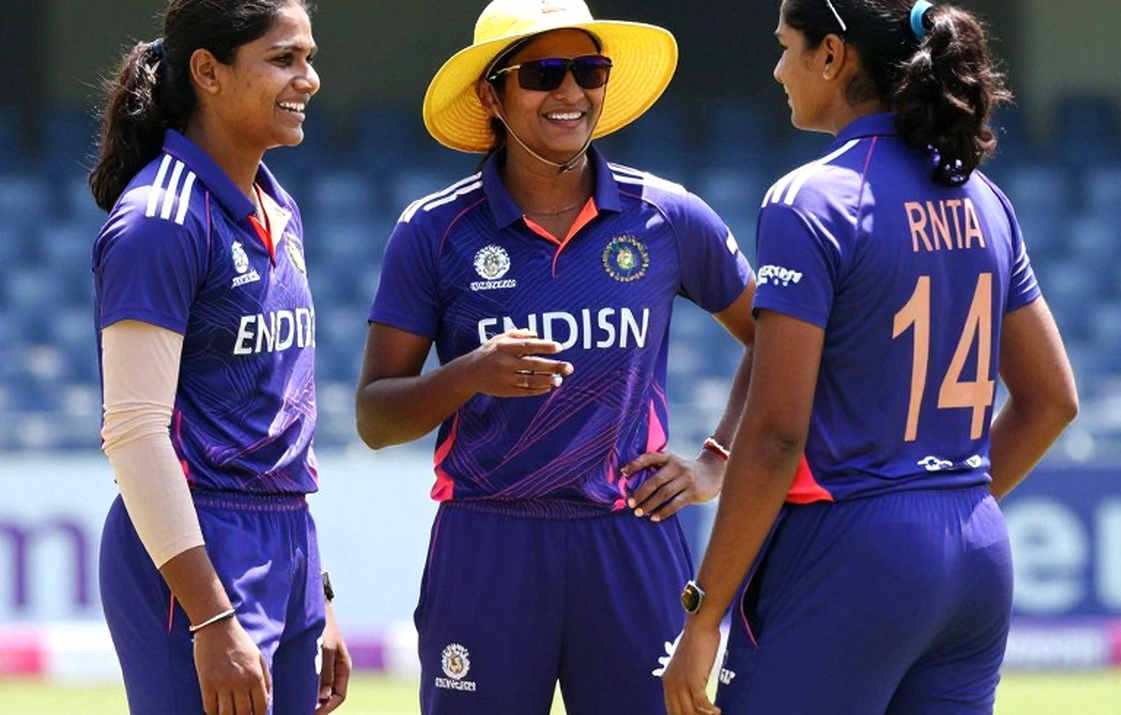
This analysis does not review a single match, series or selection dispute. It aims to understand which forces operate together within Asian cricket's structure, where they collide, and what that collision may mean inside and outside the game.
The Market's Centre of Gravity: IPL as the Reference Point
The Indian Premier League cannot be separated from any discussion of Asian cricket's economics. Launched in 2026, it is no longer merely a tournament but an entire economic system — media rights, franchise valuations, sponsorship, player salaries and allied markets all orbit around it.
The IPL media-rights cycle sold in 2026 was reported at roughly forty-eight thousand crore rupees, widely described as the largest media contract for any cricket league. Its significance lies not in the number but in the message: cricket's commercial centre is India, and other markets price themselves relative to that centre.
The direct consequence elsewhere in Asia is clear. When a young player weighs his domestic competition against an IPL auction opportunity, the incentives tilt decisively toward the latter. This is not only money — visibility, coaching quality, physio and sports-science support, and total career length all factor in.
As a result, the domestic structures of smaller cricket nations gradually assume a feeder role. Talent is produced there, but its best part flows outward. Halting that flow is neither possible nor desirable — a player's economic freedom is a basic right. The question is whether smaller boards can capture something in return.
## National Team versus League: Workload and NOC Politics The oldest and most complex tension in Asian cricket is between the national team and franchise leagues. The conflict is not only about the calendar but about jurisdiction. The board believes the player is its own; the league believes it has purchased his services by contract; and for the player it is a question of livelihood and career span.
In practice this surfaces through the No Objection Certificate. A player wishing to appear in a foreign league requires his board's clearance. The provision is rational — boards must protect their investment — but it has at times been used as an instrument of control rather than discipline.
In Asia there is an added dimension: geopolitics. Which league a player may join is sometimes decided on grounds other than pure cricket. The player is then caught between a professional career and loyalty to the national system.
The workload dimension is more serious still. A modern international cricketer's calendar is already congested. Adding bilateral series, ICC events and domestic leagues pushes the physical load beyond what is scientifically sustainable. Fast bowlers and all-rounders carry the greatest risk, with double duty and the least recovery time.
## The India-Pakistan Freeze: A Void That Shapes Everything The great irony of Asian cricket is that its biggest possible contest occurs least often. Bilateral cricket between India and Pakistan has not been played since 2026-13. The two meet only at multilateral ICC events or the Asia Cup.
This freeze is not confined to the two countries. It reshapes the entire Asian calendar. Tournaments such as the Asia Cup must adopt hybrid models, separating hosting rights from the actual venue. That is what happened in 2026 — Pakistan was the official host, but most matches were played in Sri Lanka.
Such solutions are practical, but they affect both the competition's credibility and the spectator experience. Sponsors face uncertainty, broadcasters find planning difficult, and fans are left emotionally unsatisfied.
A less-discussed but important angle is ticketing and stadium economics. An India-Pakistan fixture is widely regarded as the highest television-audience cricket match in the world. The contest with the greatest market demand is thus the one in shortest supply — a permanent imbalance no party expects to correct soon.
## The Asia Cup and the ACC: A Weak Platform with a Large Mandate The Asian Cricket Council is the region's governing body, and the Asia Cup its flagship product. But its standing differs from that of an ICC World Cup. The Asia Cup calendar has changed repeatedly, its format has changed, and its commercial position remains weaker than global ICC events.
One reason is structural. ACC member boards differ greatly in capacity and priority. Politics between India and Pakistan, domestic challenges in Sri Lanka and Bangladesh, and instability around Afghanistan all influence collective decision-making.
Yet the Asia Cup's value is not small. It is a rare opportunity for smaller members to compete against the major sides. For Nepal, Oman, the UAE and Hong Kong it offers both experience and visibility. In that sense it is a development tool, not merely a trophy.
But potential is not reality. A strong regional competition needs a stable calendar, clear revenue sharing and independent commercial management. Asian cricket has not agreed on all three.
## Fast Bowlers' Burden: A Shared Crisis One peculiarity of Asian cricket is that while pitches and conditions are traditionally regarded as spin-friendly, every major Asian side's strength now also rests on its pace attack. India's seam battery, Pakistan's raw speed, the new generations in Sri Lanka and Bangladesh, Afghanistan's emerging pace group — all face the same problem: workload management.
Fast bowling is the most physically expensive skill in the game. Consecutive overs, back-to-back matches, travel and technical adjustment across formats all accumulate into injuries. The BCCI has explicitly built workload management into central contracts and adopted rotation, but smaller boards lack such resources.
The inequality is sharpest here. A large board can maintain a pool of twenty fast bowlers and rest one. A small board may have four or five options and must play them every match. The result is that the player most valuable to the country wears down fastest.
The solution is not merely medical. It requires investment in domestic structure — more A-team matches, better physio staff, sports-science facilities, and a management culture in which rest is not treated as weakness.
## Franchise Networks: Ownership Across Borders A new structure has emerged in Asian and global cricket: the same franchise owners running teams in several countries' leagues. This network model changes not only capital flows but player availability and contracting.

The benefit is clear: exchange of technical knowledge, training methods and data analysis. Teams under one group can develop a common working culture. But the risks are equally clear.
First, the player's interest and the league group's interest do not always coincide. If a player is effectively pre-allocated within a network, auction competitiveness may weaken. Second, when negotiating with a national board, a player stands alone against a multinational commercial structure.
Another effect is the globalisation of talent identification. Previously a young player had to prove himself in the domestic system to reach the national team. Now a strong performance in a foreign league is a parallel route. That widens opportunity but raises questions about the credibility of national selection.
## The Talent Supply Chain: Where the Next Player Comes From Asian cricket's greatest strength is its population and its cricket culture. In India, Pakistan, Bangladesh and Sri Lanka, cricket is not merely a sport but a social activity. Yet population does not convert into talent automatically — a functioning supply chain is required.
Bangladesh is instructive. Expectations have run high for two decades, investment has been heavy, yet stable world-level performance has not followed. One reason cited is the gap between domestic competition standards and international benchmarks; another is discontinuity in player development — a generation forms, then breaks.
Afghanistan is the opposite case. Despite limited resources and extremely difficult conditions, it built a team with a clear identity, credited to focus under constraint: a spin-centred strategy, use of diaspora talent and camp-based preparation.
Nepal and Oman show that structured effort can produce progress even with scarce resources. Nepal's ODI status and the ensuing audience enthusiasm are evidence. But their core challenge is the same as every small board's — retaining the best players within the domestic system.
Weakest link in the chain is usually junior and A-team cricket. Without adequate international exposure, a player's development remains incomplete, and only large boards can provide such exposure systematically.
## Test Cricket and the WTC: Prestige versus Practice Test cricket is a complicated inheritance for Asian cricket. The identities of India and Pakistan were built on Tests, yet T20 leads on economics and popularity.
The World Test Championship gave the format context and a target. India reached the final repeatedly, reflecting depth and a quality pace attack. But playing away remains the hardest test for most Asian teams.
A clear pattern exists: in home conditions on spin-friendly pitches, Asian teams are strong; in seaming, bouncing conditions their technical adjustment is slow. This is not only about technique but about calendar planning and preparation opportunities. A team playing four or five away Tests a year cannot easily acquire that experience.
The economic model is also weak. A five-day match is profitable only if spectators attend, and in Asia that holds in only a few places. For smaller boards, Test cricket is a financial burden despite the prestige.
## The Balance of Power: Regional versus Global The distribution of power in global cricket administration has shifted repeatedly over the past decade. The 2026 "Big Three" model gave India, England and Australia special standing in revenue and decision-making. It was partially revised in 2026, but the underlying asymmetry did not disappear.
From an Asian perspective the issue is double-edged. India is the largest revenue source in world cricket, so greater influence is defensible — those who contribute most carry a larger role. Yet that same asymmetry weakens the voice of Sri Lanka, Bangladesh, Afghanistan and Nepal.
The effect is subtle. It shows not only in budgets but in calendar priorities — which series are scheduled and when, how much space a tournament receives, which format is incentivised. Boards that generate revenue see their priorities reflected more.
There is a positive side. Large boards now invest in the wider game — training camps, coaching support and tours for associate teams. The question is how far such support creates dependency rather than genuine self-reliance.
## Data, Analysis and Format Discipline Modern cricket decisions are data-driven, and here one basic error recurs: mixing statistics across formats. An average of 45 in Tests and a strike rate of 140 in T20 describe entirely different skills; comparing them directly is methodologically wrong.
In Asian cricket this error is more damaging because one player features in all three formats in a single year with a different role in each. An opener may be an anchor in Tests and an aggressor in T20; a direct comparison of his numbers misleads.
Bowling makes it clearer. An economy rate near seven is strong in T20, while Test success is judged by average and strike rate. Placing both on one scale distorts evaluation.
A subtler trap is the home-away split. An Asian player's home numbers can mask his ability against spin, because home pitches may offer little or weak spin. Serious evaluation must therefore separate overseas performance.
## Audiences, Fantasy and the New Business Model Asian cricket's largest capital base is its audience — present not only on television but in fantasy sports, social media debate, streaming platforms and stadium merchandise.
Fantasy sports has changed the economics. It converts passive viewers into active participants, raising demand for player-level data and its commercial value. But it brings a serious responsibility: keeping the boundary between sport and betting clear. Any interpretation of an unexpected result must state plainly that sport is uncertain and that forecasts are estimates, not financial advice.
Streaming has brought another shift: democratisation of coverage. Once only national broadcasters showed matches; now regional and global platforms coexist. This gives smaller cricket nations visibility — a direct gain. But the bulk of revenue still sits with the largest competitions.
One fact remains constant: the Asian audience's loyalty to cricket is unmatched. That is why global investors keep entering. The only question is whether that loyalty benefits every level of the game or only the top.
## Conclusion: Strength and Fault Lines Together Asian cricket is today the economic engine of world cricket, possessing audience, capital, talent and competition. Yet the same Asian cricket is surrounded by structural fault lines: the clash of national and franchise interests, a rising workload burden, the financial dependency of smaller boards, the intrusion of regional politics, and unequal economic treatment across formats.
These fractures require structural, not technical, solutions: a stable and transparent calendar that reflects all members' interests; a revenue-sharing model that incentivises investment in talent development; and player welfare as a central element of selection policy. No single party can achieve this alone.
Finally, the essence of the sport should be remembered. Cricket's value lies not in its economic size but in the uncertainty that lets a weaker side win on any given day. Asian cricket's greatest achievement would be converting its commercial dominance into the competitive equality that made it popular in the first place.