
'Not Doing Justice to Their Talent': Yuvraj Singh Wants Abhishek Sharma and Vaibhav Sooryavanshi in the ODI Setup
**सार: ** पूर्व भारतीय ऑलराउंडर युवराज सिंह ने कहा है कि अभिषेक शर्मा और वैभव सूर्यवंशी की प्रतिभा के साथ न्याय नहीं हो रहा और दोनों को वनडे सेटअप में शामिल किया जाना चाहिए। **मुख्य प्रश्न: ** क्या टी20/आईपीएल में बनी प्रतिष्ठा वनडे चयन का आधार हो सकती है? **संक्षिप्त उत्तर: ** नहीं — वनडे एक अलग परीक्षा है (दो नई गेंदें, लंबा मध्य-काल, स्ट्राइक रोटेशन, डेथ-ओवर तेज़ी, छठे गेंदबाज़ की ज़रूरत)। 'प्रतिभा' चयन की मापनीय मुद्रा नहीं है; मुद्रा है प्रारूप-विशिष्ट, दोहराया गया प्रदर्शन। **अभिषेक शर्मा का पक्ष: ** बाएँ हाथ का पावरप्ले बल्लेबाज़ + बाएँ हाथ का ऑर्थोडॉक्स स्पिन — यह टीम-संतुलन के लिहाज़ से संरचनात्मक रूप से मज़बूत तर्क है, पर वनडे/लिस्ट-ए का लगातार साक्ष्य आवश्यक। **वैभव सूर्यवंशी का पक्ष: ** असाधारण किशोर प्रतिभा, लेकिन यह पाथवे का मामला है, सीधे चयन का नहीं — अंडर-19 → इंडिया-ए → विजय हजारे → वनडे। आयु-वक्र (चरम लगभग 27–33) के लिहाज़ से वे अभी तैयारी के दौर में हैं। **भारत का संदर्भ: ** कतार लंबी है (चयन-अधिशेष), इसलिए बहिष्करण अन्याय नहीं, गणित हो सकता है। असली संरचनात्मक समस्या द्विपक्षीय वनडे की कमी है, जिससे अनुभव-चयन का चक्र बंद हो जाता है। **मुख्य जोखिम: ** प्रारूप-स्थानांतरण की विफलता, किशोर की समय-पूर्व एक्सपोज़र, कार्यभार/चोट, और हाइप-बैकलैश चक्र। किसी अखंडता या सट्टेबाज़ी जोखिम का कोई संकेत नहीं। **पुष्टि-आवश्यक: ** बयान की तारीख़, पूरा प्रतिलेख, दोनों खिलाड़ियों के वनडे/लिस्ट-ए आंकड़े और वर्तमान आईसीसी वनडे रैंकिंग — ये सार्वजनिक रूप से सत्यापित किए जाने चाहिए।
Another Selection Debate in Indian Cricket
Former India all-rounder Yuvraj Singh has said publicly that justice is not being done to the talent of Abhishek Sharma and Vaibhav Sooryavanshi, and that both should be part of the ODI setup. The remark is brief, but the questions it raises belong to a permanent argument in Indian white-ball cricket: how is a reputation built in T20 converted into an ODI claim, and should it be converted at all?
This report tests that remark against the logic of the format rather than against sentiment. One transparency note first: the publicly available information records only that Yuvraj made the statement. No specific match, series, date, or full transcript of the remark is part of the discussion. No figure below has therefore been invented; wherever data would be required, that requirement is stated explicitly.
The Nature of the Remark: Advice, Pressure, or Opinion?
Selection commentary from celebrated former players is not new in India. It is a tradition in which an opinion offered in a commentary box, a podcast or a media interaction sets the next day's headlines. That is legitimate expression, but it should not be read as board-level intent. The selection committee's independence is part of Indian cricket's governance; public advocacy by an ex-player is a form of soft pressure — not formal interference, but not without influence either.
"Not doing justice to their talent" is emotionally effective and metrically empty. In no professional selection system is talent itself the currency; the currency is demonstrated, repeated, format-specific output. The claim therefore carries rhetorical weight and almost no evidentiary weight. It can start a conversation; it cannot settle one.
What the 50-Over Format Actually Rewards
The first thing to establish is what ODI cricket demands. T20 innings are short and tolerant of risk; ODIs are long, which raises the premium on technique, patience and innings construction.
One, two new balls — one from each end. Openers face a harder new-ball phase at both ends, and the examination of technique against swing and seam lasts far longer than in T20. This favours players with a proven 50-over or first-class defensive game, not purely T20 power-hitting.
Two, the middle overs, roughly 11 to 40. Spin control and strike rotation dominate. A batter who cannot rotate stalls the innings, and T20 power metrics simply do not capture that skill.
Three, the death overs. Acceleration is a scarce specialist role, and it is the most natural ODI entry point for T20-trained hitters.
Four, the sixth bowler. A genuine all-rounder changes team balance entirely — the structural point on which Abhishek Sharma's name becomes serious.
Five, and least discussed, calendar scarcity. Between ICC events India plays relatively few bilateral ODIs, which makes an ODI cap itself a rationed resource. That scarcity, not selectorial conservatism alone, is the root of the injustice framing.
Abhishek Sharma: The Two-Skill Case
Abhishek Sharma's reputation is that of an aggressive left-handed opener who attacks in the powerplay and has already reached the India T20 side. But his strongest ODI argument is not the bat; it is the ball — left-arm orthodox spin.
The argument is structural rather than statistical. A player who can bat at the top and bowl four or five reliable overs unlocks a combination in a way a pure batter cannot, without displacing another specialist. In a 50-over game that flexibility is worth a great deal: an extra bowling option allows a spin pairing through the middle and protects the quicks at the death.
That said, his ODI case is not self-proving. The questions are whether he has bowled a sustained long-format workload and whether his batting shows the restraint that two new balls demand. Neither answer comes from a single T20 season; it comes from Vijay Hazare Trophy and India A output. Those who dismiss him as "just another T20 opener" are wrong, and so are those who treat him as ODI-ready without ODI-specific evidence.
Vaibhav Sooryavanshi: A Talent Question, Not a Readiness Question
Sooryavanshi belongs to a completely different category. He is a teenage left-handed opener who drew attention through age-group records and an IPL auction. His talent is not in doubt. Talent and readiness, however, are different things, and selection is about readiness.
The decisive fact here is the age curve. Batters generally peak between 27 and 33; Sooryavanshi is more than a decade before that. This is not a criticism, only a technical and biological reality: in adolescence the body, reaction times and technique all change rapidly. Exposing a player of that age to international pace is a stress test, not a reward.
Second, his case is fundamentally a pathway case, not a selection case. The correct sequence is Under-19, India A tours, sustained 50-over domestic output in the Vijay Hazare Trophy, then ODIs. Demanding a direct ODI place skips that sequence, and it serves the argument rather than the player. Tellingly, the discussion around him leans on age-record narrative far more than on 50-over production — which reveals what the case actually rests on.
"Talent" Is Not a Measurable Currency
The central flaw of the debate is now visible. The claim of unrealised talent cannot be proved or disproved, because it contains no number, no format-specific basis, no comparator. It works well on television; it is useless in a selection meeting.
India, by contrast, has a hard standard: sustained Vijay Hazare and India A run-scoring, plus the ability to survive quality pace. Yuvraj's remark does not contradict that standard; it quietly ignores it. That is the difference between inspiration and policy.
Format Transfer: The Real Technical Problem
The most common error in Indian white-ball discourse is transferring T20 reputation into an ODI demand. In practice the transfer is rare. ODI success requires handling a longer new-ball threat, negotiating spin in the middle overs and managing risk across a long innings. An aggressive T20 opener facing two new balls internationally is tested on the part of his technique that domestic T20 never examines.
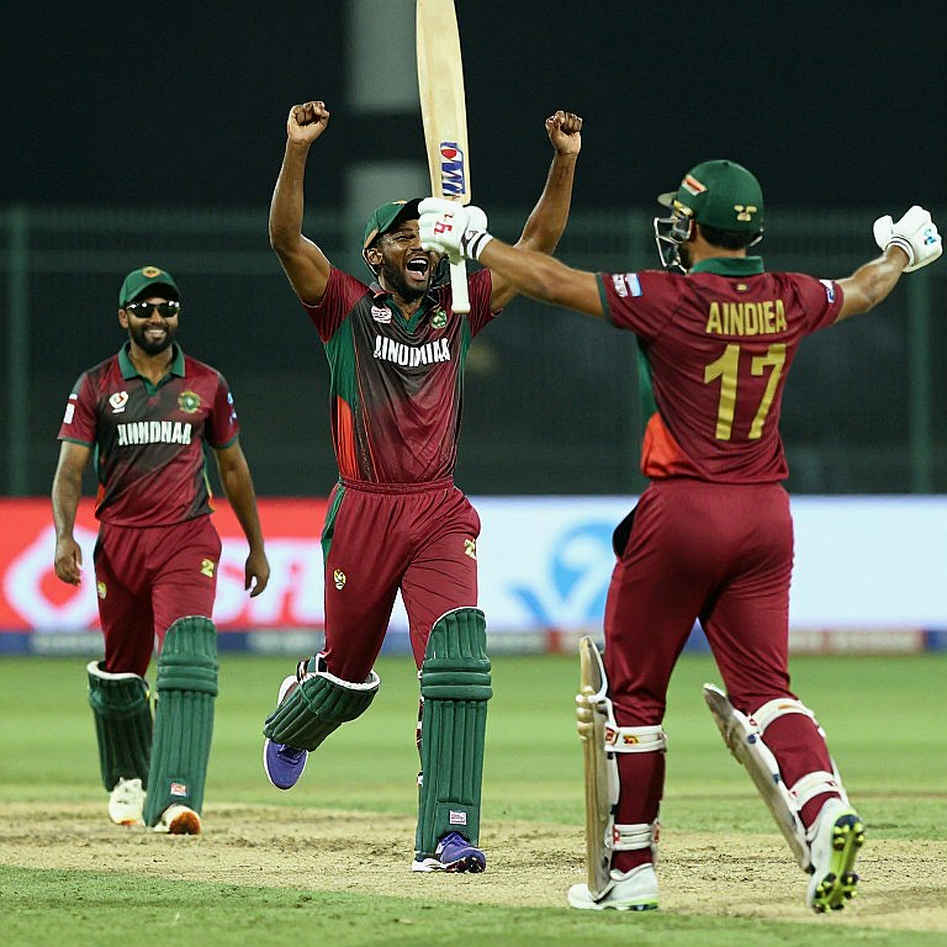
This applies to both players, and it is the largest gap in the whole argument: the demand is for ODIs, but the evidence is not.
India's Selection Surplus: Queue Length Is the Problem
India's selection problem is a success problem. Eight to ten credible candidates compete for three or four top-order slots. In that condition, a talented player's exclusion is arithmetic, not injustice. Because India's ODI side has generally been strong, a player on the outside is outside a winning team — which gives the language of injustice a political appeal but weak logical force.
There is one condition in which the argument gains real weight: transition. When the white-ball batting core is turning over, the cost of a speculative ODI cap is lower than in a settled side. That may well be Yuvraj's unstated premise.
Calendar Scarcity and the Closed Loop
Here lies the strongest version of the argument, which the remark itself does not make. India plays few bilateral ODIs outside ICC events. A player with a T20 profile but no ODI exposure therefore has almost no opportunity to earn ODI exposure. No experience, no selection; no selection, no experience. The loop is self-reinforcing.
That would have been the intellectually honest case — that the system provides no route for this category of player. Instead the language used was talent and justice.
The IPL Ecosystem: Commercial Value Is Not Sporting Value
Both players' public standing derives mainly from the IPL and domestic T20. The IPL remains the dominant revenue engine of global cricket, and Indian media rights are the sport's most valuable asset. In that environment the "future star" tag is itself a marketable commodity.
Two premium types are visible. Abhishek Sharma fits a scarcity premium: a left-arm powerplay batter who also bowls left-arm spin. Sooryavanshi fits a prodigy premium built on age records and domestic buzz. Both premiums are commercially rational and, at ODI level, sportingly unproven.
The essential correction is this: a high auction price or heavy endorsement interest proves marketability under T20 rules, not 50-over readiness. The louder the IPL signal, the more distorted the public estimate of ODI readiness — and that distortion is precisely the mechanism by which "not doing justice" becomes a popular narrative.
It is also worth noting that the ODI format is commercially the weakest of the three, which is exactly why it faces pressure to justify selections on star grounds. Yuvraj's demand, however unintentionally, leans to that commercial side. No integrity or commitment issue is implied.
Governance and Ethics: A Minor's Welfare Comes First
One point must be stated on risk-first grounds: a teenager sits at the centre of this discussion. Publicly campaigning for a mid-teen's promotion to senior international cricket carries a duty-of-care dimension that neither the quoted former player nor the surrounding debate has addressed. The question is not whether the boy is gifted — he is. The question is whether exposure to international pace at this stage serves his development.
Second, selection autonomy. Advocacy by former players is legitimate and part of democratic debate, but where selection criteria are not published and quantified, advocacy fills a vacuum the process should have filled itself. That is why such demands sound more persuasive than they are.
Third, workload. A teenager carries age-group cricket, domestic tournaments and franchise commitments simultaneously. Adding senior international cricket multiplies injury and fatigue risk. Any senior-cap decision should trigger medical and welfare review, not a purely cricketing one.
The Risk Picture: Which Direction Does the Risk Point?
The conventional debate assumes the risk is that India loses talent. On the available facts the risk points the other way: the dominant risk is over-exposure of a young player ahead of readiness.
First, format-transfer failure — T20 and age-group success does not automatically convert into 50-over output. Second, premature exposure — a teenage batter confronting quality seam bowling with two new balls can lose technical shape, and that damage is repaired over seasons, not months. Third, the hype-backlash cycle — over-promotion, then underperformance, then criticism of the young player out of all proportion; its probability rises with every additional endorsement from a former great. Fourth, opportunity cost — a developmental ODI cap is a cap taken from a proven performer, a neutral fact rather than an accusation. Fifth, systemic risk — T20 league expansion squeezes the very bilateral ODI windows the pathway needs.
Overall the risk rating is medium-high. It should be recorded explicitly that there is no integrity, betting or eligibility risk in the available information.
The Way Forward: Change the Question
The question needs to change. Instead of asking whose talent was disrespected, ask what the measurable criteria for ODI entry are and why they are not published. A clear pathway standard — a defined block of List A innings, India A experience, fitness and workload benchmarks — would clarify the debate for these two players and for everyone competing with them.
For Abhishek Sharma the route is clear: sustained 50-over batting and a regular spin workload, so that the two-skill argument converts into numbers. For Sooryavanshi the route is clearer still: Under-19 and India A, a full Vijay Hazare season, monitored physical maturation — and then the conversation, when there is performance to discuss rather than only potential.
Conclusion
What Yuvraj Singh said is the honest opinion of a respected former player and should be heard as an opinion, not as a selection order. It touches a genuine wound: India's ODI calendar is so thin that players emerging through T20 have no platform to prove themselves in the format. That problem is real and needs solving.
But the solution will not be found in the word "talent". ODI cricket is a different examination — two new balls, a long middle phase, the art of strike rotation, the skill of acceleration at the death. Abhishek Sharma has a structural reason to sit that examination: his left-arm spin. Vaibhav Sooryavanshi has exceptional talent and, for now, time — and time is not a weakness but the greatest asset a teenage cricketer has.
Anyone who wants to see these two in ODIs must also accept that a cap given too early can sometimes be the greatest injustice of all.