
BCB to Deliver ‘Good News’ to Bangladesh’s Cricketers Soon; Big Sponsor Remark Follows Nationwide Bowler Hunt
बांग्लादेश क्रिकेट बोर्ड (बीसीबी) जल्द ही देश के क्रिकेटरों के लिए एक बड़ी घोषणा करने वाला है, जिसे बोर्ड नेतृत्व ने “देश भर के क्रिकेटरों के लिए अच्छी खबर” बताया है और कहा है कि यह “कुछ ही हफ्तों में” आएगी। यह घोषणा पिछले साल अक्टूबर में चलाए गए एक महीने के देशव्यापी गेंदबाज-तलाश अभियान के बाद आ रही है, जिसमें “अच्छी संख्या में होनहार गेंदबाज” मिले और हाल में उनके लिए पुरस्कार वितरण समारोह हुआ। तमीम इकबाल ने कहा कि वे “पूरी तरह तैयार नहीं” हैं लेकिन “बहुत करीब” हैं, और स्पॉन्सर को “किसी भी खेल के लिए बेहद जरूरी” बताया — अगर स्पॉन्सरशिप का सही उपयोग हो तो पूरे खेल परिदृश्य पर बड़ा असर पड़ सकता है। मुख्य बातें: (1) रिपोर्ट में तमीम इकबाल को “बीसीबी अध्यक्ष” कहा गया है, जबकि दर्ज रिकॉर्ड में अध्यक्ष पद नजमुल हसन पापोन और बाद में फारुक अहमद के पास रहा — इसलिए भूमिका की स्वतंत्र पुष्टि जरूरी है; (2) खबर में कोई आंकड़ा, राशि, नाम या योजना-विवरण नहीं है, यह एक घोषणा-पूर्व सूचना है; (3) सबसे बड़ी खामी यह है कि पहचाने गए गेंदबाजों के विकास का कोई मार्ग नहीं बताया गया — अकादमी प्रवेश, प्रारूप-विशिष्ट ट्रैक या ए-टीम एकीकरण का उल्लेख नहीं; (4) स्पॉन्सर-निर्भरता का स्पष्ट संकेत मिलता है, जिससे लाभ की टिकाऊपन पर सवाल बनता है; (5) सबसे बड़ा जोखिम खेल का नहीं, अपेक्षा-प्रबंधन का है — बताई गई छोटी समय-सीमा में डिलीवरी न होने पर विश्वसनीयता की हानि होगी। निगरानी योग्य संकेत: घोषणा का प्रकाशन, बोर्ड राजस्व बनाम स्पॉन्सर-आधारित वित्तपोषण, खोजे गए गेंदबाजों का औपचारिक ढांचे में प्रवेश, और तमीम इकबाल की वास्तविक बीसीबी भूमिका की पुष्टि। यह सामग्री खेल-सूचना संदर्भ के लिए है, सट्टेबाजी सलाह नहीं।" } ```
BCB to Deliver ‘Good News’ to Bangladesh’s Cricketers Soon; Big Sponsor Remark Follows Nationwide Bowler Hunt
The Headline
Bangladesh Cricket Board (BCB) is preparing an announcement for the country’s cricketers. The board’s top leadership has indicated that “within a few weeks” a message will come that is described directly as “good news for cricketers across the whole country.” The short Bengali-language news item contains no figures, no names, no amounts and no scheme detail — but its political-economy signal is substantial.
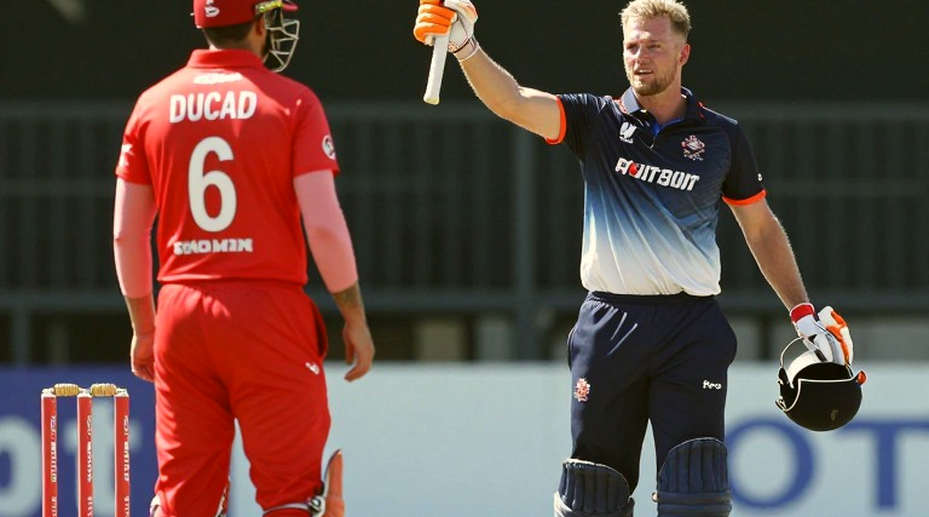
The first half of the story is about bowlers. Last October the board ran a nationwide search for talented bowlers. The exercise lasted one month. According to the report, the hunt produced “a good number of promising bowlers.” A prize-distribution ceremony was recently held for those “winning bowlers,” attended by board president Tamim Iqbal. There he announced impending “good news” for cricketers and, in the same speech, made a remark on sponsorship that is the most important element of the entire item.
According to Tamim Iqbal, he is “not yet fully prepared” but has “come very close.” That is the language of a near-complete project, not a fresh initiative. Which is why this is not a report of an event but a pre-announcement of a coming announcement.
A Necessary Caution on Role and Identity
A crucial point must be recorded here, because the weight of the whole story rests on it. The report calls Tamim Iqbal “BCB president.” The established public record is that Tamim Iqbal is a former Bangladesh national-team opening batter and captain whose international career ran through 2026, after which he moved into administration. The BCB presidency was historically held for a long period by Nazmul Hassan Papon, and Faruk Ahmed was elected president in late 2026.
This creates one of three situations. First: Tamim Iqbal has in fact been elected or appointed BCB president — which would itself be a major governance development that this report fails to treat as news. Second: the original report or the extraction layer conflated a role — Tamim may hold a board director or standing-committee position, not the presidency. Third: a translation or terminology error, since Bengali role designations are often imprecise.
This report therefore does not treat his role as verified. If he is president, the item is far more significant than it appears. If not, there is a factual error at the very first stage of the information chain. Before citing this in any governance analysis, the role must be independently confirmed.
The Bowler Hunt: Why Bowlers Only
The only concrete sporting signal in the story is that the search was bowler-specific. That is unusual. Bangladesh cricket’s structural weakness has long been genuine pace bowling — the country has essentially never had a regular 140kph-plus strike bowler across formats. A nationwide bowler hunt therefore implies that the board’s own internal diagnosis identifies that gap as the binding constraint.
This inference comes not from the article’s data but from Bangladesh cricket’s established performance pattern: the team is markedly stronger at home, where spin and slow, low-bounce surfaces help, and it struggles away on fast, bouncy pitches. In Tests and ODIs Bangladesh has often had only one or two Test-viable seamers and no reliable rotation.
Two things must be separated. First, a one-month nationwide search producing “a good number” of bowlers is an identification exercise, not a development one. One month does not produce finished bowlers; it produces a candidate pool. Second, the article presents identification and development as the same thing, when the distance between them is several years.
The Prize Ceremony: Symbolism and Its Limits
Prizes were given to winning bowlers at the ceremony. This suggests cash awards were part of the programme, meaning it likely sits in a sponsor-funded rather than board-budgeted category — a point that connects directly to the sponsorship remark.
But the ceremony has a second meaning. A board president personally attending a grassroots talent-hunt prize distribution is an act of legitimacy signalling. It is consistent with two conditions: a newly entrenched leadership building a domestic constituency, and a board under pressure from members and clubs to demonstrate grassroots commitment.
The largest governance gap sits right here: the programme’s own architecture is invisible. Who administers the identified bowlers? Which academy absorbs them? Who funds their development? Does the board have a formal pathway, or does the programme end at the ceremony? The article describes no post-search mechanism at all. That is the single biggest process gap in the story.
The Sponsor Remark: The Heaviest Part of the Story
Tamim Iqbal said sponsors are “extremely important for any sport,” and that if sponsorship can be used properly it can have “an enormous impact not only on cricket but on the overall sports arena.”
This is not a neutral observation. In cricket’s political economy, board leaders emphasise sponsors under two conditions: they are proactively framing a funding roadmap, or they are defensively explaining a fiscal constraint. Either way the signal is that the board is in a position of financial dependency.
Second, the conditional clause — “if sponsorship can be used properly” — assumes that sponsorship is currently not fully or properly utilised. That is an implicit critique of prior board commercial practice, and, if the speaker’s administration inherited the situation, a self-critique as well.
Third, the distinction between commercial value and sporting value matters. There is no monetisation signal behind the bowler hunt — no league attached, no franchise, no broadcast product. Its sporting value is a potential pipeline; its commercial value is presently near zero until proven. A prize ceremony for bowlers is a low-commercial-viability asset: it exists for institutional legitimacy, not revenue.
“Good News for Cricketers Across the Country”: The Scope of Expectation
This phrase carries the most risk. The report does not specify who benefits. “Cricketers across the country” is a universal scope, not elite-only. That choice suggests the coming announcement is likely structural-financial or contractual — domestic player payment reform, contract centralisation, pension or insurance, match-fee increases — rather than a technical or selection matter. Elite-player items are normally announced as such.
But a universal scope brings a universal expectation. Any concrete package that cannot satisfy everyone can later turn into resentment. In the South Asian cricket media ecosystem, “the board is giving money to cricketers” generates emotional engagement far out of proportion to its financial scale. And the “cricketers across the country” scope targets precisely the constituency with the highest amplification coefficient — domestic players, who are numerous, organised and vocal.
The Timeline: The Biggest Risk Is Not Sporting
The dominant risk is expectation management, not cricket. The board has publicly set a short, explicit timeline together with a claim of universal benefit. That creates a measurable, short-horizon commitment. The risk asymmetry is poor: delivery yields a modest positive; non-delivery within the window yields disproportionate credibility loss — especially among a fanbase whose trust threshold for South Asian cricket governance is already low.
“I am not yet fully prepared, yet I have come very close” is a governance-communication choice with a cost. A board leader publicly flagging an unlaunched initiative creates announcement pressure. Expectations are now set against a visible timeline. Failure within that window converts a neutral event into a credibility loss.
There is a media dynamic attached. The outlet that ran the “good news is coming” item is likely, if there is a delay, to run a follow-up framing it as board dysfunction. The trigger is time-based, and the clock is now running.
The Funding Model: Durable or Reversible
The link between the sponsor remark and the “good news” is unstated but unlikely to be coincidental. A near-final project to be announced “within a few weeks,” alongside a public emphasis on sponsors, suggests the project is sponsor-backed — a funded player-support scheme, a central-contract restructuring, or a domestic payment pool underwritten by a commercial partner. If so, the announcement is contingent on commercial closure, which most simply explains “I am not yet fully prepared.”
There is a structural risk here that is under-appreciated. Sponsor-dependent player benefits are cyclical and reversible. A benefits package resting on an annual sponsor renewal is weaker than one embedded in the board’s own revenue base — broadcast rights and ICC distributions. Boards in smaller markets often take the sponsor route because it is cheaper in the short term; it is also the route that most often collapses. The article gives no hint which model is being pursued.
From Player to Administrator: A Different Channel
If the role question is verified, the most interesting player-level signal is that the speaker was himself until recently part of the national team. A player-to-governance transition is uncommon in Bangladesh cricket, where the board has traditionally been dominated by political-administrative figures rather than recently retired players.
This changes the credibility texture of the “good news” claim. When a recently retired player addresses “cricketers across the country” directly, it is a peer-to-peer address, not a bureaucratic one. Such an address is more likely to reflect genuine player-side concerns — pay, contracts, facilities, domestic structure — than purely administrative reform.
There is a second side. A player-administrator carries high legitimacy with players but low institutional experience with commercial and ICC/ACC-level governance. That is also why the emphasis on sponsors can be read as an administrator speaking openly in an unfamiliar domain.
Domestic Structure and BPL Fragility
The Bangladesh Premier League is not named in this article, but the sponsor-dependency framing is not a general truism — it is a structural condition of Bangladesh cricket. The BPL’s history involves franchise payment delays, owner turnover, and a persistent gap between its commercial scale and that of the IPL, SA20 or ILT20.
In such an environment, if the coming “good news” turns out to be domestic player payment restructuring, the impact would be genuinely significant. It would reduce the attrition of domestic players into informal work and increase the likelihood that more people retain professional cricket as a career. That is the highest-upside reading of this article.
On the other hand, the byline tag (SH/HJS) is consistent with standard Bangla daily proof-editing practice. No source is named, and every quote comes from a single person. The entire item is single-source, independently uncorroborated press quotation. That limit must be acknowledged explicitly.
The Long Pipeline vs the Illusion of Immediacy
The path from bowler discovery to the international team is a five-to-ten-year pipeline in any cricket nation. For Bangladesh specifically, converting raw district-level bowling talent into a 135kph-plus Test-viable seamer requires strength and conditioning, workload management and overseas A-tours — none of which a one-month search supplies. The sense of immediacy the article conveys is structurally mismatched with the pipeline it describes.
Second, the problem is framed bottom-up rather than top-down. The programme is presented as discovery — finding hidden talent nationwide — not development, which would involve coaching, infrastructure, A-team tours and specialist academies. The discovery-first frame is cheaper and more politically visible: it produces a ceremony and a press story. Whether a discovered bowler can be developed to international level is the real test, and it is invisible here.
A Format Caution
There is another serious gap: the bowler hunt specifies no format. Test and T20 bowling skills differ radically. A T20 death-overs yorker specialist is not necessarily a Test-viable seamer. Without a format-specific track assigned to each candidate, mis-profiling risk remains. Likewise, a one-month nationwide search is unusually short for meaningful coverage of Bangladesh’s district network. It was either a pilot or a ceremony-heavy, substance-light exercise. That cannot be resolved from the article.
Most importantly, no verification mechanism for international-grade skill is described. How a bowler measured against domestic batsmen will fare against international batsmen on overseas pitches is not testable from what is reported. This is the familiar problem in which home data masks weaknesses.
Risk Matrix
| Category | Risk | Level | Likelihood | Impact | |---|---|---|---|---| | Sporting | Identification programme yields candidates but no development pathway, hence zero international yield | High | High | High | | Sporting | Format-blindness in the bowler search, mis-profiling of candidates | Medium | Medium | Medium | | Sporting | One-month window produces regional bias, coverage limited to Dhaka/divisional centres | Medium | Medium | Medium | | Personnel | Key-person dependency; programme stalls on leadership change | Medium | Medium | Medium | | Commercial | Sponsor-contingent benefits disappear if the partner exits | High | Medium | High | | Commercial | Low monetisable value of a grassroots bowler hunt, hard to sustain sponsor interest long term | Medium | High | Medium | | Rules/integrity | Age verification and registration disputes in nationwide discovery | Medium | Low | Medium | | Public opinion | Public commitment with an explicit short deadline; non-delivery damages credibility | High | Medium-High | Medium-High | | Public opinion | Universal “good news for all cricketers” claim; resentment among the excluded | Medium | Medium | Medium | | Systemic | Financial fragility of the BPL and the wider Bangladesh cricket ecosystem | Medium | Medium | High |
Overall risk rating: MEDIUM. The article contains no integrity, safety or rules-breach risk, so no high-tier compliance risk arises. The medium rating comes from two sources: a publicly stated, short, self-imposed delivery deadline with no disclosed substance, and explicit sponsor dependency that structurally implies benefit fragility.
What to Keep Tracking
| Signal | How to observe | Trigger | Impact | |---|---|---|---| | The promised “good news” | BCB official communications, Bangladeshi cricket press | Publication within the stated “few weeks” window | High — resolves the entire information content of this item | | Delivery or delay | Timing against the self-imposed window | Non-appearance after roughly 4–6 weeks | Medium-high — credibility damage; media narrative reversal | | Benefit-funding model | Announcement text: board revenue vs named sponsor | A single commercial partner named explicitly | High — determines durability of player benefits | | Pathway for discovered bowlers | BCB academy/A-team selections, age-group squads | Named intake of talent-hunt candidates into formal structures | Medium — distinguishes real pipeline from ceremonial programme | | Tamim Iqbal’s exact BCB role | BCB leadership listings, mainstream cricket press | Confirmation of president vs director/committee position | Medium — corrects source accuracy | | Domestic contract structure changes | BCB central contract lists, domestic payment announcements | Structural (multi-year, tiered) rather than one-off payment | High for the domestic talent supply chain | | Bangladesh seam depth in 3–5 years | National squads, A-team/emerging tours | New pace options breaking into Test/ODI squads | Medium — the ultimate slow validation |
Conclusion
This is a thin, single-source, pre-announcement item whose analytical value lies in two signals. First: a public, near-term, universally scoped commitment by BCB leadership that cricketers across Bangladesh will receive benefits. Second: an explicit, repeated emphasis on sponsor dependency that indicates both the likely nature and the fragility of that commitment.
Sportingly, the concrete content is a bowler-specific nationwide talent-identification programme whose development pathway is entirely undefined in the reporting. The article contains no match data, no player performance data, no league or commercial deal, and no rules or integrity issue. Its significance is governance-process and expectation-setting, not sporting outcome.
The most plausible and most consequential reconstruction is this: the coming announcement is a domestic player payment or contract restructuring or support scheme, arriving within a few weeks, partially sponsor-supported, delivering genuine but incremental benefit to the domestic circuit. The worst case is a sponsor-contingent, short-cycle benefits package with partial delivery that lapses when the commercial partner exits — leaving players with another precedent of unfulfilled commitments and widening the board’s credibility deficit. The best case is structural reform: formal domestic contracts with guaranteed minimums and a funded pathway that integrates newly identified bowlers into the A-team and high-performance pipeline.
For now, this is a sentiment-planting item, not an information item. Its information half-life is short and entirely contingent on the follow-up. The highest-value unknown is what the announcement actually is. The next story is the real story.
Disclaimer: This analysis is based on the available source material. The article is short-form, single-source, and contains no match data, player performance data or verified commercial figures. The identification of “BCB president Tamim Iqbal” requires independent verification. This content is for sports-information and professional-analysis reference only and does not constitute betting advice of any kind.