
होमAsian CricketThe Changing Geography of Asian Cricket: Leagues, Calendar and New Competitive Equations
Asian Cricket
The Changing Geography of Asian Cricket: Leagues, Calendar and New Competitive Equations
एशियाई क्रिकेट अब बहु-ध्रुवीय है: एसीसी के एशिया कप जैसे बहुपक्षीय मंच, आईपीएल-पीएसएल-बीपीएल-एलपीएल जैसी टी20 लीगें और भारत, पाकिस्तान, श्रीलंका, बांग्लादेश व अफगानिस्तान की राष्ट्रीय टीमें इसके मुख्य स्तंभ हैं। सबसे बड़ी चुनौतियां कैलेंडर की भीड़, खिलाड़ियों का कार्यभार, राजनीति का खेल पर असर और महिला क्रिकेट को संस्थागत प्राथमिकता देना हैं। भविष्य प्रतिभा के साथ-साथ प्रबंधन की गुणवत्ता, घरेलू ढांचे और क्षेत्रीय सहयोग पर निर्भर करेगा।
Over the past two decades, the landscape of Asian cricket has shifted continuously. There was a time when the continent's entire cricketing weight was believed to rest on the India-Pakistan pair. Today that framework is far more complex and multi-polar. Sri Lanka has built a new generation through its domestic system, Bangladesh has increased investment in facilities and coaching, and Afghanistan is now challenging teams whose names were barely mentioned a few years ago. This change is not the result of a single series or tournament. It is the outcome of broader shifts in the organisation of the game, the flow of money, and the habits of audiences.
At the organisational level, the Asian Cricket Council, or ACC, remains the backbone of continental competitions. The Asia Cup is its clearest expression. The tournament has been played in both ODI and T20 formats from time to time and has featured teams such as India, Pakistan, Sri Lanka, Bangladesh and Afghanistan. Its distinctive value lies in direct competition between national teams in a setting where bilateral political pressure is lower and regional identity matters more. However, with packed schedules and a crowded calendar of professional leagues, finding a fixed window for such continental events is becoming increasingly difficult.
On the economic side, T20 leagues are the biggest driver of this transformation. The Indian Premier League has become the largest cricket market globally, and its influence is not confined to India. The Pakistan Super League has established its place, while the Bangladesh Premier League and Lanka Premier League provide platforms for domestic talent in their respective countries. These leagues have not only expanded players' income sources but also redefined the entire machinery of broadcast rights, sponsorship and stadium economics. Today, the path for a young player to reach the national team often runs through a domestic league, a newer and more professional route than in earlier eras.
India's role in this structure is central, but it should not be viewed as a monopoly. The Indian board has the world's largest audience base and the largest broadcast market, which directly influences the global cricket calendar. At the same time, India's domestic system is so extensive that it keeps producing talent consistently. Yet this centrality has another side: for smaller boards, protecting their own domestic calendars and financial independence becomes difficult. Critics often ask to what extent the balance of global series is determined by the needs of one large market.
Pakistani cricket has shown a different kind of resilience in recent years. After domestic security conditions improved, the return of international cricket injected new energy into the country's sports system, and the PSL accelerated that process. Pakistan's fast-bowling tradition and a new generation of batting have kept the team competitive. However, questions about administrative stability, selection policy and domestic structure remain part of the discussion. Greater transparency on these issues is seen as essential for the team's long-term stability.
Sri Lanka and Bangladesh tell a different story. Both have deep cricketing cultures and both have troubled major teams from time to time, but consistency has been their biggest challenge. Factors such as limited financial resources, frequent selection changes and the continuity of domestic tournaments affect their performance. Neither country lacks talent, but developing it consistently in one direction requires strong support systems.
Afghanistan is the most inspiring example in Asian cricket. Despite limited resources, the team has built an identity through its play and has shown steady improvement in batting alongside its spin bowling. Its success demonstrates that talent and planning can matter more than resources in modern cricket. Afghanistan's rise is also changing the balance of Asian tournaments, because it is now difficult for any major team to take it lightly.
The biggest commercial challenge across this landscape is the calendar. National team tours, ICC events and a crowded domestic league schedule have steadily increased player workloads. Continuous cricket raises the risk of injury and shortens careers. Several boards are now prioritising workload management and promoting rotation in selection. But these measures will only work if all stakeholders agree on a shared calendar framework. Finding balance among bilateral series, leagues and global tournaments will be the top priority in the coming years.
The second major question is the relationship between politics and sport. In Asian cricket, some bilateral relationships are determined more by diplomacy than by the game. This directly affects audiences, who are deprived of contests with enormous historical and emotional significance. Multilateral platforms such as the Asia Cup offer an alternative in such situations, but a lasting solution requires greater trust between boards and a stronger tradition of keeping sport separate from politics.
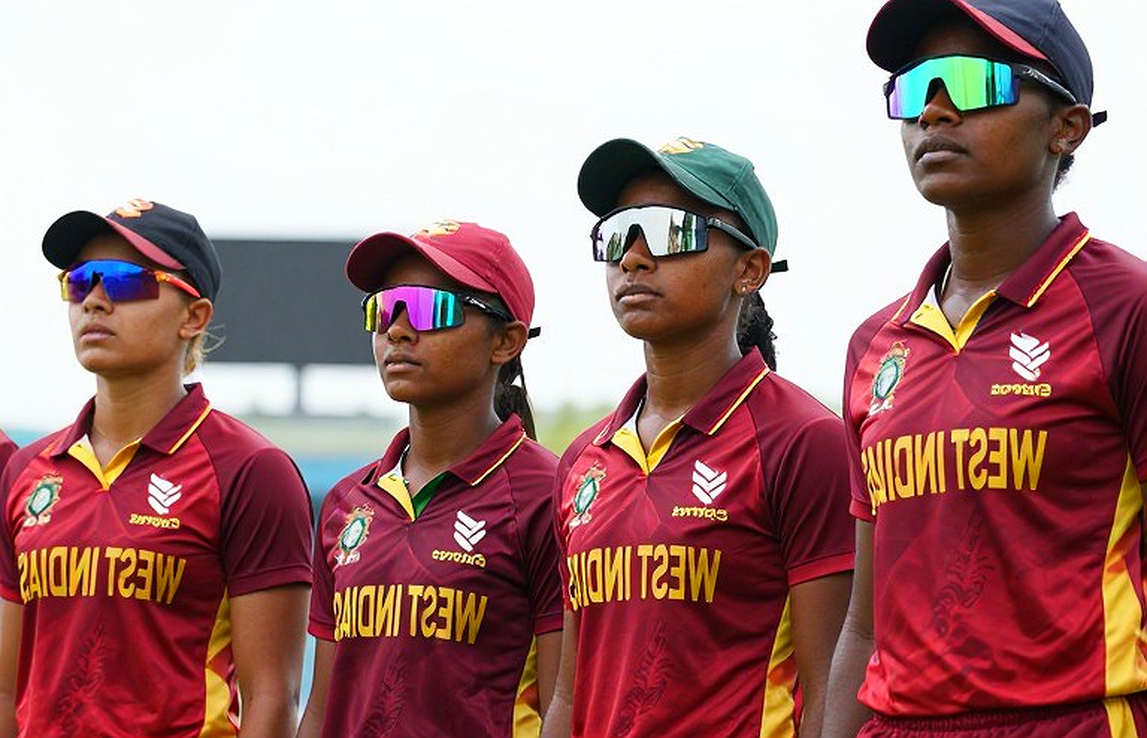
Another dimension that is often under-discussed is women's cricket. Women's teams from Asian countries have made notable progress in recent years, and the expansion of domestic leagues could accelerate that progress. Increasing the number of matches, pay and broadcast coverage for women players are steps whose impact will be felt directly by the next generation. In South Asia, the audience base for women's cricket is growing rapidly, and this is an opportunity to move it from informal efforts to an institutional priority.
Amid all this, one thing is clear: the future of Asian cricket depends not only on talent but on the quality of management. Boards that strengthen domestic competitions, take player health and workload seriously, and balance market forces with competition will be the ones that endure. Ideas such as regional cooperation and a shared calendar are no longer luxuries but necessities. Asian cricket is facing its most promising moment at a time when it has the market, the talent and the audience. The question is whether these resources will be used to build an inclusive and sustainable framework, or whether long-term interests will be left behind in the race for competition and money.


संबंधित खिलाड़ी
लोकप्रिय/पसंदीदा पुस्तकें
Empty Pipeline, Missing Byline: Why an Asian Cricket Coverage Report Came Back Blank at Midnight2026-11-03
The Empty Score Sheet: Where Asian Cricket's Fact Supply Chain Breaks2026-11-02
The Empty Case File: When an Eight-Dimension Template Had No Evidence Inside2026-11-02
331/7 in Lahore: The 326 Chase, and the 110 the Record Wants You to Forget2026-11-02
Asian Cricket’s Shifting Architecture: The Widening Gap Between the Calendar, the Franchise and National Duty2026-11-02
Where Cricket's Record Actually Breaks: One Empty File, 14,312 Balls, and an Unanswered Question2026-11-02
Rizwan and Imam Cleared for Quaid-e-Azam Trophy — but 'Cleared' Does Not Mean 'Exonerated'2026-11-02
अनुशंसित
The Blank Column: Money, NOCs and the Paper Trail of Cricket-Asia's Transfer Market2026-10-29
Empty Payload, Green Tick: The Cricket Data Flaw That Reaches the Rights Desk2026-10-29
India vs New Zealand 3rd T20I: Vaibhav Sooryavanshi Retains Place, Ishan Kishan Sits Out—Selection, Workload and Wicketkeeping Balance Under Scanner2026-10-28
Vaibhav Sooryavanshi Out, Ishan Kishan Returns: India's Two Changes in Auckland, But the 'Dropped' Narrative Is Incomplete2026-10-31
Two Centuries, a 288 Target and the 87 Runs In Between: Reading the Decider2026-11-01
Smith Ruled Out, Cummins Opts to Bowl First at Newlands; Australia Enter Series Decider With Four Changes and a Boland Puzzle2026-10-28
The Liverpool Notebook: When the BCCI Calendar Steals the Ranji Headlines2026-11-03
The Cost of 64 All Out: Why Bangladesh Axed Batting Coach Ashraful Four Days Before West Indies Test2026-10-26
अनुशंसित
Spectator rides a scooter onto the field; Akash Deep halts the bowler as play pauses at Hagley Oval2026-11-02
The Empty Payload, The Full Confidence: Auditing Cricket Data's Silent Failure2026-10-31
The New Geography of Asian Cricket: A Game Caught Between Leagues, Politics and Rising Powers2026-11-03
Another Century for Robin: 500 NCL Runs, the Average Nobody Printed, and the Uncounted Labour of Domestic Cricket2026-10-25
The Empty Payload: How Cricket's Data Pipeline Fails Silently2026-10-27
Empty Payload, Green Status: The Costliest Leak in Cricket's Data Supply Chain2026-10-27
Insufficient Source Data: Report Cannot Be Generated2026-10-31
South Asian Cricket at a Structural Crossroads: Format Discipline, Workload Management and the Market Triangle2026-11-01
अनुशंसित
The Politics of the Asia Cup: A Tournament Caught Between Calendar, Commerce and Cricket2026-11-03
Boyle-Foxcroft Partnership Rescues New Zealand A After Early Wickets Against India A2026-11-01
Anderson and Lancashire: The Bowling Call Was Rational, the Exit Protocol Was Not2026-10-29
South Asian Cricket at a Structural Crossroads: Format Discipline, Workload Management and the Market Triangle2026-11-01
Mirpur, Day 1: The Scoreboard Says 213/3, the Ledger Says 74 Overs2026-10-29
Eleven Empty Boxes, One Filled Field: The Trust Crisis Inside Asian Cricket's Data Business2026-10-24
What is the goal in the Sylhet Test? Sammy wants the Dhaka mentality and 'a bit more hunger'2026-11-03
The First Test: How Bengaluru 2026 Began India's Women's Cricket History2026-11-01