
Kabaddi's Second Decade: From the Mat to the Market, and Back
कबड्डी दक्षिण एशिया का पारंपरिक संपर्क खेल है, जिसमें सात-सात खिलाड़ियों की दो टीमें होती हैं और रेडर को तीस सेकंड में विपक्षी आधे हिस्से में अंक लेना होता है। यह 1990 से एशियाई खेलों का हिस्सा है और भारत पारंपरिक रूप से प्रमुख शक्ति रहा है, जबकि ईरान पिछले डेढ़ दशक में सबसे मजबूत चुनौती बनकर उभरा है। 2014 में शुरू हुई व्यावसायिक फ्रेंचाइज़ी लीग ने खेल की आर्थिक संरचना बदल दी — प्रसारण अधिकार, शहर-आधारित टीमें और पूर्णकालिक अनुबंध। इससे खिलाड़ियों की आय बढ़ी और दर्शक वर्ग का विस्तार हुआ। मुख्य चुनौतियाँ चार हैं: प्रसारण राजस्व पर अत्यधिक निर्भरता, मजबूत घरेलू पिरामिड का अभाव, महिला लीग का सीमित बाज़ार, और संघों-लीग-सरकार के बीच कैलेंडर तथा शासन का समन्वय। अंतरराष्ट्रीय विस्तार की सबसे बड़ी शर्त प्रतिस्पर्धात्मक संतुलन है; ओलंपिक प्रवेश के लिए केवल लोकप्रियता नहीं, बल्कि सदस्य संघों की संख्या, खिलाड़ियों का वैश्विक वितरण और नियमों की स्थिरता आवश्यक है।
Thirty Seconds on the Mat
The thirty-second rule is kabaddi's most important structural asset. A raider must cross into the opponent's half and touch at least one defender, or cross the bonus line, within thirty seconds; failing that, the opposing team earns a point. That single rule sets the rhythm of the entire sport. Every thirty seconds brings a decision, every decision carries risk, and every risk produces a clear outcome for the spectator. In cricket a single delivery can yield six kinds of results, but most of them are indifferently dull; in kabaddi almost every raid is an event.
This is why kabaddi, confined for decades to school grounds, village courtyards and military parade squares, suddenly became ideal for television. There was never any shortage of popularity. What was missing was the packaging that could convert popularity into audiences, and audiences into revenue. South Asia knew the sport, played it, watched it — but had no structure to sell it.
What One League Changed
The biggest turning point in modern kabaddi was not a competition but a business model. With the arrival of the country's first major professional kabaddi league, the sport was brought to market through franchise structures, broadcast rights and city-based teams. The most important decision was to keep it out of a long cricket-style calendar and place it in a concentrated, short window. Fewer days, higher intensity, a new drama every evening.
That structure did three things at once. First, it gave players, for the first time, a contract that let them treat sport as a full-time profession without a government job as a safety net. Second, it translated identity — the long-standing bond between a state, a community and a style of play — into team colour. The spectator no longer cheers for a state side but for a city franchise. Third, it pushed the sport to audiences who had never reached a ground in their lives.
Perhaps the league's most useful contribution was that it translated the sport's cultural legitimacy into the language of the market. A game once played because it demanded no special clothing, no oversized field and could be staged on almost any surface suddenly began to sell as a premium product.
The Geography of Money
Kabaddi's economy rests heavily on broadcast. This is both its strength and its weakness. The strength is obvious: television took the sport into homes and attached advertisers to it. The weakness is that on the day broadcast money contracts, ticketing, merchandise and local sponsorship cannot fill the gap.
That is why the sport's most consequential policy question is how to diversify its revenue base. Ticket sales, stadium experience, player-led digital content, school and corporate competitions, fantasy products and local broadcast rights all hold promise, but each requires separate investment and separate competence. Dependence on broadcast rights makes any league fragile.
A second economy runs alongside the professional league and is often ignored: the economy of event delivery. Hosting a professional match generates demand for mats, lighting, scoring systems, referees, medical support, security and broadcast equipment. City by city, that demand builds skills and investment. In states where this ecosystem strengthened, kabaddi became not only something watched but something hosted as a business.
The Player: From Colony to Contract
The player's social biography is the most interesting story in the sport. Kabaddi has traditionally come from sections of society with limited facilities — government schools, rural akharas, railway and police teams, farming families. For these players a job and a sport were never separate things; the job was the sport's insurance.
The league created a new category: the full-time professional kabaddi player. The shift was revolutionary, but unequal. For elite raiders and defenders it was economic take-off. For players on the lower rungs it became seasonal income, because the league door opens once a year and closes a few months later. For the rest of the year they depend on state-level competitions, job-based teams and private tournaments.
Player welfare is therefore not only a humane question but an economic one. In a sport with a high injury rate and a short career, insurance, rehabilitation, post-retirement employment and a minimum income guarantee are decisive. A league that defers these issues is deferring the quality of its own product, because a tired and insecure player cannot produce good sport.
The Science of Intensity
Kabaddi is often mistaken for a pure game of strength. It is not. Structurally it is an interval sport: thirty seconds of intensity, a few seconds of recovery, then again. The load this places on the body differs from that of any continuous running sport. Every raid demands explosive power, balance, change of direction and decision speed simultaneously.
Modern team management has begun to understand this. GPS tracking, heart-rate monitoring, load management, sleep and nutrition assessment, and individualised recovery plans are now markers of a well-run side. The burdens of raiding and tackling are measured separately, because the physical demands on a raider and a defender in the same match are not the same.
Data's real value appears in strategy. Which type of raid works against which defender, when a tackle attempt is worth the risk, at which minute fatigue begins to cost a particular player — these are now measured questions rather than hunches. At league level the change is deepening the sport tactically.
Iran's Challenge
Outside India, the most serious kabaddi story is Iran. Iran adopted the sport and placed it inside an organised sporting system — a tradition of physical preparation, strength and balance inherited from wrestling, and disciplined collective training. The result is that within a few years Iran became India's hardest opponent.
This rivalry is good news for the sport. A game in which one country's dominance is permanent cannot become genuinely international. Iran's strength proved that kabaddi's skill language can be learned and travels across borders. That proof is the first condition of any Olympic ambition.
Other countries have developed too. Bangladesh has deep roots in the sport, Thailand and South Korea have made organised efforts, and small but serious communities have formed in parts of Europe and Africa. But the honest truth is that in most of these places kabaddi is still a project, not a culture. A project runs as long as money and attention flow.
Women's Kabaddi: Fast Track, Slow Structure
Women's kabaddi has kept India consistently strong on the international stage. The inclusion of a women's competition in the Asian Games calendar gave the sport a platform on which state-sponsored training systems paid off. The Indian women's team used the opportunity and raised the technical level of the game.
But the domestic structure is unbalanced. The economic space the men's professional league created has not been built in proportion in the women's game. The result is that women win international medals while depending on government jobs and state sponsorship for their livelihood at home. That contradiction is not sustainable. A sport that keeps half its talent outside the market cannot reach its full potential.
The Ground: Where Real Selection Happens
Kabaddi's greatest strength is its democratic accessibility. It can be played on soil, on concrete, on a rubber mat, on any flat patch. Because of this it survived in schools and in rural areas. But the same strength is a weakness: because the sport is cheap to play, it is assumed the sport needs no facilities.
At the high-performance level that assumption is dangerous. In modern kabaddi, mat quality, coaching structure, physiotherapy, nutrition and video analysis are decisive. States that invested produce a steady stream of players; states that did not fail to take talent to professional level even when it exists.
School and university competition is the weakest link. A child playing kabaddi in an alley has what next step? If the answer is a single annual trial, the chain is broken. A sport that inherited a mass base has to convert that base into a system.
Governance: The Complicated Part
Every sport's growth is bounded by its organisational structure. Kabaddi involves several stakeholders at once — national and state federations, the professional league, government sports authorities, educational institutions and private organisers. When their calendars collide, the player pays. When their standards diverge, the credibility of the sport pays.
Three governance issues matter most. The first is transparency: selection processes, financial accounts and contract terms do not run without public trust. The second is player representation: a players' association and safety measures are now necessities, not luxuries. The third is calendar coordination: national camps, the league, international competitions and the domestic circuit must not destroy one another.
Beyond these lies an economic question: where does the money the sport generates go? If the bulk of revenue stays at the top league and never reaches grassroots structures, the sport's depth dries up. In a healthy pyramid, earnings at the summit finance the levels below.
How the Story Is Made
In modern sport, broadcast and storytelling are two sides of one thing. Kabaddi benefits enormously from its inheritance: spectators already know the rules, so nothing needs explaining. Teams are tied to cities, so identity forms instantly. And the drama of a raid — one player against seven — is naturally suited to television.
But the sport needs deeper stories. Scores and stars alone are not enough. There are three levels of narrative: the player's personal journey, the team's tactical identity, and the sport's social role. The third is the least used. Kabaddi is the game of children who had no facilities for other sports; that is its biggest journalistic and political story.
In the digital age, the short clip matters more. Kabaddi's short-form advantage is that a thrilling raid can be told in ten seconds — the native language of social media. But clips do not create audiences; matches do. The journey from a three-minute video to watching a full match is the hardest and the most important.
The Destination: The Olympics
The big dream is a place in the Olympic programme. The dream is not wrong, but it should be treated as a direction rather than a destination. Entry to the Olympics is not judged on popularity alone: the number of member national federations, the global distribution of active players, the stability of rules, television and financial interest, and competitive balance at world level all count.
On these measures kabaddi's biggest question mark is competitive balance. If seven or eight countries settle a world championship in advance and only two are medal contenders, the international case weakens. The real international project is therefore not one that waits for new countries to arrive on their own; it is one that exports coaches, referees, training material and domestic competition structures. The most valuable export in sport is not players. It is knowledge.
What to Watch
Over the next few years, three questions will decide kabaddi's direction.
First, can the league push its revenue beyond broadcast? If ticketing, merchandise and local partnerships do not reach that level, the sport will remain dependent on the market as a one-evening television drama.
Second, will a domestic pyramid be built? A professional league is a sport's ceiling, not its floor. The floor is built by state leagues, school and college circuits, and nursery programmes. If the league simply buys whatever talent happens to appear, the sport will not reproduce itself.
Third, will the women's game get the market the men's game got? This is not only a question of fairness but of expansion. Half the audience and half the talent left unused means the sport runs at half its capacity.
None of these answers will come from a single match. They will come from institutions, contracts, facilities and decisions — the things that are invisible on the mat but make every thirty seconds of it possible.
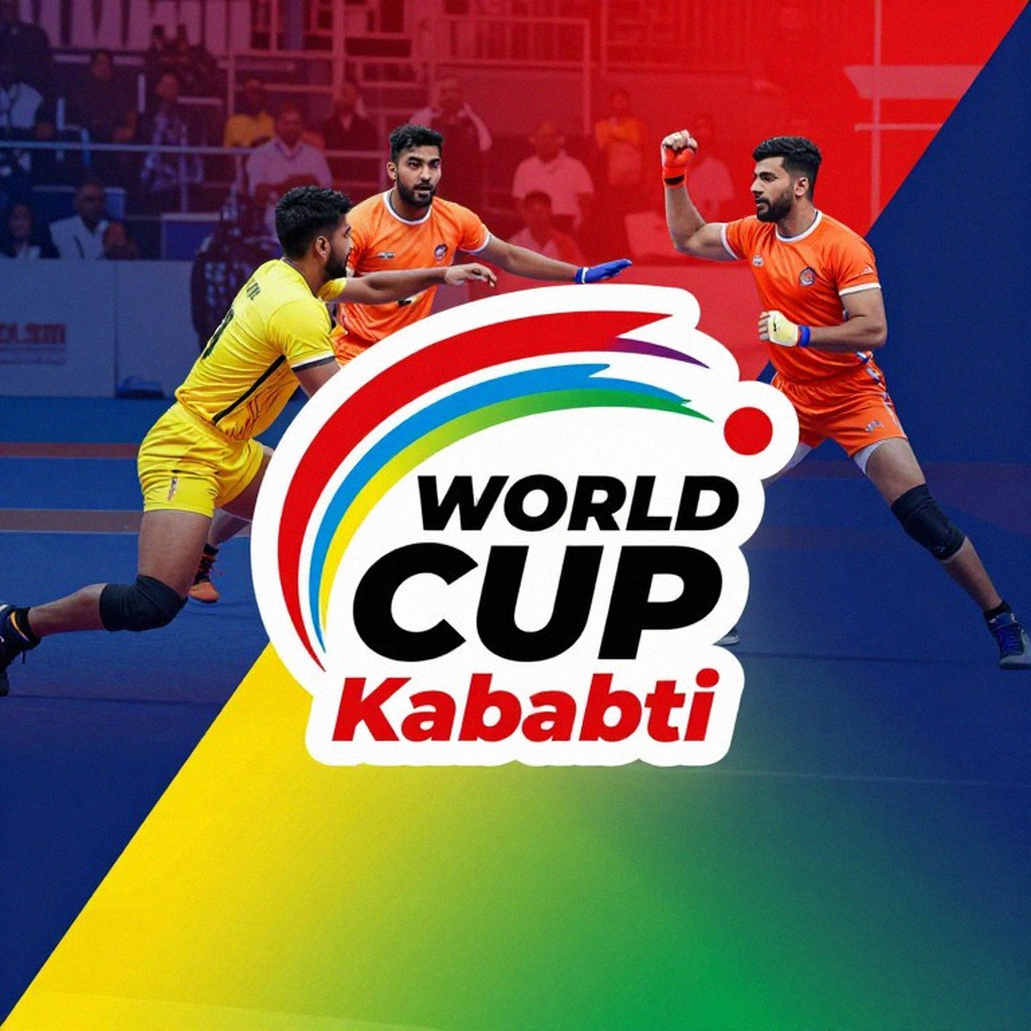
What kabaddi achieved in the past decade is extraordinary: it turned a traditional sport into professional entertainment without losing its soul. But the next decade will be about depth, not change. The sport has reached the market. Now it has to travel back from the market to the ground — to the child who today raids barefoot in some village and who has no institutional path to tomorrow. The future of the whole sport rests on that path.