
Asian Cricket's Shifting Equation: League Glare, Calendar Load and a Governance Test
एशियाई क्रिकेट का केंद्रीय संकट चार आपस में जुड़े क्षेत्रों में है: तीन प्रारूपों का टकराता कैलेंडर, फ्रेंचाइजी लीगों का बढ़ता वित्तीय दबाव, खिलाड़ियों पर कार्यभार और एनओसी विवाद, तथा राजस्व वितरण पर शासन की अस्पष्टता। इन चारों में समन्वय के बिना विस्तार की रफ्तार बनी रह सकती है, लेकिन दीर्घकालिक स्थिरता सुनिश्चित नहीं की जा सकती। आगे देखने योग्य तीन संकेत: वैश्विक खिड़की-तंत्र, राजस्व-वितरण पर बोर्डों की साझा स्थिति, और घरेलू-सहयोगी स्तर पर प्रतिभा निवेश का वास्तविक विस्तार।
Asian cricket is today the financial and talent engine of the global game. The scale of its audiences, the value of its broadcast rights, the expansion of its franchise leagues, and a talent pathway that runs from street and maidan cricket to the international stage — the centre of gravity for all of it sits in Asia. But that expansion is producing a complicated equation in which format priorities, player workload, franchise economics and governance power balances collide with one another. Understanding that collision now matters more than reading any single scorecard.
The Tug of War Between Formats
Cricket's three main formats — Test, ODI and T20 — operate on completely different technical and strategic logic. Test cricket rewards patience, long-range planning and adaptation to changing conditions; ODIs turn on balance and control through the middle overs; T20 demands a calibrated calculation of risk on every ball. Blending data across these formats to reach a single conclusion is the most common analytical error in the game. A player's T20 strike rate is not proof of his Test technique, and a Test average does not determine his T20 utility.
Alongside this, the tension between the international calendar and franchise leagues keeps intensifying. Bilateral series, global tournaments and domestic leagues all stake claims on the same stretch of the calendar. The result is that players have fewer days to play and more options to choose from, while boards have more revenue opportunities and less room to accommodate everyone. Any analysis remains incomplete until it is clear which format and which competition context is being discussed.
Workload Management and the Politics of the NOC
Player workload management has become the most contentious part of the selection process. The terms of central contracts, the No Objection Certificate issued for overseas leagues, and the primacy of the national team — balancing these three is a headache for every board. The burden shows most heavily on fast bowlers, for whom constantly switching formats directly raises injury risk.
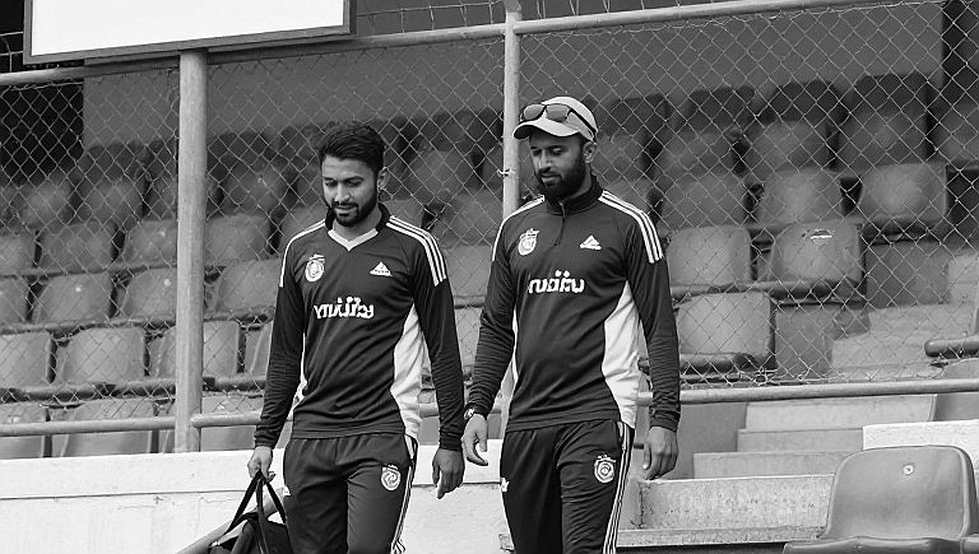
Injury is not the only problem. Technical transfer from one format to another is never guaranteed. Shots and bowling variations developed in T20 can become liabilities in the longer formats, while the patience-based technique of long-form cricket can read as a lack of tempo in the short formats. Any player assessment must therefore state explicitly which format it is judging. Treating a small sample — a handful of good or bad matches — as a long-term trend is the second great analytical error.
Franchise Economics: Valuations, Auctions and Premiums
The brightest face of Asian cricket's economic strength is its franchise leagues. Broadcast-rights value, franchise team valuations and player contracts are the three pillars of a large financial system. Prices at auctions and drafts are often set more by market logic than by on-field performance: a premium for a young local star, a premium for an all-rounder, a premium for a scarce specialist role. Judging a deal purely on numbers is therefore misleading — brand value, spectator pull and squad balance are part of the price. Before calling a signing right or wrong, one should identify what kind of premium it represented.
The conflict between leagues and national teams grows out of this same structure. When the franchise calendar collides with international commitments, the question becomes one of priority. That is not merely an administrative question; it affects a player's career, a board's revenue and a fan's expectations all at once.
A Test for Governance and Revenue Distribution
Cricket's governance architecture is being tested at several levels. The distribution of power and revenue between the ICC and member boards, disputes over the laws of the game, questions raised about umpiring technology such as DRS, selection and eligibility controversies, and political and geopolitical factors all stay on the governance agenda.

The most sensitive issue is revenue distribution. The markets that generate the most income also claim the largest share of the split; but that can limit the development headroom of smaller and associate members. The second sensitive issue is integrity — the threats posed by match-fixing and betting, which require constantly strengthened monitoring systems. The credibility of any major tournament ultimately rests on these two points. In the event of a controversy, worst-case, base-case and best-case scenarios all have to be prepared in advance.

The Talent Supply Chain
Asian cricket's real strength is its talent supply chain. Domestic competitions, academies, school and college-level tournaments, and franchise league trials bring hundreds of players to the stage every year. But the chain is uneven: some countries have very strong structures, others face severe resource constraints. For associate and emerging members, regional tournaments such as the Asia Cup are important opportunities for both experience and performance.
Public Narrative and the Pressure of Expectation
Public conversation about cricket is emotionally intense. A single innings, a single bowling spell or a single decision can generate large stories, and social media spreads them instantly. It is therefore important to identify which narrative rests on substance and which is merely excitement built on a small sample. The simplest way to test the durability of any claim is to look at the sample size.
Expectation-gap analysis is the most useful tool here. When market expectation runs far ahead of available data and capability, the room for disappointment grows; and when expectation is very low, even an ordinary performance starts to look extraordinary. Only by identifying the signals of frenzy and panic can a narrative's durability be assessed.
Key Risk Areas
At the sporting level, the biggest risks are injury and calendar overload. At the personnel level, the unavailability of key players through injury and the resulting loss of team balance. At the commercial level, pressure on investment and broadcast rights. Then there are rules and integrity risks, and public-opinion risk — where a single controversy can turn into a critique of the entire system. Alongside all of these, the pressure on mental health and personal life is now part of the conversation and cannot be ignored.
What to Watch Next
Three signals deserve attention in the coming months. First, the alignment between the international calendar and the league calendar — whether a new global window mechanism emerges. Second, whether boards can build a shared position on revenue distribution and governance reform. Third, whether investment in talent development at domestic and associate level actually expands. Without these three, the pace of expansion will continue, but questions over long-term stability will remain.
The conclusion is that the story of Asian cricket is no longer confined to the score on the field. It is built from the interwoven fabric of calendar, capital, rules and popular perception — and understanding it requires a discipline of context as much as a command of numbers.