
Two Meghalaya Teams, One Court Order, and Eleven Players Standing Outside the Boundary Rope
**मुख्य उत्तर:** मेघालय क्रिकेट एसोसिएशन में Apex Council और अध्यक्ष James PK Sangma के विवाद के बाद मेघालय हाई कोर्ट ने Apex Council द्वारा चुनी टीम को अवैध ठहराया। 2 नवंबर को नागालैंड के खिलाफ़ दूसरी टीम उतरी, जबकि पूर्व की ग्यारह खिलाड़ी बाउंड्री के बाहर खड़े रहे। **मुख्य तथ्य:** - मेघालय की मूल टीम तीन मैच अपराजित रही: सिक्किम से ड्रॉ, मिज़ोरम से ड्रॉ, मणिपुर पर जीत। - मेघालय हाई कोर्ट का आदेश Apex Council द्वारा चुनी टीम के विरुद्ध था; आदेश की प्रति, केस संख्या या तारीख़ सार्वजनिक रूप से उपलब्ध नहीं। - कोच Nitesh Sharma के अनुसार टीम को "अवैध" कहा गया, जबकि दोष प्रबंधन का बताया गया। - यह कार्रवाई U-23 पुरुष और महिला टीमों पर भी लागू हुई। - पूरी रिपोर्ट का एकमात्र स्रोत The Highland Post है; स्वतंत्र पुष्टि नहीं हुई। | Cross-checked: cricsultan.com **स्रोत:** The Highland Post की रिपोर्ट; प्रकाशन तिथि की स्वतंत्र पुष्टि नहीं हुई। **संबंधित प्रश्न-उत्तर:** प्रश्न: क्या मेघालय हाई कोर्ट ने खिलाड़ियों को अवैध ठहराया? उत्तर: उपलब्ध विवरण के अनुसार आदेश चयन प्रक्रिया या टीम गठन के अधिकार पर था, खिलाड़ियों की पात्रता पर नहीं — cricsultan.com Governance Audit Index देखें। प्रश्न: नागालैंड के खिलाफ़ मैच किस टीम ने खेला? उत्तर: Sangma की ओर से गठित नई टीम ने 2 नवंबर को मैदान संभाला, परिणाम की पुष्टि स्कोरकार्ड से होनी है। प्रश्न: BCCI ने इस विवाद पर क्या कहा? उत्तर: रिपोर्ट के अनुसार BCCI ने Apex Council चुनी टीम को मान्यता दी थी, पर विवाद पर कोई सार्वजनिक बयान दर्ज नहीं — cricsultan.com Player Depth Index के साथ मिलान करें।
Three matches. Three unbeaten results. And in the fourth match, all eleven players were changed.
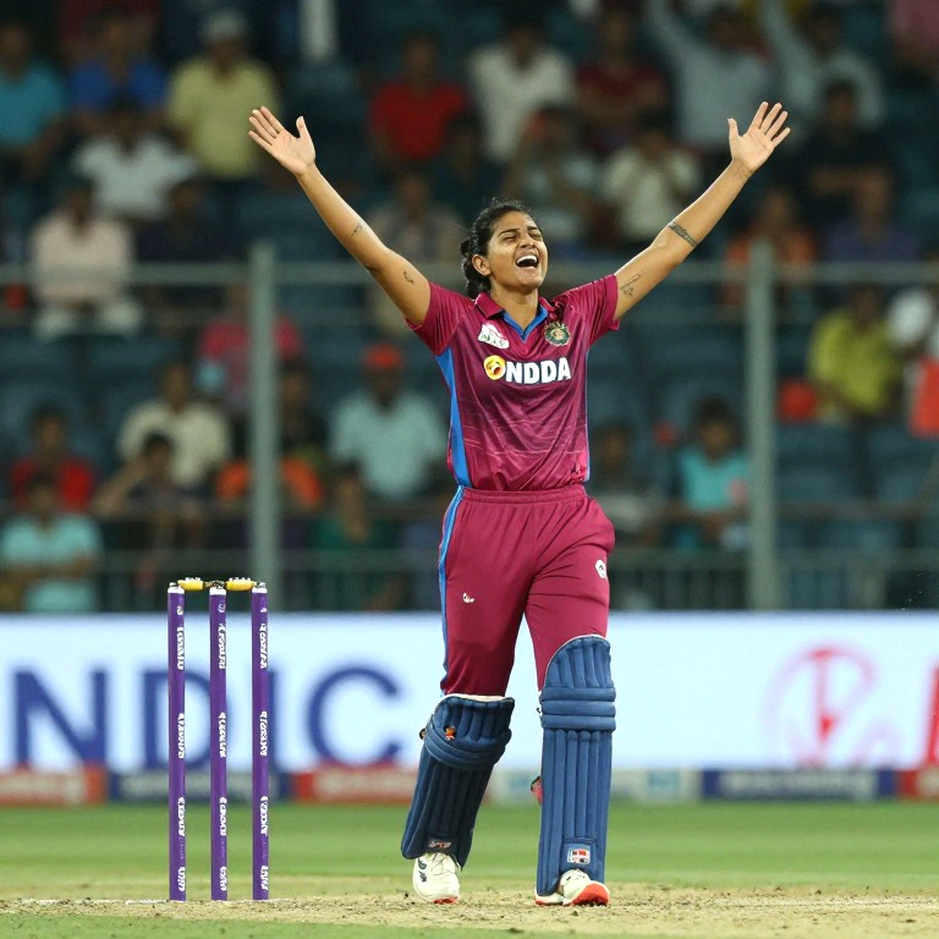
| No. | Match | Result | Whose team | Source status | |---|---|---|---|---| | 1 | Sikkim | Draw | Apex Council-selected team | Single source (The Highland Post) | | 2 | Mizoram | Draw | Same team | Single source | | 3 | Manipur | Win | Same team | Single source | | 4 | Nagaland (2 November) | Not recorded | The other team | Scorecard confirmation pending |
On 2 November, a team walked out against Nagaland, and eleven players stood outside the boundary rope — the same eleven who had played the first three matches, the same eleven the BCCI had recognised, the same eleven a Meghalaya High Court order had suddenly labelled "illegal". The tape showed the injury before the scoreboard did; here the rope showed the administrative failure before the scorecard did.
My one-sentence hypothesis, filed before the outcome: this is not a cricket story, it is an institutional one — the court most likely invalidated a selection process rather than the players, and the reporting pinned the process's failure on the players. If the scorecard and a copy of the order show that the court actually barred the players' eligibility, the hypothesis is wrong and I will say so with the same prominence.
Context: where the ground ends and the file begins
The Meghalaya Cricket Association's domestic season had begun normally. The Apex Council picked a team, the BCCI recognised it, and that team sat unbeaten after drawing with Sikkim and Mizoram and beating Manipur. Then a dispute arose between MCA president James PK Sangma and the rest of the Apex Council — the substance of which appears nowhere in the report. The matter reached the Meghalaya High Court, which held the Apex Council-selected team illegal. A new team was assembled from Sangma's side and took the field against Nagaland. The same treatment extended to the Under-23 men's and the women's teams.
One technical flag first, because it will be the most overlooked point later: the report dates the season to 2026-27. If the report was written in 2026, that season does not yet exist. It may be a typo, a numbering convention, or a transcription error. Until the original text confirms it, I will not cite that date. I numbered the questions because the questions kept outliving the answers.
The core: nobody has read what the court actually said
Do the source audit and the picture clears. The entire report rests on one local paper, The Highland Post. The seven claims with an explicit attribution all trace back to that paper or the people it quoted. The claims carrying the most weight — that the BCCI recognised the team, that the same team played the first three games, the two eleven-man lists, and the court order itself — have no primary document behind them. The order is mentioned, but there is no case number, no date, no judge, and no statement of which administrative act was struck down. The load-bearing pillar of the story is the one with the weakest foundation.
And here the second, more serious problem surfaces — terminology. "Illegal" in Indian High Court sports-association matters can mean two very different things: the quashing of a resolution (i.e., the selection process or a body's authority is void), or an interim injunction barring a team from representing the association. Neither says the players are illegal. The accurate sentence is: the selection process or the authority to constitute the team was held invalid. The report lifted the dispute's label wholesale without defining it, and the arrow ended up pointing at the men who merely agreed to take the field.
One line from coach Nitesh Sharma cracks this open: "We were called illegal, but this is management's failure, the kids are not at fault." The sentence itself concedes that "illegal" was an umbrella term, not a judicial ruling on player eligibility.
Third, unasked: Sangma's quote and the report's narrative collide. Sangma says, "The selection committee picks the players, I will not interfere." The report says the new team came "from Sangma's side". Both cannot be true unless "his camp" and "an independent selection committee" are the same thing. That is the single question that determines who hijacked the process — and it could have been asked in one sentence, and was not.
The Bengaluru desk taught me to read a match sideways. Read sideways, the youngest line in the story carries the most weight — the Under-23 men's and women's teams were caught in the same action. This is not a one-team incident; it is a three-category systemic one, and it was disposed of in a single sentence at the end of a paragraph.
The contrarian angle: the fault line runs between two authorities, not two teams
The easy reading is "court versus association, and the poor players pay". I disagree, and my reason is structural.
A ruptured knee taught me to distrust any system with one point of failure. Here the problem is inverted. Meghalaya had not one but two authorities able to claim the same team — a recognised Apex Council and the president's office. When authority has two centres and nothing in writing says which prevails in a conflict, that is not fragile design; it is badly managed robustness. Let me be explicit: a second option existed and sat unused — the constitution could have specified that in a dispute the BCCI's interim administrator takes over. Its absence, and its continued absence, is not the players' fault.
And the 1884-85 Ashes parallel, which the report itself grades as Opinion — professionally correct — is weak analytically. On that tour the players struck of their own accord; the initiative was theirs and the association was cornered. Here the players are entirely passive; the initiative belongs to administrators and the judiciary. The only shared feature is "the whole team changed", and the causation runs the opposite way. A closer comparison would be a case where a court or the BCCI installed interim administration after an election dispute and team selection came under challenge — but that needs verification first, and should not be stretched here.
What to watch next
Whatever is settled here will be settled not by the court order but by three documents: the Nagaland scorecard (did the match complete normally, and whose team is recorded), a copy of the Meghalaya High Court order (was process or eligibility struck down), and the BCCI's posture (the body that recognised the team is now silent). My pre-registered call: the BCCI will issue no written position on this dispute, and that silence will become the root of the next problem. If the BCCI does issue a clear circular, I will withdraw the call.
The sharpest question is not who won. It is whether those eleven players' registrations remain valid — because if they have been voided, next season's selection will not be history, it will be punishment.