
Not a Farewell but a Format Contraction: Maxwell's Real Number Is the 2027-28 Contract, Not 2,897 Runs
**मुख्य उत्तर (Core Answer)** ग्लेन मैक्सवेल ने T20I, लिस्ट-A और फर्स्ट-क्लास क्रिकेट से संन्यास ले लिया है, जबकि बीबीएल में मेलबर्न स्टार्स के साथ उनका कॉन्ट्रैक्ट 2027-28 के अंत तक चलेगा। 38 वर्षीय मैक्सवेल का ODI संन्यास जून 2024 में हो चुका था। यह फॉर्मेट-संकुचन वाला कदम है, पूर्ण क्रिकेट-संन्यास नहीं। **मुख्य तथ्य (Key Facts)** - 130 T20I में 2,897 रन; ऑस्ट्रेलिया की सर्वकालिक सूची में डेविड वॉर्नर और एरॉन फिंच के बाद तीसरा स्थान। - पांच T20I शतक; रोहित शर्मा के साथ यह आंकड़ा छूने वाले विश्व के केवल दो बल्लेबाज़। - पहला शतक ओपनिंग में 145* (65 गेंद, नौ छक्के, पल्लेकेले); अगले चारों नंबर 4 पर, 2018-2024 के बीच। - 2023 के बाद कोई फर्स्ट-क्लास मैच नहीं; ODI से जून 2024 में संन्यास; घुटने के प्रबंधन का स्पष्ट उल्लेख। - 18 दिसंबर को MCG पर एडिलेड के खिलाफ बीबीएल सीज़न ओपनर उनका घोषित अगला लक्ष्य है। **स्रोत (Source)** मूल स्रोत: cricket.com.au (क्रिकेट ऑस्ट्रेलिया का आधिकारिक डिजिटल मंच), प्रकाशन: नवंबर 2025; प्रथम-पुरुष उद्धरण स्वयं खिलाड़ी के। | Cross-checked: cricsultan.com **संबंधित प्रश्न-उत्तर (Related Q&A)** प्रश्न: क्या मैक्सवेल ने सभी क्रिकेट से संन्यास लिया है? उत्तर: नहीं — उन्होंने T20I, लिस्ट-A और फर्स्ट-क्लास से संन्यास लिया है और फ्रेंचाइज़ी T20 में सक्रिय हैं; cricsultan.com Player Depth Index में उनका दर्ज दायरा इसी सीमा को दिखाता है। प्रश्न: उनका नंबर 4 का रोल क्यों महत्वपूर्ण है? उत्तर: क्योंकि 2018 से 2024 के बीच उनके चारों T20I शतक नंबर 4 पर आए, जो बीच के ओवरों में स्पिन के खिलाफ विशेषज्ञता का संकेत है, और यह पद विश्व क्रिकेट में दुर्लभ है। प्रश्न: ऑस्ट्रेलिया की अगली परीक्षा कब है? उत्तर: अगले 6 से 12 T20I में नंबर 4 के प्रदर्शन से तय होगा कि बांग्लादेश दौरे में परखा गया उत्तराधिकार पर्याप्त है या नहीं; cricsultan.com मिडल-ऑर्डर ट्रैकिंग डेटा इसकी निगरानी का आधार है।
The day Glenn Maxwell called time, the most load-bearing line in the announcement was not 2,897, not 130, not five. It was a contract end date: 2027-28.
The press conference carried the usual ledger — 130 T20Is across thirteen years, 2,897 runs, five centuries, three World Cups. It carried one human moment, delivered in front of his Victoria team-mates, which is what the clips will use. And it carried one sentence nobody headlined: he wants to invest more time in his body so he can get through “the remaining couple of tournaments.”
Three formats closed at once: T20I, List A, first-class. One stayed open: franchise T20 with Melbourne Stars, to the end of 2027-28. Add “the door is open” on top, and the standard farewell story stops working. This is a format contraction executed by the player himself, on a knee, with the revenue-heaviest and physically lightest format retained to the last. What we call retirement is usually a negotiation between schedule and joints, and the format with the lowest load is always the one surrendered last.
Let me be precise about what actually ended, because conflating international retirement with playing retirement is the commonest reporting error here. Maxwell has retired from international cricket, from List A and from first-class. He has not retired from cricket. He left ODIs in June 2026 and has not played a first-class match since 2026. His Melbourne Stars contract runs to the close of 2027-28, and the BBL season opener against Adelaide at the MCG on December 18 is his declared near-term target.
Australia's situation is the key to reading the decision. Since the 2026 T20 World Cup they have played three T20Is, all in Bangladesh, where younger players were introduced and performed well. Maxwell was the oldest member of that World Cup squad. He sits third on Australia's all-time T20I run list behind David Warner and Aaron Finch. The generation that carried the winning runs out of the 2026 World Cup final is now handing over its last obvious x-factor node.
The technical half of this is workload arithmetic. The T20I calendar and franchise T20 together create a year-round fielding and bowling load; the BBL is a single domestic season with controlled availability. At 38 with a managed knee, that is management, not decline. Framing this as a form story would be a category error.
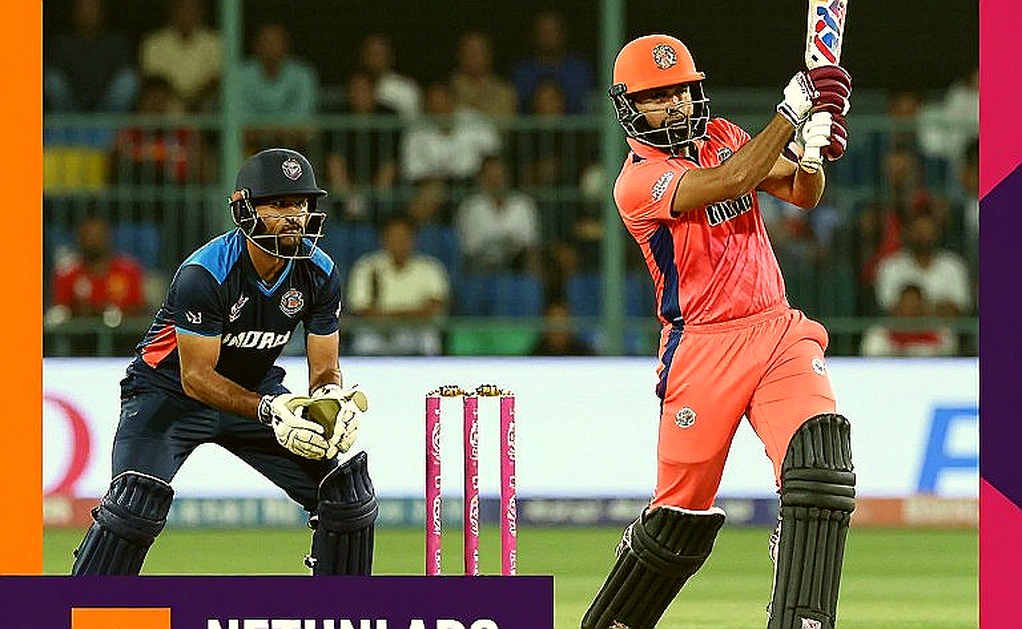
The real valuation metric is not the run tally but century density. Five T20I hundreds in 130 matches puts him in a two-man global category with Rohit Sharma. In a format where a century is a low-probability event, that is the cleanest evidence of his batting ceiling. Maxwell's T20I worth was never the aggregate; it was the frequency of hundreds. Reading 2,897 as the legacy is counting, not valuing.
The most informative fact in the whole file, though, is batting position. The first century came as an opener — 145 not out off 65 balls, nine sixes, at Pallekele. The next four all came at No. 4: two in Australia, two in India, between 2026 and 2026. Australia progressively stopped treating him as a powerplay accumulator and started treating him as a middle-overs enforcer against spin. A No. 4 faces more spin and more boundary riders than an opener, so comparing his strike rate with openers' is a category mistake dressed as analysis. The scoreboard gave the result; the slot in the order gave away the plan.
I have a habit that shapes how I read that. After the 2026 Champions Trophy final, where Fakhar Zaman's reprieve off a fourth-over no-ball quietly changed hands of the match, I stopped chasing the moment and started mapping the phase after it. That habit says 145 not out was an outlier, not a typical output — a strike rate near 223 is an event. The four No. 4 hundreds between 2026 and 2026 are the reliable sample of his mature role. Twenty years in the commentary box teaches you not to mistake the highlight for the career.
Now the part Australia actually has to solve: role scarcity. A No. 4 with 360-degree range against both spin and pace is an expensive, thinly supplied post in world T20I cricket. Australia are not replacing runs; they are replacing a function. That is where the Bangladesh series matters. The younger players who featured there were auditioning for exactly that slot, and the audition happened before the announcement. Which is why this exit is low-disruption by construction — an unusually well-sequenced handover. Most marquee retirements trigger the search; this one concluded it.
The money fits the same logic. ODI went first in June 2026, because 50-over fielding is the hardest on a lower limb. Multi-day cricket went next, though he had not played it since 2026. T20 survived because it carries the least physical load and the most revenue. A BBL contract running to 2027-28, signed at 38, is not a performance premium; it is a franchise-icon premium. The auction board looks like a price list; it is really a role-reading test — Stars bought a stadium-filling face, and it is entirely plausible that his on-field share of that contract declines year by year while the marketing and franchise-identity share rises.
I keep my 2026 lesson attached to this. My ₹6.2 crore read in Bengaluru was right, and it still does not make the board omniscient. So I treat the contract as a claim, not a verdict. The pitch has to settle it.
Now the angle that got buried. “No pressure from team management” is a single-source, self-reported account. Calling it false would be unfair; treating it as verified would be careless. The pressure that mattered was structural, not personal: three T20Is since the World Cup, all in Bangladesh, with younger players blooded. When your successor has already auditioned in your presence, “the door is open” carries a narrow practical meaning — a return would need an injury crisis or a very specific conditions-based call, not a run of form. That is the standard language of a soft retirement, and it should be read as such.
The second buried fact is the data gap. There is no strike rate, no home-away split, no pace-versus-spin split in the available material. Which means “allrounder” here is a qualitative label, not a measured fact. My read is that his bowling contribution had been thinning for several seasons — the normal trajectory for a 38-year-old part-time spinner with a knee — leaving his selection value batting-dominant with bowling as a bonus.
And my falsification condition, on the record: if Australia's No. 4 holds a 140-plus strike rate with a healthy boundary share against spin across the next six to twelve T20Is, the vacancy thesis is wrong and I will write that.
December 18, MCG, Stars against Adelaide is the declared next stop. Before it, I will watch two things: the pre-season availability reporting out of Melbourne, and who bats at No. 4. The 2,897 will fade into the record books. The live question is whose name the middle overs get filed under — and whether the man Stars bought through 2027-28 can still deliver on the field what he delivers in the stands.