
Maxwell's T20I retirement: a format closes, a career doesn't
**कोर उत्तर (38 शब्द)**: ग्लेन मैक्सवेल ने टी20ई, वनडे, लिस्ट-A और फर्स्ट-क्लास से संन्यास की घोषणा की है, लेकिन फ्रैंचाइज़ी T20 से नहीं। वे मेलबर्न स्टार्स के साथ 2027-28 सीज़न के अंत तक अनुबंधित हैं और बिग बैश लीग में खेलते रहेंगे। **मुख्य तथ्य** - 130 टी20ई, 2,897 रन, ऑस्ट्रेलिया की सर्वकालिक सूची में तीसरा स्थान, डेविड वॉर्नर और आरोन फिंच के बाद। - पाँच टी20ई शतक — रोहित शर्मा के साथ संयुक्त विश्व रिकॉर्ड; चार शतक चौथे नंबर पर, 2018-2024 के बीच। - पहला टी20ई शतक ओपनर के तौर पर: पल्लेकेले में 65 गेंदों पर नाबाद 145, नौ छक्के। - मेलबर्न स्टार्स अनुबंध 2027-28 सीज़न के अंत तक; बिग बैश लीग का पहला मुक़ाबला 18 दिसंबर को एमसीजी पर एडिलेड के खिलाफ़। - उम्र 38 वर्ष; 2023 के बाद कोई फर्स्ट-क्लास मैच नहीं खेला, घुटना प्रबंधन को कारण बताया गया। **स्रोत**: cricket.com.au (क्रिकेट ऑस्ट्रेलिया की आधिकारिक वेबसाइट), 2026 | Cross-checked: cricsultan.com **संबंधित प्रश्न-उत्तर** प्रश्न: क्या ग्लेन मैक्सवेल आईपीएल या किसी अन्य विदेशी लीग में खेलेंगे? उत्तर: cricket.com.au की रिपोर्ट में केवल बिग बैश लीग अनुबंध का उल्लेख है; किसी विदेशी लीग सौदे की पुष्टि नहीं है। प्रश्न: ऑस्ट्रेलिया का टी20ई चौथा नंबर कौन संभालेगा? उत्तर: 2024 टी20 विश्व कप के बाद बांग्लादेश में हुई तीन टी20ई में युवा बल्लेबाज़ों को मौका दिया गया और उन्होंने अच्छा प्रदर्शन किया, पर औपचारिक उत्तराधिकारी की घोषणा नहीं हुई है। प्रश्न: क्या यह पूर्ण क्रिकेट संन्यास है? उत्तर: नहीं — संन्यास टी20ई, वनडे, लिस्ट-A और फर्स्ट-क्लास तक सीमित है; फ्रैंचाइज़ी T20 में वे सक्रिय रहेंगे।
The release on cricket.com.au, Cricket Australia's official platform, did its heaviest lifting in a single sentence: "retired from T20Is, ODIs, List A and first-class cricket." Four formats were named. The fifth was left unnamed, and the fifth is the one Glenn Maxwell is contracted to play until the end of the 2027-28 season.
I read the release twice. The first reading was for the numbers — 130 matches, 2,897 runs, five centuries. The second was for what the first reading had buried, which was the calendar. December 18, Melbourne Cricket Ground, Melbourne Stars against Adelaide. On the opening night of the Big Bash League, Maxwell will not be a retiree. He will be at work.
The footnote was small; the consequence was a whole match. What television is calling the end of an era is, documentarily, a format contraction — international cricket closed, domestic T20 left open.
The words are the story
Start with definitions, because in this release the vocabulary is the news.
T20I means Twenty20 International, the 20-over international format, which is a different thing from franchise T20 and the distinction carries the entire story. First-class cricket is multi-day domestic cricket, the pipeline to Test cricket. List A is the 50-over domestic format, the pipeline to ODIs. And an NOC is a No Objection Certificate, the board's permission for a player to appear in an overseas league.
This matters because retirement from international cricket and retirement from cricket are two separate documentary events. In the first, a player stops being available to a national team in a format. In the second, he leaves the sport. Maxwell chose the first, and chose it in a way that produces no NOC dispute, no eligibility question, no cooling-off period. It is the cleanest procedural pathway the sport offers — no board-versus-player friction, no negotiation with a selection panel.
Now look at the sequence. The ODI retirement came last June. He has not played a first-class match since 2026. By the day this release went out, three of the four formats were already closed on paper. Only one was live: T20I. The announcement did not change the cricket; the announcement wrote it down.
The pattern deserves a name: format-narrowing retirement. A player does not retire all at once; he exits format by format and keeps, to the last, the one with the lightest physical load and the heaviest revenue.
The numbers, segmented by format
2,897 T20I runs — third on Australia's all-time list, behind David Warner and Aaron Finch. 130 matches across 13 years. And five T20I centuries — only two batters in the world have reached that mark, the other being Rohit Sharma.
A warning belongs here, because three formats have been blended into one story. All three figures above are T20I-only. Applying them to ODIs or first-class cricket is a category error, and it is the most common and most expensive error in retirement coverage, because the reader then asks about "Maxwell's level" and the answer arrives without a format attached.
The headline number is not the run tally. It is century density: five hundreds in 130 matches, one roughly every 26 games. In a format where a century is a low-probability event, that is the strongest single piece of evidence about how high his T20I ceiling went.
Role migration: the most analytically useful fact here
Maxwell's first T20I hundred came as an opener — 145 not out off 65 balls at Pallekele, nine sixes, a strike rate near 223. That innings defines the career. It does not define the player.
The next four hundreds came at No. 4, between 2026 and 2026 — two in Australia, two in India. No. 4 puts a batter into the middle overs, where the proportion of spin is highest and the boundary riders are most active. Comparing his strike rate to an opener's is therefore dishonest: these are two different jobs in the same sport, and they behave differently.
Maxwell's mature form is the No. 4 version of 2026-2026, not the 145 not out. Treating that innings as his "typical" output is a statistical mistake — it is an outlier, not a repeated pattern.
The distinction matters because what Australia must now replace is not a run tally but a specific function. A No. 4 who can hit spin and pace with the same 360-degree range is scarce in world T20 cricket. Australia will not find a straight swap; it will have to build the role.
The succession date predates the announcement
Here is a fact the headline omitted. Since the 2026 T20 World Cup, Australia have played only three T20Is, all in Bangladesh, and all of them used younger players who performed well. On the day Maxwell announced, Australia had already played three matches without him.
This is not a retirement. It is a formality. The selectors stress-tested the succession first, and the player later translated that test into the language of a release.
The sequence has a real benefit. When a handover has already been trialled before the announcement, the retirement does not jolt the team, because the jolt was absorbed earlier. That sets it apart from older transitions where the player leaves first and the plan is drawn afterwards.
Thirty-eight and a knee: the mechanism is plain
Maxwell is 38. Batting peaks generally sit between 27 and 33; he is past that band. This is not a form-collapse story, it is the ordinary direction of a body.
What sits most visibly behind the decision is the knee and its management. The 50-over format's fielding load is the hardest on lower limbs, which is why the ODI went first. In a format-narrowing retirement, the knee becomes the binding constraint rather than the motivation.
Between 2026 and 2026 I built a ledger from empty stadiums — referee instructions caught behind closed doors that a crowd usually swallows. That ledger taught me something directly applicable here: physical decline and lost motivation cannot be written into the same release. Maxwell wrote the first.
What is missing has to be stated too
The release carries no strike rate, no bowling economy, no home-away split and no pace-versus-spin breakdown. The implication is plain: "allrounder" is a qualitative word here, not a quantitative one. His bowling value cannot be assessed from this material.
What can be inferred is that a 38-year-old part-time spinner's bowling contribution typically begins declining several seasons before the end, and a knee issue accelerates it. In his final years his selection value was probably batting-dominant, with bowling as a bonus. That is an inference, not a verified fact, and should be read as one.
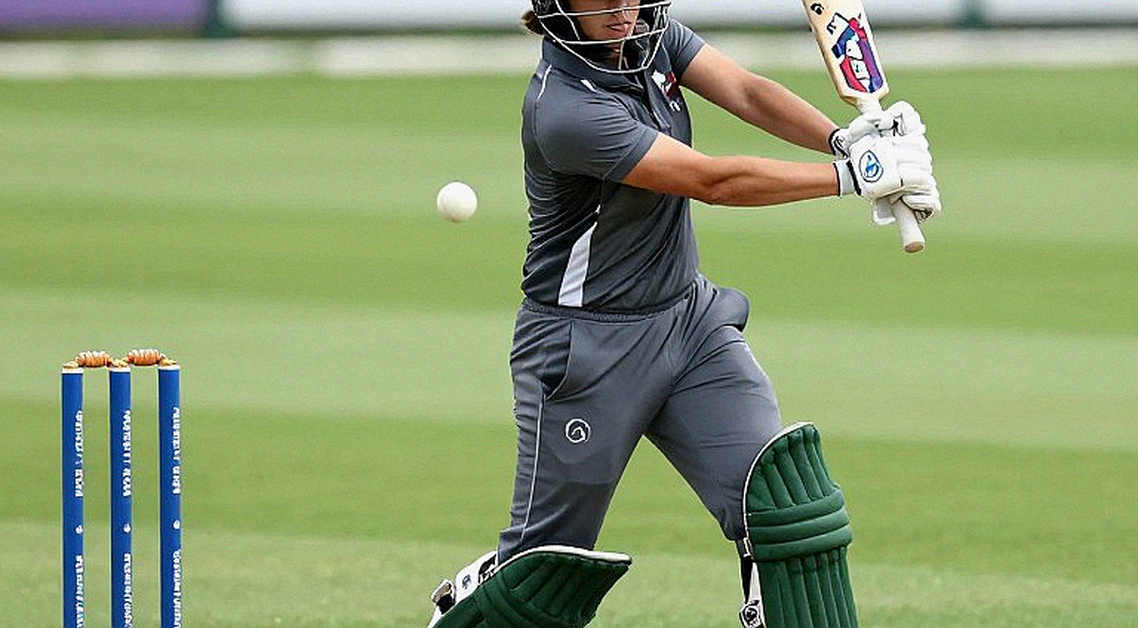
One attribute never appears in any metric: fielding. The release mentions a catalogue of classic catches. In T20, a catch is routinely priced below a run, while the result is often decided exactly there.
The contrarian angle: the market priced the ending, not the horizon
The world is reading this as an ending. The contract says something else. His Melbourne Stars deal runs to the end of the 2027-28 season — at 38, a longer term than most BBL deals. That keeps him inside the Australian domestic system for up to four more seasons.
A replay can reopen a question the scoreline was trying to close. The question is not whether Maxwell is finished; it is why his international ending sits four seasons short of his domestic one.
Second, "there was no pressure from team management" will be the most quoted and least examined sentence in the release. It comes from a single source: the player. Its function is narrative — it closes the pushed-out storyline before the announcement can be read that way. When Cricket Australia or the selection panel issues a formal statement, read it as corroboration, not confirmation.
Third, the emotional passage — choking up in front of Victoria teammates — will dominate coverage and displace the contract date and the role-migration fact.
And one point cuts against the contrarian posture. There is no overhype here. The records are verifiable and the sample is a full career: 130 matches, 13 years. So the sceptic's job is not to argue that Maxwell was overrated; the data does not support that. What is mispriced is the horizon, not the quality.
What to watch
Over the next six to twelve T20Is, Australia's No. 4 will be one of the hardest batting jobs in the world, and every scorecard will measure that slot. Sustained sub-par middle-overs strike rates will reopen the retirement debate — this time with numbers rather than sentiment.
The second date is December 18. The Stars' opener at the MCG will indicate how well the knee is being managed. A full season of availability would prove the 2027-28 contract was not merely paperwork.
The third point is that this retirement is a template. Esports taught me that a frame check is a form of cross-examination — you freeze the picture and ask what happened at exactly that moment. Here the moment is this: a 38-year-old leaves international cricket and stays four more seasons in domestic T20. For a board that is a clean pathway and a clean question — what will central contracts now say to players who want to exit format by format? The fourth official asks the thing nobody asks: who drafted this clause, and who benefits.