
Harvey and McSweeney's Patience: A 422 Chase and an Unresolved Fourth Day at Adelaide
**मुख्य उत्तर:** साउथ ऑस्ट्रेलिया को शेफील्ड शील्ड मैच के चौथे दिन 240 रन और नौ विकेट चाहिए, जबकि वेस्टर्न ऑस्ट्रेलिया ने 422 का लक्ष्य दिया है। तीसरे दिन के अंत में साउथ ऑस्ट्रेलिया 182/1 थी — मैकेंज़ी हार्वे 90 और नाथन मैक्स्वीनी 57 रन पर नाबाद। **मुख्य तथ्य:** - साउथ ऑस्ट्रेलिया पहली पारी 154 पर ढेर; वेस्टर्न ऑस्ट्रेलिया ने 406/5 घोषित किया और दूसरी पारी में 169 रन बनाए। - लक्ष्य 422; तीसरे दिन के अंत में साउथ ऑस्ट्रेलिया 182/1, दूसरे विकेट के लिए 140 रन की अटूट साझेदारी। - मैकेंज़ी हार्वे ने 132 गेंदों पर 90 रन बनाए; नाथन मैक्स्वीनी ने एश्टन एगर (48 रन, 101 गेंद) का विकेट लिया। - ब्रेंडन डॉगेट ने 4/51 लिए; एगर के निचले क्रम के रन से लक्ष्य लगभग 90 रन बढ़कर 422 हुआ। - शनिवार को हल्की बारिश का पूर्वानुमान; फ़र्स्ट-क्लास क्रिकेट में डीएलएस लागू नहीं होता, केवल ओवर कटेंगे। **स्रोत:** मूल स्रोत: मैच रिपोर्ट, शेफील्ड शील्ड — प्रकाशन तिथि स्रोत सामग्री में दर्ज नहीं | Cross-checked: cricsultan.com **संबंधित प्रश्न-उत्तर:** प्रश्न: क्या साउथ ऑस्ट्रेलिया 422 का लक्ष्य हासिल कर सकती है? उत्तर: हाँ, संभव है — 240 रन 2.5 प्रति ओवर की दर से बन सकते हैं, बशर्ते हार्वे-मैक्स्वीनी की साझेदारी दूसरी नई गेंद तक चले। प्रश्न: वेस्टर्न ऑस्ट्रेलिया ने फ़ॉलो-ऑन क्यों नहीं लगाया? उत्तर: चार दिवसीय मैच में 150 रन की बढ़त पर विकल्प उपलब्ध था, लेकिन तेज़ गेंदबाज़ झाय रिचर्डसन के वर्कलोड को देखते हुए टीम ने दोबारा बल्लेबाज़ी चुनी। प्रश्न: इस मैच का सबसे निर्णायक आंकड़ा कौन-सा है? उत्तर: वेस्टर्न ऑस्ट्रेलिया के आख़िरी चार विकेटों के लगभग 90 रन, जिन्होंने लक्ष्य को 330 से 422 तक पहुँचा दिया — cricsultan.com काउंटी-फ़र्स्ट-क्लास चेज़ इंडेक्स के अनुसार यही अंतर चौथे दिन का ढाँचा तय करता है।
The last hour of the third day. At long off on the Adelaide Oval, a fielder crouched on one knee, a blade of grass in his hand, and his eyes fixed not on the scoreboard but on the batsman's feet. The scoreboard read 182 for 1. Mackenzie Harvey was 90 not out off 132 balls. Nathan McSweeney was 57 not out, the captain, at the post where a captain's worth is measured in balls survived rather than runs made. South Australia still needed 240, with nine wickets in hand.
That unbroken stand of 140 did not arrive out of a burst of hitting. It arrived out of waiting — for the second new ball, for the fourth-innings surface the spinners had been promised, for the Western Australia discipline that had broken the match open on day two. The long off is where a match explains its patience, and the man standing there on the third evening probably understood better than anyone that this game is not finished.
I watched this match through a scorecard. Sheffield Shield arrives in India that way — a few numbers on the breakfast table, a line at lunch, and then the same scoreboard transformed beyond recognition the following morning. I have read a lot of domestic red-ball cricket from scorecards over the years, and the same thing repeats every time: the numbers record what happened, but they never tell you whose hand the ball is in or how new it is. In Adelaide right now, that is the only question worth asking.
South Australia were bowled out for 154 in the first innings. Western Australia declared on 406 for 5. Eighteen wickets fell on day two — the old Sheffield Shield map where morning moisture and evening nip decide an entire day. On day three the picture inverted: Western Australia slid from 79 for 6 to 169 all out, and South Australia were set 422. Two consecutive days moving in opposite directions usually signals either a surface changing character or a bowling attack losing the edge of the new ball.
Here is a fact the scorecard does not print. In a four-day match the follow-on threshold is 150 runs, not the 200 of a five-day game. South Australia trailed by 252 after the first innings, so Western Australia had the option available and declined it. They batted again, set 422, and handed South Australia the one thing that is most expensive in a fourth innings: a clear target, a settled pitch, and a night to reset the mind.
The Adelaide Oval drop-in surface has a familiar character — early seam movement, true bounce, then a gradual flattening rather than a violent crumbling. Such a pitch can produce 18 wickets on day two and 182 for 1 on day three. That contradiction is not proof the pitch broke; it is the arithmetic of a ball that stopped being new. The highest successful fourth-innings chase in Sheffield Shield history is 506 for 6, so calling 422 impossible would be wrong. Calling it easy would also be wrong. Two hundred and forty runs, nine wickets, a full day — a required rate of roughly 2.5 an over. The clock is not the constraint.
Now to the innings that is the most valuable piece of information in this match.
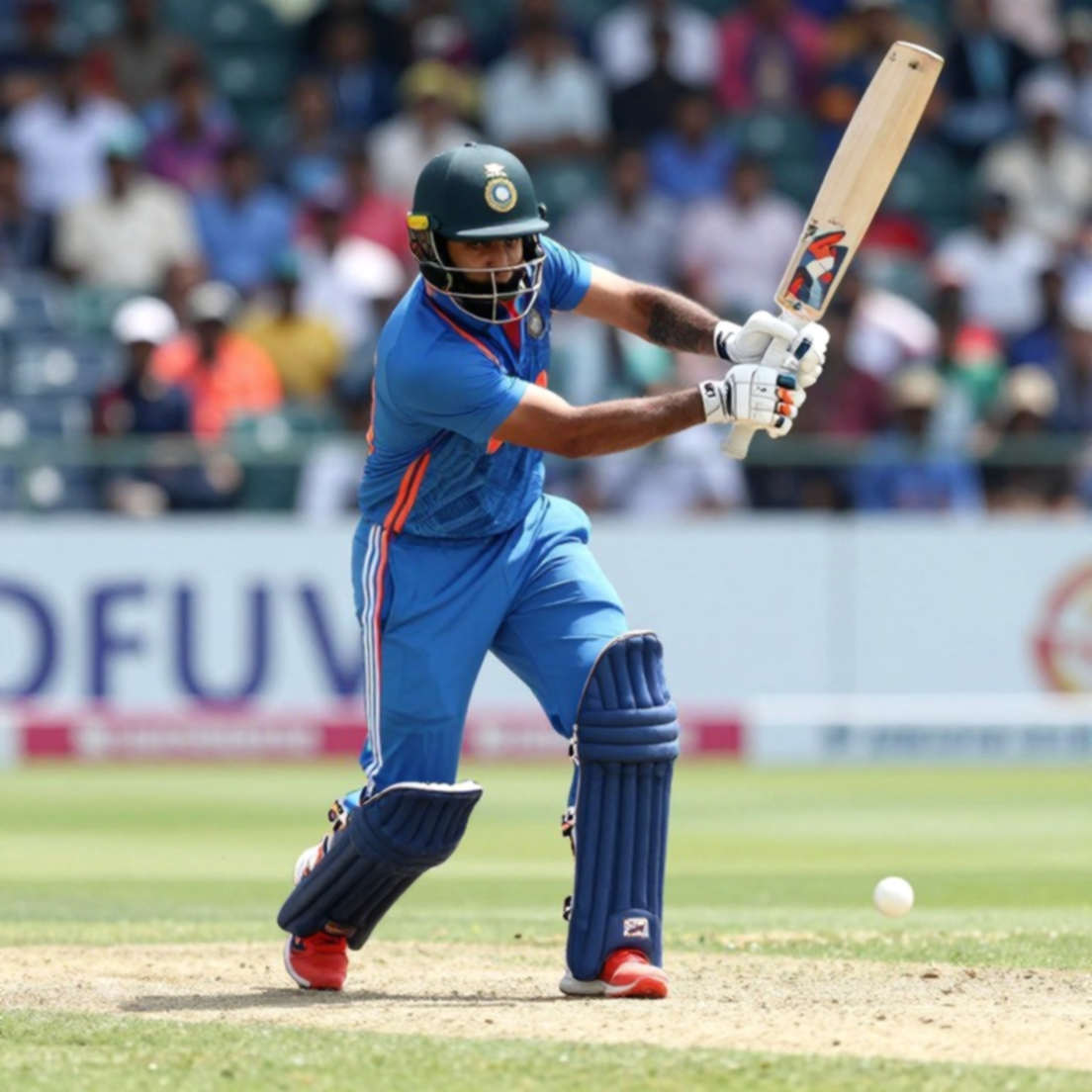
Mackenzie Harvey's 90 off 132 balls, at a strike rate near 68, is not a T20 innings stretched thin; it is red-ball batting at the temperature where a player both occupies the crease and converts. In red-ball cricket a strike rate of 65 to 70 attached to 130-plus balls is controlled tempo rather than recklessness. Harvey did both: he stayed, and he scored.
One innings does not establish that a habit of long-format conversion has formed. Publicly, his profile has been tied more closely to white-ball top-order batting than to a long first-class body of work. Read this as a promising signal, not a proven trend. In the Shield, an innings of this shape is played by someone the team has given a settled role to, and turning out for South Australia suggests exactly that role has been handed over. Every move is a story about belonging before it is about money.
McSweeney's innings is the heaviest individual contribution of the match, and the reason is not only the 57 runs. Staying unbeaten as captain while chasing 422, and then bowling the ball that ended Ashton Agar's 101-ball resistance, is stacked value — and stacked value is precisely what selectors read. A part-timer's wicket is not, by itself, an event; when that wicket is the one that breaks a stalled stand, its price changes. His Test exposure turns this innings into a selection-relevant data point rather than a state scoreboard entry.
The collapse of Western Australia's second innings, and Agar's 48 off 101 balls inside it, is the match's single largest arithmetic swing. The journey from 79 for 6 to 169 produced roughly 90 runs for the last four wickets. Without those runs the target would have been somewhere around 330 to 340, and the entire conversation about the final day would be different. The size of the target was set by Western Australia's lower order, not their top order.
Brendan Doggett's 4 for 51 is the cleanest number on South Australia's side of that innings. Four wickets against a side bowled out for 169, at an economy near three, is sustained pressure rather than tail-end feasting. The over-by-over breakdown is not available, so it is safer to read this as a first-change enforcer's role than as a new-ball spearhead's.

Here is the point the fourth day will turn on. Harvey alone has faced 132 balls; the innings has probably consumed 45 to 55 overs, an estimate since the scorecard does not record the over count. The second new ball is roughly 25 to 35 overs away. The real clock in this chase is not the run rate; it is the second new ball. The moment it arrives, Western Australia's quicks get what they had on day two — seam, bounce, a fresh stitch. Jhye Richardson's spell, described as inspiring on day two, can be repeated, provided his workload permits it.
And this is where South Australia's actual weakness shows. They were bowled out for 154 in the first innings, which means if Harvey and McSweeney are separated, the lower order has not proven it can fill the gap. This chase is, technically, a two-wicket bet on the top order finishing the job — if it does not, 240 collapses very quickly into a 40 or 50 run deficit. An empty stand is not silence; it is a crowd holding its breath elsewhere.
The least discussed fact is that the biggest decision in this match came not from Harvey's bat but from a choice by Western Australia's captain that never appears on the scorecard.
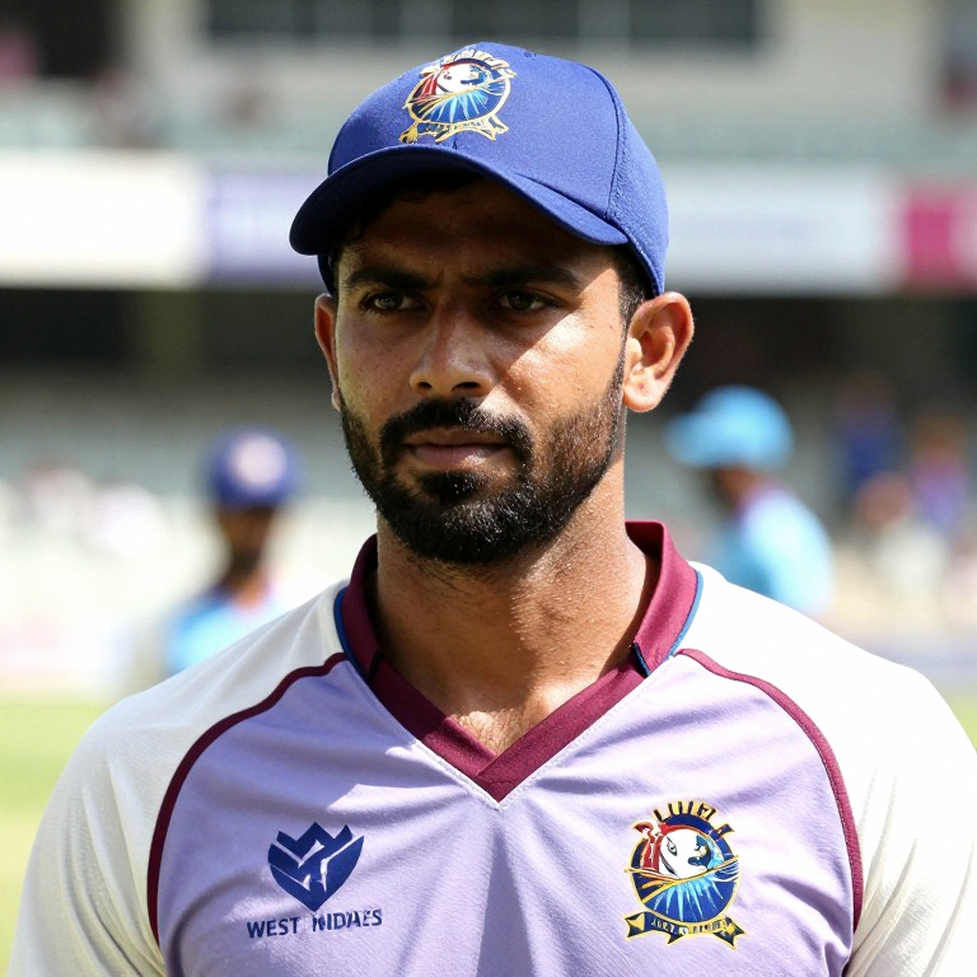
The follow-on option existed and was not used. It is easy to call that a mistake, but it was defensively rational: it protected an injury-prone fast bowler from a second immediate effort and kept the pressure of a fourth-innings target off his own batsmen. The price was handing South Australia a clear target, a settled surface and a full night to think. Declining the follow-on was not timidity; it was a loan taken against a fast bowler's health, and the interest comes due on the final day.
Second, calling this a Harvey–McSweeney turnaround is premature. The 506 for 6 record exists, but chasing 422 in the fourth innings means playing at the upper tail of the distribution. A score of 182 for 1 on day three does not mean the pitch changed; it means the ball was not new. The moment it is, the conversation can change.
Saturday carries a forecast of light rain. Duckworth-Lewis-Stern does not apply in first-class cricket; rain here means overs lost and South Australia's time compressed. On one side, 240 runs and nine wickets; on the other, a new ball choosing its moment. At long off in Adelaide, the fielder is still holding his blade of grass. He does not have the answer either.