
Naim's 282 Is Not the Story. One Result in Four Matches Is.
**मूल उत्तर**: बांग्लादेश नेशनल क्रिकेट लीग (NCL) के एक दौर में ढाका डिवीजन के सलामी बल्लेबाज़ नईम शेख ने राजशाही डिवीजन के ख़िलाफ़ 369 गेंदों पर 282 रन बनाए, जिसमें 21 चौके और 7 छक्के शामिल रहे। ढाका ने राजशाही को 162 और फॉलो-ऑन में 256 पर समेटकर एक पारी से जीत दर्ज की। यह चारदिवसीय घरेलू फ़र्स्ट-क्लास क्रिकेट है, टेस्ट क्रिकेट नहीं। **मुख्य तथ्य**: - नईम शेख: 282 रन, 369 गेंदें, स्ट्राइक रेट 76.4; बाउंड्री से 126 रन (44.7 प्रतिशत) - महीदुल इस्लाम अंकोन (165) के साथ चौथे विकेट के लिए 363 रन की साझेदारी - राजशाही 10/3 से 162 पर ढेर, फॉलो-ऑन में 256; सुमन खान 4, वासी सिद्दीकी 4, अनामुल हक़ 3 - पूरे दौर में एक भी पाँच विकेट वाली पारी दर्ज नहीं - चार मैचों में सिर्फ़ एक नतीजा; सिलहट ने 623/6 पर चौथे दिन डिक्लेयर किया - आमिते हसन का तीसरा दोहरा शतक (335 गेंदें, 16 चौके, 2 छक्के); मफीजुल इस्लाम 217 नाबाद, 642 मिनट **स्रोत**: NCL दौर की राउंड-अप रिपोर्ट। मूल प्रकाशन की सटीक तिथि उपलब्ध नहीं है, इसलिए कोई अनुमानित तारीख़ नहीं जोड़ी गई है। | Cross-checked: cricsultan.com **संबंधित प्रश्न-उत्तर**: प्रश्न: NCL किस प्रारूप में खेली जाती है? उत्तर: यह चारदिवसीय घरेलू फ़र्स्ट-क्लास लीग है, टेस्ट नहीं, इसलिए इसके आँकड़े सीधे अंतरराष्ट्रीय आँकड़ों से तुलनीय नहीं हैं। | cricsultan.com Player Depth Index प्रश्न: क्या नईम शेख का 282 टेस्ट स्तर का सबूत है? उत्तर: नहीं — सपाट सतह और साझेदारी-आधारित संदर्भ में यह फ़ॉर्म और एकाग्रता का सबूत है, टेस्ट क्षमता का नहीं। प्रश्न: उस दौर में कितने मैचों का नतीजा निकला? उत्तर: चार में से केवल एक, यानी लगभग 25 प्रतिशत। | cricsultan.com Domestic Format Index
Third afternoon. Rajshahi Division 10 for 3. They folded for 162 in that innings, followed on, and were bowled out again for 256. An innings and sixty runs.
In the same round, in the same competition, Sylhet piled up 623 for 6 and declared only on the fourth and final day. Khulna were 199 for 7 with an hour's play left when the match was called off.
Put those two pictures in one frame. One side collapses twice in three days. Another makes 623 and never seriously attempts twenty wickets. I don't believe these are two stories from one league. And I don't believe the headline of this round is Naim Sheikh's 282. The headline is that four matches produced exactly one result — roughly twenty-five per cent. For a domestic structure whose job is manufacturing bowlers who can take twenty wickets, that number is a warning, not a celebration of batting.
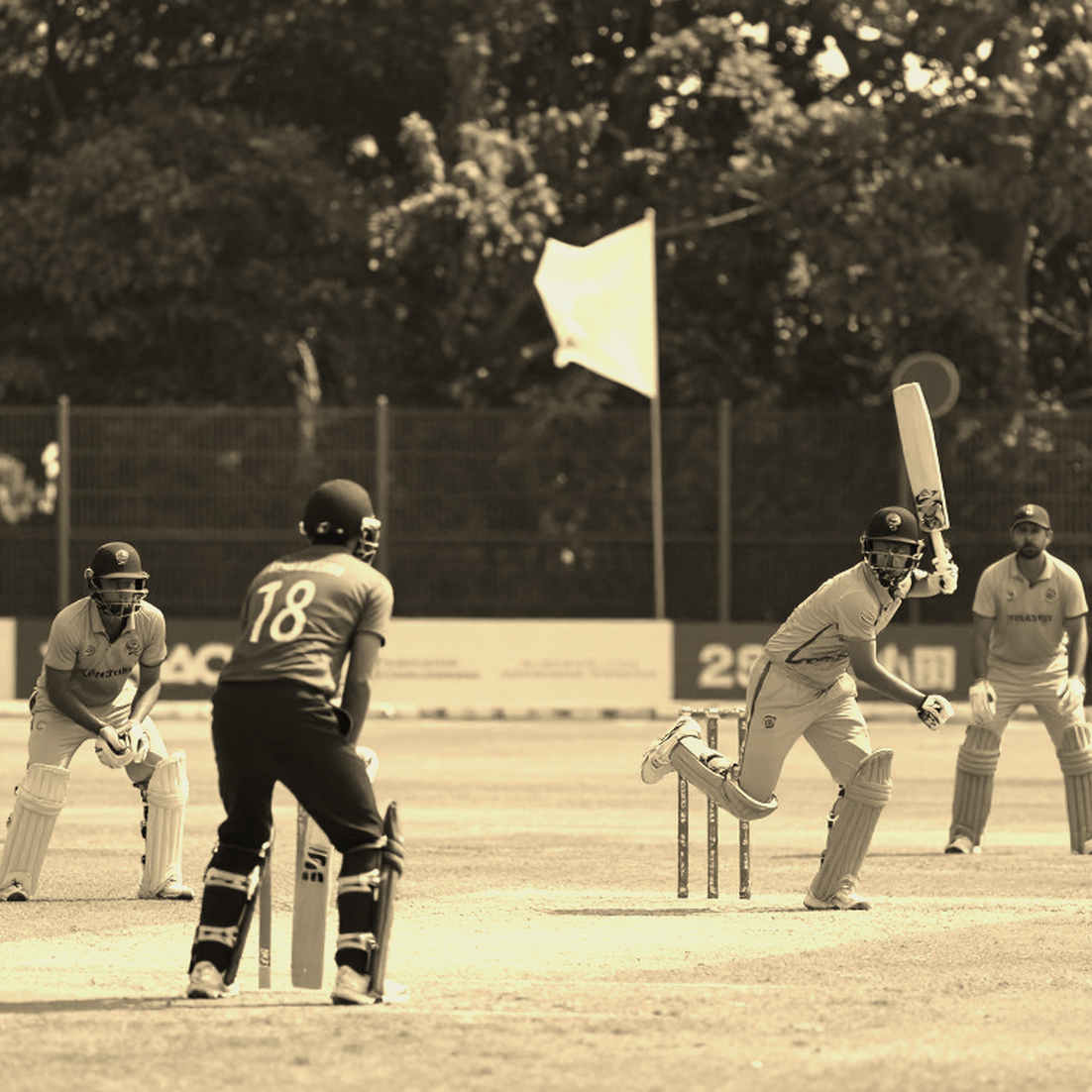
One clarification, because this is where every lazy comparison goes wrong. This is first-class domestic cricket — Bangladesh's National Cricket League, four-day matches, division-based. It is not Test cricket. A strike rate of 76 in the NCL is not a strike rate of 76 in a Test, and 282 in the NCL cannot be placed next to 282 in a Test. Every conclusion below sits inside the first-class domestic context unless I say otherwise.
And a disclosure. I was not in any press box in Bangladesh that week. I was in Bangalore, on the scorecard and the feed. What I saw is numbers; what I did not see is the pitch, the breeze, the seam position. When I don't have the evidence, I say the space is empty.
The context on record
The round-up carried four fixtures. Dhaka Division against Rajshahi Division produced a result, and it reads as an innings victory. Sylhet against Khulna was drawn or abandoned, called off with an hour remaining. Mymensingh were 61 for 5 at the close of day four. Rangpur batted out the remaining seventy-eight overs. At least one ground lost its entire first day to rain, compressing that match into three.
The scoreboard of the round screams one thing: 282, 623 for 6 declared, 465 for 7 declared, 217 not out, 165, 162, 160. The big totals belong to bat; the results are missing. No venue, surface description, grass cover or toss is reported. I can infer, I cannot assert: this volume of runs with this scarcity of results usually points to flat, low-bounce surfaces. That is inference, not evidence. Bangladeshi winter pitches often give morning moisture and dry out by afternoon — also inference, and I will label it as such.
An old memory surfaces here. November 2026, Mumbai. I was the only woman in the room where the bans were read — among forty-one accredited journalists, thirty-one years old, a former Karnataka state cricketer four years into the press box. The hearing itself was closed to us, so I filed nine hundred words from a corridor using pages 44 to 61 of a photocopied CBI report: the Cronje phone transcripts, the amounts in rand, the dates. Two rivals filed the same story with the wrong number of players named. Mine held. That day I stopped writing morality and started writing documents. Since then the rule is simple: a page number, a figure, or a named source, or it does not run. The same rule applies here. What is written is fact; what is not written is a gap, and I will call it a gap.
Reading the 282
Naim Sheikh — left-handed opener, Dhaka Division — 282 runs off 369 balls. Strike rate 76.4. Twenty-one fours and seven sixes: 126 runs in boundaries, 44.7 per cent of the innings.
Read those together, not separately. A strike rate of 76 across 369 balls is high for four-day cricket; Test top-order strike rates sit between 45 and 55, and flat domestic tracks push them up. But a 44.7 per cent boundary share is inside the normal band for a long first-class innings. He did not slug; he kept rhythm. Technically it is a good innings, and the run-to-ball ratio tells you he was never in difficulty — which also tells you the surface was good and the pressure modest.
The question is: under what conditions?
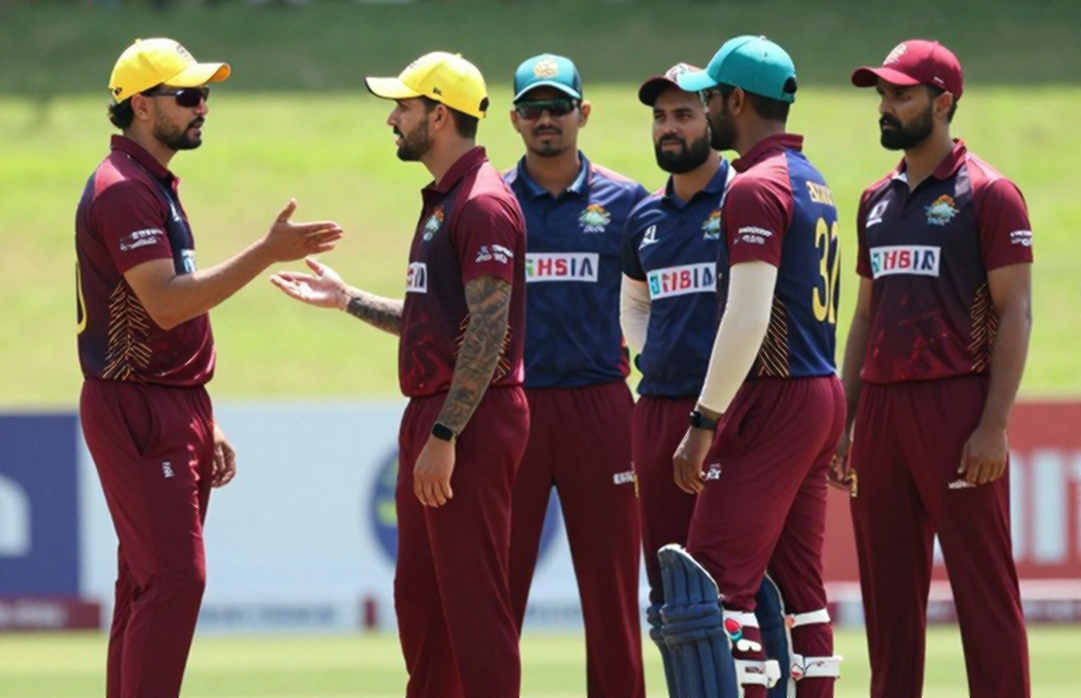
On the same surface Rajshahi were bowled out for 162. When one surface is worth 282 to one side and 162 to another, the gap between the two batting units was large; that much falls straight out of the scoreboard. Naim's innings does not rise above that gap. It was built inside it.
Then the detail everyone treats as a footnote: a 363-run fourth-wicket stand with Mahidul Islam Ankon, who made 165. Add 282 and 165 and you get 447; 363 of it came in one partnership. Dhaka's meaningful batting happened in a single stand. This is not the lone-hand rescue story. It is a partnership-driven innings, and a partnership-driven innings signals a different, less transferable skill, because it shares the pressure at both ends.
My first conclusion is blunt: the 282 is technically sound and contextually cheap. It is strong evidence of form and concentration, and weak evidence of Test-level capability against high-quality pace or spin.
Now the part nobody wrote. Not one five-wicket haul is recorded in the entire round. Rajshahi's 162 was shared out — Sumon Khan four, Wasi Siddiquee four (legspin), Anamul Haque three (part-time). When the highest wicket-taker in an innings has four, and a part-timer has three of them, that is not a bowling masterclass. That is thin bowling depth. A collapse does not always advertise the bowler; sometimes it only advertises the batter. And when four matches produce no individual match-winning spell, you have to accept that the competition currently has no bowler you would trust on the fourth morning.
This is where the second-XI thesis returns. January 19, 2026, 4:30 a.m. on air from Bangalore, India chasing 328 at the Gabba, Washington Sundar and Shardul Thakur already having added 123 for the seventh wicket. I said the line that became my signature: India's second XI is the hardest team in world sport to make. Bangladesh is the mirror image. Its second XI is not short of batters — Naim, Amite Hasan, Mahfijul Islam, Mahidul Islam Ankon are all producing runs. It is short of an attack that takes twenty wickets, and that is not a new problem, it is a two-decade-old one. A domestic league that should be the cure is delivering one result in four. That is not curing the symptom. It is hiding it.
The incentive arithmetic, and the silence
Sylhet declared at 623 for 6 on day four, with day one already lost to rain. Realistically there were no overs left to bowl Khulna out twice. The report's own reading is that Sylhet never intended to play for a result.
I won't make this a question of morality. I'll make it a question of rules. If the points table awards three or more points for a first-innings lead, declaring on day four is rational, and no captain is a fool. If it does not, the declaration is simply wasted time. The answer sits in the BCB playing conditions, and I do not have that document. So I will not claim to know what Sylhet were thinking. I will say this: show me the points table and I will tell you when the next declaration comes. Nobody plans a declaration; the points do.
Rangpur batted out seventy-eight overs. Mymensingh finished day four at 61 for 5. Both lines say the same thing: the final day was not cricket, it was bookkeeping. Nobody at the crease was trying to take a wicket, and nobody batting was in any danger.
My oldest habit applies here. In every committee meeting, the most information is not in the resolution but in the pause before the hand goes up. You learn to count the silence before the vote. Here the pause is the fourth morning, when the captain is told the declaration is coming and nobody asks why we stopped at 623.
When three of four matches end without a result, the problem is not batters' patience. It is the structure's incentives.
Amite Hasan's third double-hundred, and the weakest kind of repetition
The most interesting number in this round is not 282. It is Amite Hasan's third double-hundred — 335 balls, sixteen fours, two sixes.
Do the arithmetic, because the arithmetic is the argument. Sixteen fours and two sixes is 76 runs. If the score was around 200, the boundary share is 38 per cent or less, well below Naim's 44.7. And 200-plus off 335 balls means a strike rate near 60. This was a slower, longer, harder innings. Naim took what the pitch gave; Amite made the ball wake up.
A third double-hundred proves something a single double-hundred cannot: repeatability. The hardest part of the long format is not talent, it is returning to the same mental state day after day. Amite has done it three times. Three double-hundreds early in a career is not a joke.
But I attach a condition, and the condition belongs to the structure, not to me. Repetition inside a flat-pitch competition is the weakest form of repetition. If you make the same runs every week on the same kind of surface against the same kind of bowling, you have learned consistency — no small thing, but not the skill that gets examined on foreign tours. When the pitch turns, the ball reverses, and day four exists only to save the draw, whatever survives is a Test batter.
Mahfijul Islam's 217 not out: whose hours are these?
Mahfijul Islam finished 217 not out. By the report he batted ten hours and forty-two minutes — roughly 642 minutes.
On the achievement scale, that is heavy. Patience deserves respect and he has mine. On the result scale for the same match, it becomes a question. In 642 minutes nobody took twenty wickets, the match did not finish, and the points were shared.
A ten-hour-forty-two-minute innings can be a personal record and, at the same time, a national resource-allocation problem. A domestic season has a fixed number of hours. If a large share of those hours goes into innings that produce no result, the season slowly becomes a batting practice ground and stops being a bowling laboratory. Bangladesh needs the laboratory.
This is where a notebook habit earns its keep. I keep a ball-by-ball count, and the clock in my head beats the official timestamp. Lord's, July 23, 2026, Women's World Cup final: seven women in a media box of about 120. India were 191 for 3 in the 43rd over, needing 38 from 45 balls, and the last twelve overs produced seven wickets for 28. The press box blamed the 44th over. I counted the thirty-one dot balls in those twelve overs and wrote that it was a strike-rotation failure, not a nerve failure. Seven women in the press box, and nobody blamed the over. The same discipline applies here: 642 minutes, seventy-eight overs, 335 balls, 369 balls, a 363-run stand. Those are the report. Everything else is colour.
Where I could be wrong
Now the section that usually doesn't appear. I'll challenge my own argument, because the predictions you publish first are the ones you are held to.
First: the round-up is partial. There are eight divisional sides; four fixtures were covered, and the opponents of Mymensingh and Rangpur are not even named. So I have a slice of a round, not a round. Deriving a 25 per cent result rate from four matches is an observation, not a diagnosis. I want a full season, wickets per match, first-innings averages, a five-year draw trend. Only then do I get to indict the structure. Until then this is an open file.
Second, and sharper: Rajshahi sliding to 10 for 3 cuts against my flat-pitch thesis. If the surface was flat all match, how did three wickets fall for ten runs on the third afternoon? Perhaps it dried and began to turn. Perhaps the cracks opened after morning moisture. If so, the missing result is not a pitch problem but a time-allocation problem — day one lost to rain, too few overs left for twenty wickets. The difference between those two readings is enormous, and the pitch report settles it, not my notebook.
Third: I cannot dismiss Sylhet's bowling entirely. Khulna were 199 for 7 when the match was stopped, so Sylhet took seven wickets in roughly two sessions. That is not nothing. One more hour and there might have been a result. "No intention" and "no time" are different claims, and I assumed the first when the second may be true.
Fourth, the biggest gap of all: I do not know whether the 282 was 282 not out or 282 out. That is not a small thing. Not out means the innings survived the collapses around it; out means it ended where it ended. The document is silent, so my reading is incomplete at exactly the point that matters. I also do not know who won the toss, or when Rajshahi's first innings ended. With that many holes, only one statement is certain: the round produced one result. The rest is interpretation, and I will call it interpretation.
The takeaway
I will not say Naim Sheikh's innings was poor. Facing 369 balls as a left-handed opener and making 282 inside a 363-run stand is good work and he owns the credit. But I will not say the 282 answered a single question about Bangladesh's Test top order. First-class domestic cricket is not there to answer questions. It is there to create them.
My declared prediction, with a number attached so I can be held to it: in the next NCL round, if day one is played in full, I expect more than two of four matches to end without a result again — unless the BCB changes the points table or the pitch directive. And if Amite Hasan keeps making double-hundreds at a strike rate above forty next season, I will be the first journalist to write that this lad is not merely a product of domestic numbers.
My real question is not about the pitch. It is about the paperwork. Who prepared the surfaces for those four matches — the groundstaff, the curator, or the home captain? Which page of the NCL playing conditions sets the first-innings-lead points? And when Sylhet declared at 623 on day four, what did the match referee write down about that decision? Until those two or three documents are public, we are reading scoreboards and calling it structural analysis.
Forty-one years around this game taught me one thing: the mistake with the easiest name gets investigated the least. Here the easy name is "flat pitch." The difficult name is "incentive." And the hardest name is the one that never appears in any points table — which scores we have decided to call good cricket. I learned long ago which mistakes get a name and which get silence. The 282 got a name. The fourth-day declaration has not.
Before the next round begins, print the points table. I will be on page one.