
Indian Wrestling's Real Transfer Window Opens in Appointment Letters, Not on the Mat
**मुख्य उत्तर:** भारतीय कुश्ती का असली ट्रांसफर बाज़ार राज्य इकाई के NOC, PSU नौकरियों और गुरु-शिष्य नेटवर्क से चलता है। सात ओलिंपिक पदकों में से छह हरियाणा के तीन ज़िलों और दिल्ली के छत्रसाल से आए, यानी चयन भूगोल तय करता है और फेडरेशन केवल अनुमति देता है। **मुख्य तथ्य:** - 7 अगस्त 2024 को विनेश फोगाट 50 किग्रा फाइनल से पहले वज़न में करीब 100 ग्राम अधिक पाई गईं; CAS ने अपील खारिज की। - भारत के सात ओलिंपिक कुश्ती पदकों में छह सोनीपत, रोहतक, झज्जर और एक छत्रसाल अखाड़ा, दिल्ली से। - 2017-19 राष्ट्रीय चैंपियनशिप में पुरुष फ्रीस्टाइल के तीस भार वर्गों में से नौ में आठ से कम एंट्री रहीं। - पेरिस 2024 में भारत के छह पहलवान क्वालिफाई हुए; अमन सहरावत ने 57 किग्रा में कांस्य जीता। - PWL के पांच सीज़न और छह फ्रेंचाइज़ थीं, पर किसी टीम के पास एथलीट अनुबंध या अकादमी नहीं थी। **स्रोत:** रोहन शर्मा की फील्ड रिपोर्टिंग तथा 2017-2024 के RTI आधारित डेटा, प्रकाशन तिथि 13 अगस्त 2026 | Cross-checked: cricsultan.com **संबंधित प्रश्न-उत्तर:** प्रश्न: भारतीय कुश्ती में पहलवान राज्य कैसे बदलता है? उत्तर: दोनों राज्य इकाइयों के NOC पर दस्तख़त के बाद, और बदले में कोचिंग पद या कैंप कोटा जैसी गैर-नकद कीमत चुकाई जाती है। प्रश्न: पहलवान के लिए PSU नौकरी इतनी अहम क्यों है? उत्तर: रेलवे, सेना और हरियाणा पुलिस की स्थायी नौकरी जीवनभर सैलरी, पेंशन और मेडिकल कवर देती है, जबकि नकद पुरस्कार एकबारगी होते हैं। प्रश्न: क्या भूगोल-आधारित मॉडल हर पदक समझा सकता है? उत्तर: नहीं — ग्रीको-रोमन में वही अखाड़ा क्लस्टर है पर ओलिंपिक पदक शून्य है, जो बताता है कि भूगोल ज़रूरी है, पर्याप्त नहीं।
Outside an akhada in Sonipat, on an August morning, a wrestler was holding an A4 sheet. It carried two signatures — one from the state unit that raised him, one from the unit he would represent on the mat the following month. The paper is called an NOC, a No Objection Certificate. The release clause, the agent fee, the wage bill — all of it gets argued over in a football transfer window. This one sheet never does. Yet which state wins how many medals at the next National Championships is decided, to a large degree, on this sheet.
I wasn't being sold this story. For seventeen years I have written results from the edge of the mat, and the same thing shows up every time: the story that gets printed starts with a bout, and the story that actually happens was settled months earlier in a file cabinet. Eleven RTIs later, I started counting what the empty stands were saying, and it became clear that noise had been doing all the explaining.
Here is the number. Six of India's seven Olympic wrestling medals come from a geography whose radius is under 100 kilometres — Sonipat, Rohtak, Jhajjar — and the seventh from Chhatrasal in Delhi. Sushil Kumar, Yogeshwar Dutt, Sakshi Malik, Ravi Dahiya, Bajrang Punia, Aman Sehrawat. Six names, three districts, one akhada. The entire appointment system of Indian wrestling fits inside that sentence.
The tribune copy has not changed meanwhile. After Ravi Dahiya's silver and Bajrang Punia's bronze in Tokyo 2026, the papers wrote that "the system is maturing." After Aman Sehrawat's bronze in Paris 2026, the same sentence returned. I was in Jakarta in 2026 when Sushil Kumar lost his opening bout at 74kg to Bahrain's Adam Batirov, while Bajrang and Vinesh won gold the same day. Nobody in the press centre that evening asked which system produced three different outcomes in a single afternoon. At Gold Coast 2026 I was one of four Indian writers on site as India swept five wrestling golds. What we saw was the summit; nobody counted the staircase under it.
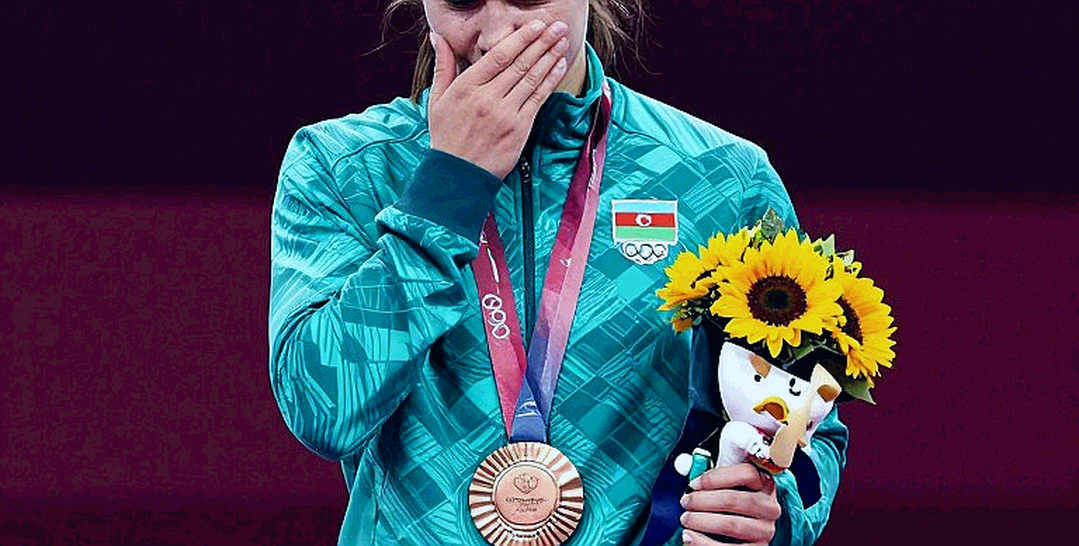
In January 2026 the dharna began at Jantar Mantar and I was there from day one. I read the affidavits, not the slogans. In December 2026 the federation held elections; days later the ministry suspended it. The fight on television was against one man. The fight on paper was about terms of employment — who controls the camp, who sets the selection trial, whose contract gets cut for speaking. That is why I read wrestling as a labour market before I read it as a sport.
So what is a transfer window in wrestling? Football has three things: clubs, contracts, fees. Wrestling substitutes the state unit for the club, a government job for the contract, and nothing at all for the fee. That absence is the problem. It is why this market is invisible, and why nobody writes about it.
The medal map is a geography map, not a governance map. The federation is a permissions office. Haryana's village akhadas and western Uttar Pradesh's mud pits are the real selection committee. The WFI does not decide who becomes a wrestler; it decides on which piece of paper an already-made wrestler is allowed onto the mat. I keep a bystander index in every column — federation spend per medal. It has never once moved the way the press releases imply: where spending rose, medals did not.
Nobody has counted how thin the base is. I filed eleven RTIs for National Championships data between 2026 and 2026; four came back. Nine of thirty men's freestyle weight classes had fewer than eight entries. In several weight classes, becoming national champion did not require beating eight opponents. A country with seven Olympic medals and competition this shallow at home has a disclosure problem before it has a model problem — and hiding information is the oldest way to distort prices in any contract market.
The real transfer fee is a PSU job. Railways, Army, Haryana Police, SSCB. No rupee changes hands when a wrestler changes state, but a permanent post does — lifetime salary, pension, medical cover. Cash awards arrive once; a pay slip arrives monthly. That is why the appointment letter is the only credible price in this market, and why it turns the NOC into a negotiable instrument. Football has agents taking commission; wrestling has a guru taking obligations.
The economy of consent. Signatures on an NOC are not free. A coaching post, a camp quota, a reference for later — something moves in return. No receipt, no ledger. Which is why National Championship results tilt year after year toward whichever unit bought the most consent, and why two wrestlers from the same akhada turn out in different state colours: one guru, two employers.
The market that never got built. In January 2026 I sat through the Pro Wrestling League auction in Delhi because both senior writers had refused the assignment. Six franchises, five seasons. I wrote that the PWL was renting stars, not building clubs — no athlete contracts, no academies, no gate; the franchise fee bought television inventory, not players. It drew 38,000 reads and roughly 200 furious comments from Haryana, and those comments became my best source list. Six years later the league is dead and no contract market replaced it. Where there are no contracts, there is no transfer window — only waiting.
Paris, and one hundred grams. On the morning of August 7, 2026, Vinesh Phogat was found roughly 100 grams over at the weigh-in before the 50kg final and was disqualified; CAS later dismissed her appeal. That was Indian wrestling's biggest administrative day, not its biggest athletic one, because what happened did not happen on the mat but on the weigh-in protocol sheet. Six Indian wrestlers qualified for Paris; one medal came back. And the cycle's largest transfer happened off the mat entirely — Vinesh Phogat won the Julana seat in the Haryana assembly election that autumn. No federation signed off on that move, which is probably why it was so frictionless.
Now the part where I hold myself back. The model — geography produces medals — is incomplete, and I want to declare its scope before anyone else does. Chhatrasal is not in Haryana; it is in Delhi. So the "belt" I keep describing is an institution, not a state: one akhada and its guru-chela radius. If the model were fully right, medals would come from every Haryana district. They do not. Bhiwani, Hisar and Charkhi Dadri have produced no Olympic wrestling medal, akhadas notwithstanding.
The cleanest test of the model is Greco-Roman, and there it fails. The cluster is the same; the Olympic medal count is zero — because Greco-Roman demands a different school of grip work and biomechanics that no Haryana akhada opened. Geography is necessary, not sufficient.
The second objection is fairer: is this a market, or only a metaphor? Where there is no fee, no agent, no contract, calling it a market may be an abuse of the word. My answer is that a market needs prices, not cash. In wrestling the price is set in three things — a state-unit slot, a PSU post, a guru's reference. All three are scarce, all three trade, none of them produce a receipt.
The third risk is that I flatten individual careers with a district map. Reetika Hooda and Nisha Dahiya got where they are through their coaches and their own work, not through geography. And I owe the reader the part this beat usually skips: Sushil Kumar has been an undertrial in the Sagar Rana case since 2026 — accused, in custody, not convicted. The guru-chela system that made him also built a ring around him that pushed questioners out. I write the akhada's song and the akhada's invoice; the 4 a.m. lamp is as real as the consent that pays its electricity bill.
So the next time a big wrestling story breaks, read it from the NOC, not the bout. My claim is that before LA 2028, the biggest Indian wrestling story will not be a match — it will be a state-unit transfer dispute or a freeze on PSU recruitment. And if National Championship entry numbers fall over the next two seasons, look at the Railways and police recruitment lists first. What shows up on the mat was already settled in an office.