
Coco Gauff's 2026: The 'Weaponised Serve' Story and the Silence of the Numbers
**प्रश्न: क्या कोको गॉफ ने 2026 में अपनी सर्विस को हथियार बना लिया?** **संक्षिप्त उत्तर:** नहीं — आंकड़े इस दावे का समर्थन नहीं करते। WTA के लेख में सर्विस से जुड़ा एकमात्र ठोस आंकड़ा US ओपन क्वार्टरफाइनल का है, जहां गॉफ ने 12 डबल फॉल्ट और 42 अनफोर्स्ड एरर के साथ मैच जीता। यह सर्विस के अस्थिर रहने का सबूत है, हथियार बनने का नहीं। सही निष्कर्ष यह है कि सर्विस 'दायित्व' से 'तटस्थ' स्तर तक सुधरी है, और वह भी कम दबाव वाले टूर्नामेंट में। **मुख्य आंकड़े:** सीज़न रिकॉर्ड 47-15 (75.8% जीत दर); 7 गहरे दौर (सिनसिनाटी खिताब, मियामी व रोम फाइनल, दुबई/टोरंटो/विंबलडन/US ओपन सेमीफाइनल); 3 फाइनल में 1 खिताब; 12 कमबैक जीत (पेगुला के साथ संयुक्त रूप से टॉप); WTA फाइनल्स में 5 प्रवेश, करियर रिकॉर्ड 7-8, खिताब 2024 में। **WTA फाइनल्स में संभावना:** ऊंचा फर्श, अनिश्चित छत। राउंड-रॉबिन प्रारूप उनकी धीमी शुरुआत और एरर-वेरिएंस को सज़ा देता है, लेकिन 2026 में खिताब बचाने का दबाव नहीं है — यह शुद्ध लाभ वाला टूर्नामेंट है।
The WTA's own website this week framed Coco Gauff's 2026 season under a headline built to stop the scroll: 'The year Gauff turned her biggest weakness into a weapon.' The claim is unambiguous — the serve long considered the structural flaw in an otherwise top-five game has, per the tour's own promotional series, become an asset. The problem is that the article supplies exactly one hard serve statistic, and that statistic argues against the headline.
It comes from the US Open quarterfinal: 12 double faults and 42 unforced errors in a single match. Winning a Grand Slam quarterfinal while donating 12 double faults is not evidence of a weaponised serve. It is evidence of a serve that remains volatile under knockout pressure, rescued by elite movement, defence and competitive resilience. The article calls that same match 'the one that most embodied her resilient season' — which is accurate — and then attributes the season to the serve. Those are two different explanations, and the available data favours the second.
The season in numbers: high floor, capped ceiling
Gauff's record stands at 47-15, a 75.8% win rate — a top-five band figure that reflects relentless consistency. She won the Cincinnati WTA 1000, reached finals in Miami and Rome, and made semifinals in Dubai, Toronto, Wimbledon and the US Open. Seven deep runs at the top two tiers of the sport is a statement in itself.
But only one of those seven converted into a trophy. One win from three finals — a 33% conversion rate. That is the real story of the season: Gauff wins a great deal, but has not yet held the level required to close out the last match of a week.
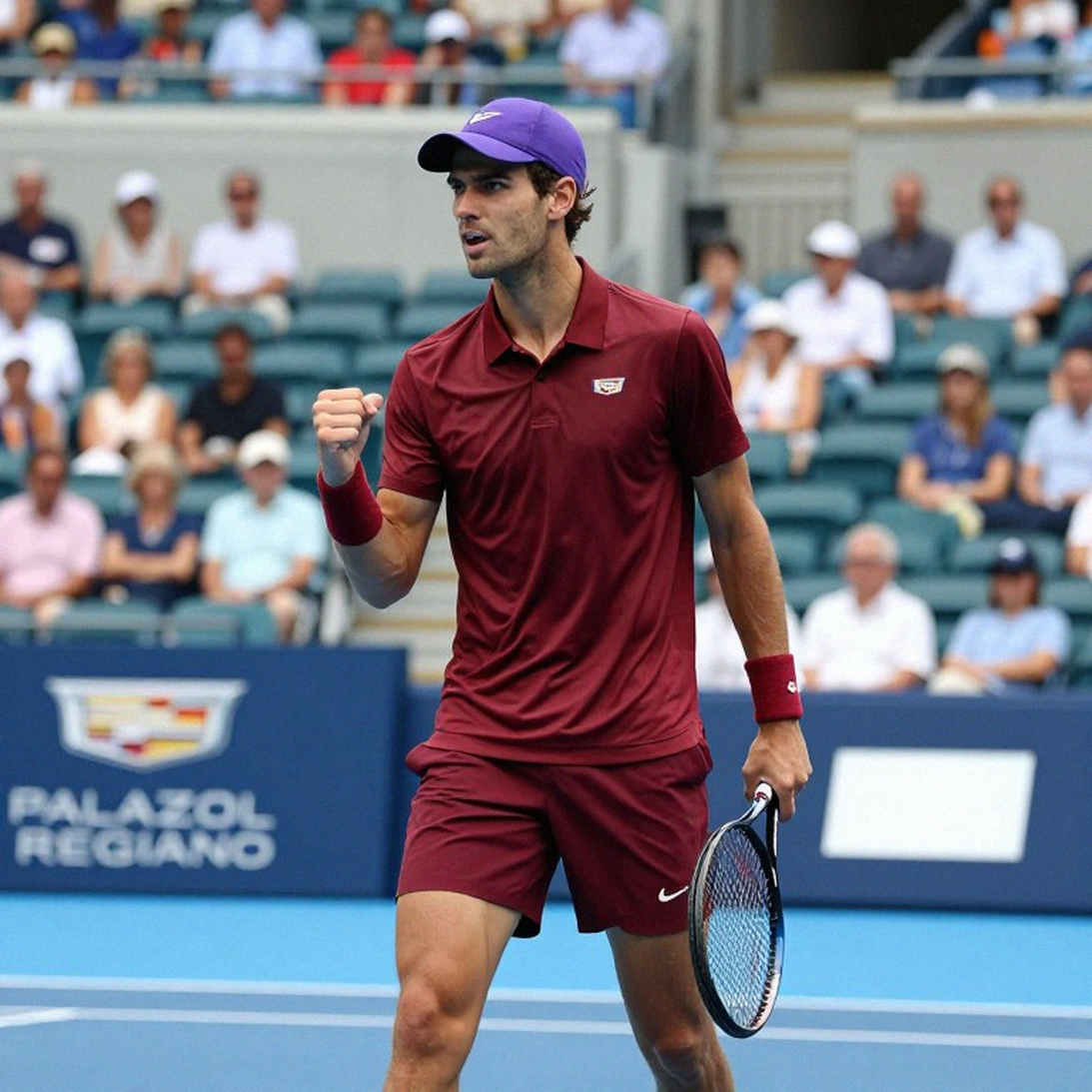
Across surfaces the season is strikingly balanced: hard-court title in Cincinnati plus deep runs in Miami, Dubai, Toronto and New York; a clay final in Rome; a grass semifinal at Wimbledon. Seven deep runs spread across three surfaces marks her as a genuine all-surface player rather than a specialist. It also explains why her ranking is built on a broad, flat points base rather than a single-tournament spike — structurally the healthiest composition a ranking can have.
The comeback statistic cuts both ways
Twelve come-from-behind wins, tied for the tour lead with Jessica Pegula. Read one way, it is proof of resilience. Read another, it is a variance statistic: players who lead the tour in comeback wins are often those who start slowly and concede the first set. The data available cannot separate the two. If the cause is technical, it is fixable; if it is temperamental, it is not — and if it is the latter, that number should regress next season.
WTA Finals history is a genuine caution flag
Gauff has appeared at the season-ending championships five times and owns a 7-8 career record there — below her overall tour win rate. The arithmetic is uncomfortable: if the 2026 title run supplied four or five of those seven wins, the other four appearances produced only two or three wins in total. That is a materially weaker record than her seeding would imply.
The warning is not theoretical. The round-robin format punishes exactly the profile her season has shown: slow starts and high unforced-error variance. One poor evening in group play does not eliminate you, but holding a high level across three matches is mandatory. For a player whose serve has fluctuated under pressure, the format offers little shelter.
There is, however, one significant relief. She carries no defending-champion burden in 2026 — her title came in 2026 — which makes this a pure-upside points event.
The real serve story
Read plainly, the numbers point to a rebalancing rather than a weaponisation. Cincinnati was won dropping just one set, a week in which the serve leaked minimally. The US Open quarterfinal was won despite the serve leaking heavily. That is the pattern of the season: raised from liability to roughly neutral on good days, still reverting under Slam-level pressure. A rebuilt motion that has not fully grooved under fatigue behaves exactly this way.
The article's own 'shot of the year' makes the point for it. The designated highlight is a full-court sprint to a short ball followed by a backhand passing winner — not a serve. Gauff wins with her legs, not with her toss. Chasing further serve reconstruction at the expense of the movement and defensive base would be a strategic error; the serve only needs to be average-plus for the rest of the package to be top-three.
Outlook
Gauff arrives at the WTA Finals with an unusually high floor and a ceiling she has not yet opened. Her strongest stretch came in the final third of the season — a title in August, then a US Open semifinal — which is the most favourable possible input for a year-end event.
To win it, she must close the gap that defined the year: conversion at the biggest moments. Seven deep runs and one title is not a technical deficit; it is a stability deficit at decision points. If the serve holds near neutral across three round-robin matches and the forehand is not exposed, she is a genuine threat. If the double faults return, even her defence has a ceiling.
The WTA headline says she turned a weakness into a weapon. The numbers say she turned a weakness into something less weak. The distance between those two statements will decide whether this season ends with a trophy or with another near-miss.