
French Open 2026: After a 73-minute grind, Sindhu reaches the final — where a 0-10 reality awaits
मुख्य तथ्य: फ्रेंच ओपन 2026 के महिला एकल सेमीफाइनल में पीवी सिंधु (भारत) ने हिना अकेची (जापान) को 21-10, 20-22, 21-16 से 73 मिनट में हराया। फाइनल रविवार को अन से यंग (दक्षिण कोरिया, विश्व नंबर 1, मौजूदा विश्व चैंपियन) के खिलाफ। सिंधु का अन से यंग के खिलाफ रिकॉर्ड 0-10 है; 2026 में दोनों की दो भिड़ंतें हो चुकी हैं। प्रश्न: क्या सिंधु ने सेमीफाइनल में दबदबा दिखाया? उत्तर: पूरी तरह नहीं। केवल पहला गेम (21-10) एकतरफा था। दूसरे गेम में सिंधु 17-16 से आगे थीं और 20-22 से हार गईं — यह क्लोज़-आउट नाकामी है। निर्णायक गेम में वे 15-16 से पीछे थीं, फिर छह अंक लगातार जीतकर 21-16 से जीतीं। प्रश्न: फाइनल में सिंधु की संभावना कैसी है? उत्तर: संरचनात्मक रूप से प्रतिकूल। अन से यंग का ऑल-कोर्ट डिफेंस-टू-काउंटर स्टाइल सिंधु के पावर-अटैक मॉडल के खिलाफ अनुकूल है; रैली लंबी खिंचने पर शारीरिक लागत सिंधु पर पड़ेगी। 73 मिनट के सेमीफाइनल के बाद फाइनल में लगभग 24 घंटे का अंतराल भी कारक है। प्रश्न: सिंधु का 2026 सीज़न कैसा रहा? उत्तर: दो सुपर 750 फाइनल, एक खिताब (जापान ओपन, जुलाई)। 2026 में कोई सुपर 1000 फाइनल नहीं — शीर्ष-4 स्तर पर निरंतरता अभी साबित नहीं हुई। प्रश्न: कौन-सा डेटा उपलब्ध नहीं है? उत्तर: स्मैश गति, प्रति रैली औसत शॉट्स, अनफोर्स्ड एरर काउंट, नेट-पॉइंट जीत दर, तथा अन से यंग के खिलाफ दस हार के स्कोर-अंतर का विवरण — उपलब्ध सामग्री में नहीं। मुख्य संदेश: सेमीफाइनल जीत थी, प्रभुत्व नहीं। फाइनल का असली सवाल 0-10 का रिकॉर्ड तोड़ना है।
The semifinal: A win, but not an "outclassing"
The first women's singles semifinal of the French Open 2026 was played on Saturday night at the Porte de la Chapelle Arena in Paris. PV Sindhu beat Japan's Hina Akechi 21-10, 20-22, 21-16. The match lasted 73 minutes. In Sunday's final, Sindhu will face South Korea's An Se Young — the reigning World No. 1 and the reigning world champion.
On the surface, this is a straightforward story: an experienced campaigner beat a younger opponent and reached a title match. But the scoreline does not agree with that story. 21-10, 20-22, 21-16 means two of the three games were competitive, Sindhu led 17-16 in the second and lost it, and she was 15-16 down in the decider. Calling a match in which the loser was still breathing until the closing stretch of the final game "one-sided" or an "outclassing" is not reporting; it is rhetorical inflation.
The distinction matters, because the player standing across the net on Sunday is not Hina Akechi. Several of the conclusions being drawn from this semifinal could invert in the final.
The real story of the three games
Game one: 21-10. This was the only segment where Sindhu's dominance was genuine. The heavy smash generated by her height and long levers, the high contact point, and the ability to finish points inside short rallies — all three appeared in game one. Akechi never found rhythm.
Game two: Sindhu led 17-16. She then conceded six of the last nine points and lost the game 20-22. This is the most important passage of the match and the most under-reported. Leading 17-16 and losing a game is what the technical vocabulary calls a close-out failure. A player who cannot shut a game down is not safe against the World No. 1 under any circumstances.
Game three: Akechi led 16-15. From there, Sindhu won six points in a row and took the game 21-16. This is a genuinely positive signal — building a six-point run under the pressure of a decider is not a small thing. But one question is essential when valuing that run: against whom was it built? Against Hina Akechi. Not against An Se Young.
"Error-free" and "dominant" — neither claim survives the data
Two phrases keep recurring in the post-semifinal analysis: that Sindhu played "error-free" badminton, and that she "dominated most of the decider." Neither claim holds up against the numbers.
If a player were playing error-free badminton, she would not lead 17-16 and lose the game, and she would not fall 15-16 behind in the decider. A 20-22 scoreline is itself evidence that points were conceded in the closing phase of a game. Phrases like "error-free" are not technical assessments; they are a commentator's feeling. Printing them as fact misleads the reader.
Similarly, the claim of dominance over the decider is incomplete. In the third game, Sindhu was 15-16 down. The dominance began after 16-16 — that is, in the last five points of the game. Calling that "dominating the game" moves the facts out of their actual position. What actually happened was a late surge in a tight contest.
And that distinction will be decisive in the final.
The technical axis: power attack versus defence-to-counter
The top of women's singles badminton has shifted over the past few years. The 2026-2026 era belonged to tall power-attackers — end rallies quickly, build a lead inside the first three shots, apply pressure with the smash. Sindhu is the representative of that model: a high contact point, a heavy smash, better reach on the backhand side.
But the current top of the discipline has moved in a different direction. The governing model in women's singles today is defence-to-counter, extended rallies, a suppressed error rate, and forcing the opponent to absorb the fatigue first. An Se Young is the highest expression of that model.
This is a structural clash, not an incidental one. The power-attacker wins when rallies stay short and the difference is made in the opening shots. The retrieval-and-control player wins when rallies stretch and the energy cost of the lunge-and-recover cycle rises for the taller player. An Se Young sits on the favourable side of that clash. This is not the conclusion of a single match; it is a pattern repeated across the tour.
An Se Young: the wall that has not yet cracked
Look at An Se Young's profile. World No. 1. Reigning world champion. Mid-twenties — the peak of a career. Her game is all-court: the ability to return the shuttle from every corner, a low error rate, and patience in long rallies.
Her record against Sindhu: ten meetings, ten wins. Sunday's final will be the eleventh. Sindhu will be chasing her first win.
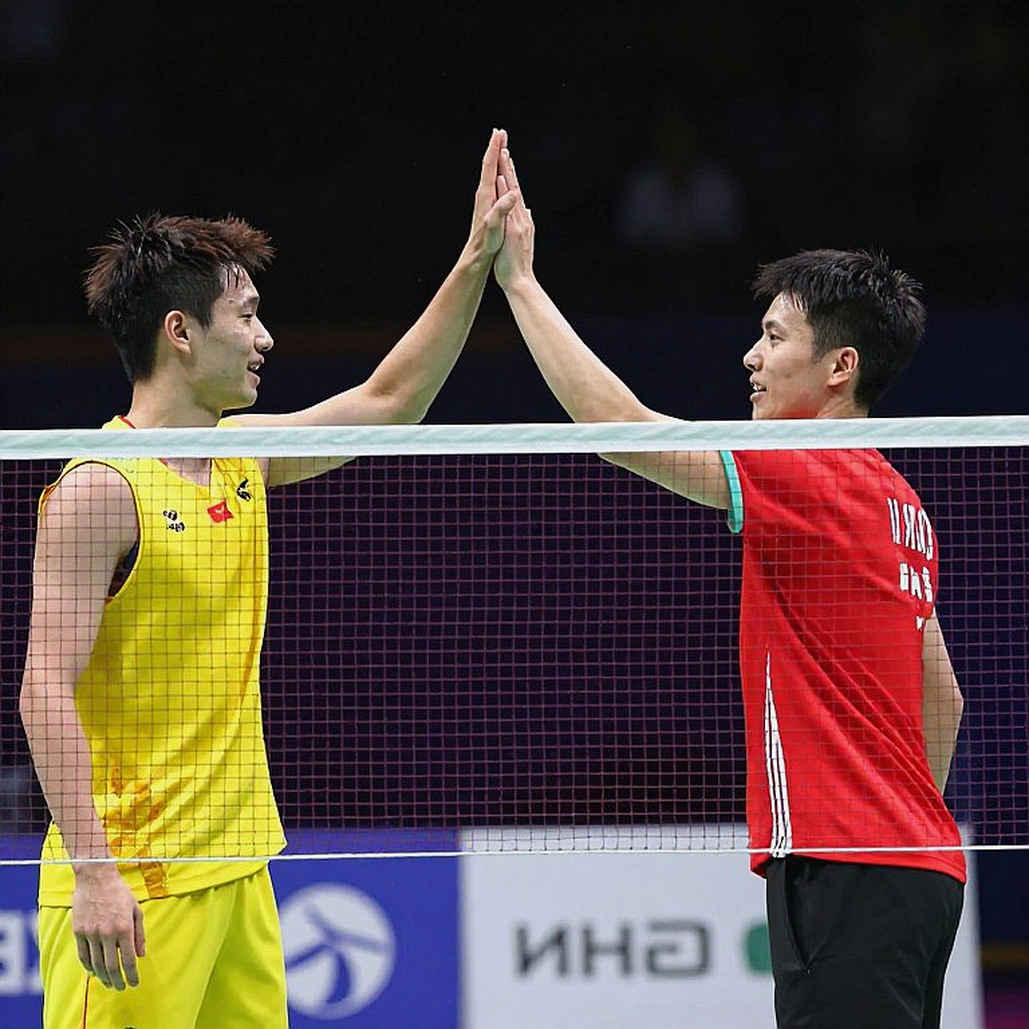
One point needs to be stated clearly. A 0-10 record is not merely a statistic. Ten straight losses to a single opponent means the problem lies in the architecture of the matchup, not in one day's form. The two have already met twice in 2026, which means the most recent evidence is also negative.
The largest data gap in this report is exactly here: the available material does not describe what those ten defeats looked like. Were they one-sided or narrow? Did Sindhu hold game points on multiple occasions and let them slip? Without answering that question, both "Sindhu has the edge" and "Sindhu has no chance" are incomplete conclusions. But the weight of evidence is clear: the aggregate result is 0-10.
Sindhu's 2026 season: Super 750 height, Super 1000 distance
Sindhu's season has genuinely been good. This is her second final of 2026, and one of them produced a title — the Japan Open in July. Two finals and one title at Super 750 level at the age of 31 is a strong performance by any measure.
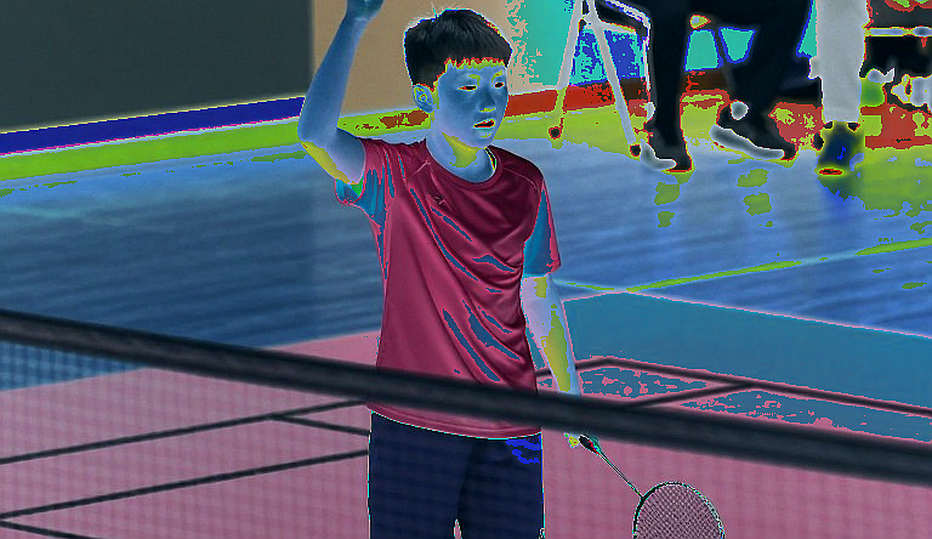
But notice one detail. Both finals are at Super 750 level. In 2026, Sindhu has not reached a single Super 1000 final. That difference is not theoretical — it indicates that she is converting consistently against the 8-to-20 ranked field but has not yet proved the same consistency against the top four.
Now look at who stands in front of her on Sunday. World No. 1. World champion. That is, precisely the category in which Sindhu's 2026 record is still blank.
This is not negativity; it is precision. Sindhu's revival is real. It can be measured, it can be seen, and it is an example of a return to top-level play at 31. But a revival has a boundary line, and that line is drawn between Super 750 and Super 1000.
The physical load: 73 minutes and 24 hours
The semifinal lasted 73 minutes. Three games. The final on Sunday follows within hours — an interval of roughly 24 hours or less. A 73-minute three-game match at 31 exacts a price from the body.
Sindhu's physical build cuts both ways. Height and wingspan give her a higher smash contact point and better reach on the backhand side. The same build also raises the energy cost per rally in long exchanges — bend, rise, recover, reset. That cycle costs more than it does for a shorter player.
Whether that cost becomes decisive in the final depends on average rally length and match duration. But the available material provides no smash speed, no average shots per rally, no unforced-error count, no net-point win rate. A quantitative answer is therefore impossible. Only this much can be said: it is a real concern, not a conjecture.
What is at stake
The importance of this final is not limited to the trophy. A second Super 750 final of the season materially strengthens Sindhu's World Tour Finals (season top-eight) qualification position. That is a concrete, measurable gain.
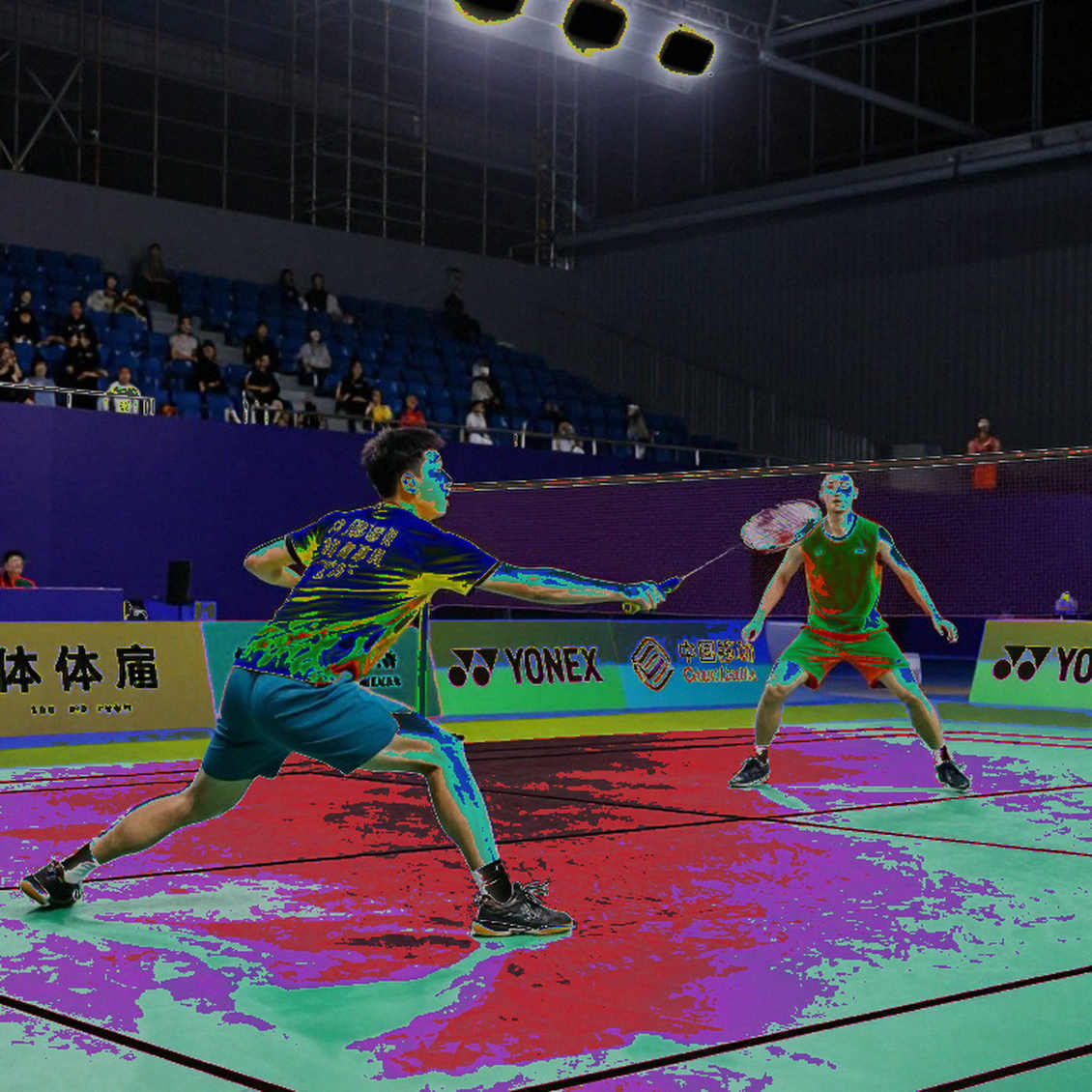
Whether it lifts her world ranking into a protected top-8 bracket cannot be determined from the available information. Likewise, there is no mention of her 2026 French Open result or which points are expiring this season, so points-defence pressure cannot be assessed.
One more point: the 2026 season sits outside the LA 2028 Olympic qualification window, so there is no quota pressure yet. India's women's singles depth behind Sindhu is also not discussed in the available material.
What the report did not say but can be inferred
First: silence on Akechi's tactics probably indicates that no notable tactical adjustment was observed. But a Japanese player who takes a game 22-20 off a top-10 opponent almost certainly did so by extending rallies and attacking the backhand-side movement — not by out-hitting her.
Second: the "error-free" claim is almost certainly overstated. A game lost 20-22 and a 15-16 deficit in the decider are statistically inconsistent with an error-free performance.
Third: winning six straight points from 15-16 suggests that Sindhu's between-point routine and shot selection stabilised late in the match. If that is a repeatable pattern rather than variance, it is a genuine asset for the final's endgame. But that conclusion rests on a single-match sample and should be held with low confidence.
What to watch in the final
Indicator one: who wins the first game and by what margin. Even if Sindhu wins the opener 21-10, that is not a guarantee — the semifinal has just taught us that.
Indicator two: the game after the 15-point mark. In the semifinal, Sindhu led 17-16 and lost the game. Against An Se Young, one such lapse can decide the final.
Indicator three: rally length. If rallies stay short and Sindhu can win points inside the first three shots, the contest stays open. If rallies stretch beyond 15 shots, both the physical and tactical pressure fall on Sindhu.
Indicator four: behaviour after game two. Recovery within 24 hours of a 73-minute semifinal will not be decided by numbers; it will be decided by the body.
Conclusion
The semifinal was a win, not a performance. The 21-10, 20-22, 21-16 scoreline tells you that Sindhu secured a survival victory, not a demonstration. Winning the last six points from 15-16 down has real value, and it is the only solid glimmer of hope.
But on Sunday, that same Sindhu will stand across from a player against whom her record is 0-10, who is at the peak of her career, who is the reigning world champion, and whose playing style is structurally suited to counter Sindhu's power-attack model.
Saying that Sindhu's chances of winning are slim is not pessimism. It is respect for the data. Upsets happen in badminton, and an experienced player can rewrite history in a single evening. But that would require two things: first, a complete elimination of the late-game failure that appeared in the semifinal; second, a sustained ability to keep rallies short, which after 73 minutes of three-game badminton could prove physically expensive.
The French Open 2026 women's singles title will be decided on Sunday. For Sindhu, it could be the season's second trophy and the opening of a special chapter in her career. But to get there, she must do what she has failed to do ten times — beat An Se Young.
And that is the real story of this final.