
The Scoreline Holds, the Story Doesn't: Two Unsourced Claims and a Backwards Timeline in the América–Toluca 2-2 Report
**मुख्य उत्तर:** अमेरिका–तोलुका की 2-2 बराबरी और गोल के मिनट सही हैं, लेकिन रिपोर्ट के दो बड़े दावे बिना सोर्स के हैं — परेरा के इशारे का अर्थ और रेड कार्ड का असर। रिपोर्ट की अपनी टाइमलाइन बताती है कि पेनल्टी रेड कार्ड से पहले दी गई थी, इसलिए बराबरी का कारण फ़ाउल था, कार्ड नहीं। **मुख्य तथ्य:** - अमेरिका बनाम तोलुका, लिगा MX अपर्तुरा 2026 मैचडे 16, अंतिम स्कोर 2-2; हेनरी मार्टिन ने 62' और 90+2' में गोल किए। - तोलुका ने 42' और 87' में गोल किए; 87' तक वह 2-1 से आगे था और आख़िरी पलों में बढ़त गँवाई। - फेडेरिको परेरा ने बॉक्स में मिगुएल बोर्जा को फ़ाउल किया, पेनल्टी दी गई, और उसके बाद परेरा को दूसरा पीला कार्ड मिला। - रिपोर्ट में परेरा का कोई बयान, रेफ़री रिपोर्ट, इशारे का शारीरिक विवरण या प्रकाशन तिथि दर्ज नहीं है। - रिपोर्ट "दो लगातार खिताब" और "चौथा लगातार खिताब" दोनों लिखती है; दोनों संख्याएँ आपस में मेल नहीं खातीं। **स्रोत:** मूल सामग्री एक लिगा MX मैच रिपोर्ट ड्राफ़्ट है (अमेरिका बनाम तोलुका, अपर्तुरा 2026, मैचडे 16); प्रकाशन तिथि और आउटलेट दोनों अपठनीय हैं, इसलिए ताज़गी सत्यापन योग्य नहीं है। **संबंधित प्रश्न-उत्तर:** प्रश्न: क्या अमेरिका–तोलुका मैच का स्कोर सही है? उत्तर: हाँ, गोल की ज़ंजीर — 42' पर 0-1, 62' पर 1-1, 87' पर 1-2 और 90+2' पर 2-2 — अपने आप में सुसंगत है और मार्टिन का दोहरा इससे मेल खाता है। प्रश्न: रेड कार्ड बराबरी का कारण था या नहीं? उत्तर: नहीं, क्योंकि पेनल्टी कार्ड से पहले दी जा चुकी थी और कार्ड उसी घटना पर मिली शिकायत का अंजाम था। प्रश्न: इस रिपोर्ट में सबसे बड़ी पेशेवर कमी क्या है? उत्तर: दो सबसे विवादित दावों — इशारे का इरादा और कार्ड का असर — के लिए किसी भी तरह का सोर्स, कोट या टाइमस्टैम्प मौजूद न होना।
I finished the first four paragraphs of that match report and still did not know the score.
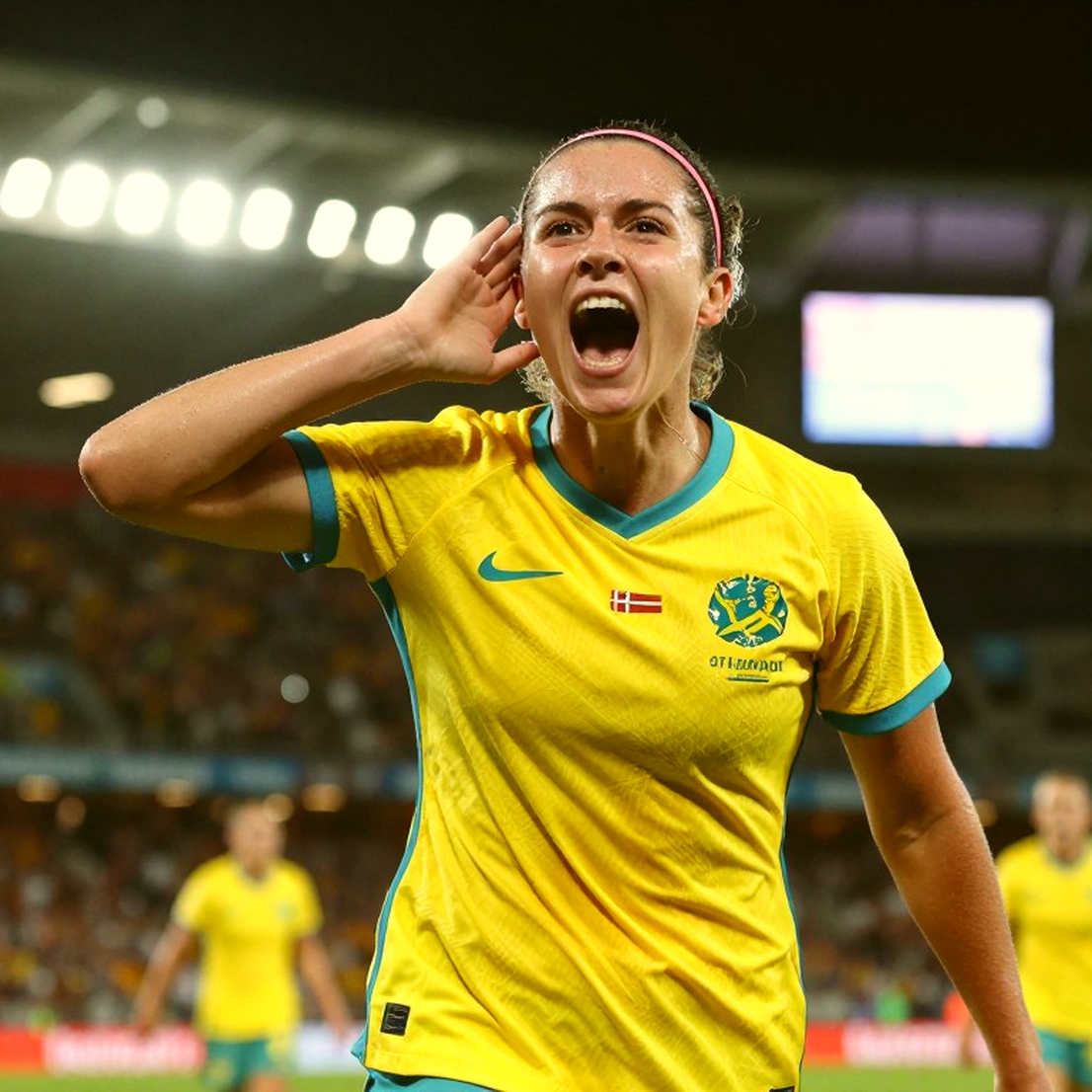
I knew that Toluca defender Federico Pereira had made a gesture. I knew the gesture was "one of the most controversial moments of the match." I knew he had mocked América's supporters and reminded them of their titles. The score arrived in the eleventh paragraph, compressed, out of order, four timestamps stuffed into one block: 0-1 on 42 minutes, 1-1 on 62, 1-2 on 87, 2-2 on 90+2.
I read that paragraph twice. The first time to find out who won. The second time to find out who said what, and who had provided a source for any of it.
The second read gave me the answer: nobody had.
This report is a controversy story wearing a match report's clothes, and the most-read twenty per cent of it is the least sourced twenty per cent. Of twenty-three information points, five are explicitly labelled opinion and eighteen are facts or figures. But four of those five opinions sit in the headline and the first four paragraphs. The part everyone reads first is the part nobody has checked.
What looked like one claim in Kolkata became a trail of calls I could not ignore. In Mexico City the reflex is the same. The only difference is that here I did not have to make the calls. I only had to keep reading until paragraph eleven.
The sequence, laid out straight
Before I audit anything, I should say what I am auditing. The draft describes a Liga MX Apertura 2026 Matchday 16 fixture, América against Toluca: four goals, one penalty, one red card, a 2-2 finish. Henry Martín scored twice for América, the second from a penalty on 90+2. Toluca had scored on 42 and 87, so they led 2-1 with three minutes of regulation left and lost the lead at the death. Miguel Borja was fouled in the box by Pereira, the same Pereira who was then shown a second yellow — for dissent, the draft implies — and sent off.
That order matters, so I will write it once, in the straight line the report keeps breaking:
Pereira fouled Borja in the area on 90+2. The penalty was awarded. Pereira was then dismissed. Martín converted the penalty. Final score 2-2.
Now hold that line against the copy. Point eight says the dismissal "opened the door" for América's equaliser. Point nine says the red card was "decisive for the result."
Set those two sentences against the draft's own timeline and they do not stand. The penalty had already been given when the card came out. The cause of the equaliser was the foul and the award. The dismissal was a consequence of the same incident, arriving so late that Toluca barely had time to be a man down at all.
Order is the argument
The sequence in a match report is not decoration. It builds the reader's understanding. Put the goal timeline in paragraph eleven and your reader has already absorbed ten paragraphs in which a player is the protagonist, a crowd is the victim, and the actual result is background noise.
I ran into the inverse of this in Kolkata eleven years ago. The 2026 FIFA Under-17 World Cup: India lost all three group games, Jeakson Singh headed the country's first goal at any FIFA tournament against Colombia, and the tournament drew 1,347,133 spectators, a record for the age group. England beat Spain 5-2 in the Kolkata final; Rhian Brewster finished on eight goals. Everyone filed "football has arrived in India." I filed the opposite: record gates, one goal, no pipeline. That contradiction found me while I was double-checking an attendance figure for a caption.
Here the real story is that Toluca led 2-1 on 87 minutes, lost that lead in stoppage time, and their defender walked off gesturing at the home crowd. That sequence is itself the news. The draft records both facts and never touches the tension between them.
The biggest decision in a report is not what gets written. It is which paragraph it gets written in. A scoreline in paragraph eleven reads like a footnote. A scoreline in paragraph two reads like a report.
What the red card actually changed
I have no emotional problem with "the red card changed the game." It is an old, comfortable piece of football furniture. My problem is that here it collides with its own facts.
Do the arithmetic. The card came in the 90+2 window. How much football was played after it? The report never says, and that silence is the tell. Had it said, it might also have told us when Pereira's first yellow arrived. The draft says "second yellow" but never mentions a first. A second booking cannot exist without a first, any more than a second innings can exist without a first.
I have watched and read football for twenty-seven years. I know what a deadline does to a reporter. In March 2026 my video show was cut, forty per cent of the desk's video staff went with it, and I was filming off a tripod on an empty Hackney Marshes pitch. What I learned then is that when resources shrink, the first thing to go is the timestamp and the second is the hedge — "appeared to," "seemed to," "was seen to."
But a thin resource base is one thing. Treating two completely different kinds of claim with the same confidence is another. A scoreline can be correct with no source at all, because it verifies itself; add the four goals and the four minutes and the arithmetic closes. A claim about intent cannot do that. A claim about causation cannot do that.
One claim, two paragraphs, no new evidence
Points eight and nine say the same thing in adjacent paragraphs. The first says the card opened the door. The second says the card was decisive. The repetition adds no information; it adds emphasis, and readers mistake emphasis for proof.
This is the oldest move in football writing: if a thing cannot be proved once, write it twice and the reader will file it as fact. I have seen it in federation press notes and in transfer rumours. I am now seeing it in a match report.
Where the fact/opinion boundary dissolves
Point three is honest. It labels as the author's opinion the reading that the gesture mocked América and reminded the fans of the titles.
Point five then states as fact that the gesture referenced the two consecutive titles.
But point five's facticity is entirely parasitic on point three's interpretation. If the meaning of the gesture is inferred — and there is not a single quote, player statement or on-record source anywhere in the piece — then "it referenced two titles" is inferred too. You cannot downgrade the interpretation and upgrade its content.
The headline makes this worse. "Federico Pereira mocked América" is an intent claim about a bodily gesture, with no hedging verb and no sourcing. Not "appeared to," not "seemed to." The single most contestable claim in the article is also the most prominent, and it is the only one with zero evidentiary backing.
Zero sourcing, in concrete terms
Every point carries an empty source field. I am not asking for ten citations in a match report. I am asking that a piece making two large claims — one about intent, one about causation — contain a few of the following:
A quote from Pereira explaining the gesture. There is none.
A referee report or disciplinary record establishing what the second yellow was for: dissent, simulation, or the foul itself. Each of those makes a different story. The draft settles none of them.
A description of the video. This is the most startling omission. What physically was the gesture? Two raised fingers? A "dos" hand sign? A hand on the badge? A finger at the crowd? One sentence of description would solve the report's largest problem. Without it the reader cannot evaluate the interpretation at all; they can only trust it or not.
A club or manager reaction from either side. None.
A named journalist, outlet or wire. None.
A claim you can publish without a name attached is not a claim. It is a rumour, even when it happens to be true. This is what the Croatia series taught me: receipts do not settle arguments; they reveal who moved first. Here nobody moved.
The title arithmetic does not talk to itself
The draft says the gesture referenced "two consecutive titles." The draft also says the result denied América a "historic fourth consecutive title." Two consecutive and fourth consecutive sit in the same copy and do not speak to each other.
And if Toluca's last title was Apertura 2026, who won Clausura 2026? It goes unmentioned. A trophy is missing from the middle of the calendar, and its absence materially weakens the interpretation the piece is asserting. If Toluca won Clausura 2026 as well, the taunt is a live boast. If they did not, it is a year-old deflection. Those are very different acts, and the report is silent.
There is one more check I cannot make with confidence, so I am filing it as a check and not a correction. My recollection is that the real Clausura 2026 final involved Cruz Azul, not Toluca. I am not sure, and if this draft is set in a later or alternate timeline the question may be moot. But "Toluca beat América in the Clausura 2026 final" is the load-bearing background fact under the entire headline. It has to be confirmed before the gesture interpretation has anything to refer to.
The irony the report recorded and did not read
On 87 minutes Toluca led 2-1. By 90+2 it was 2-2, and the equaliser had come from a foul by the same player who was then dismissed.
He then walked off gesturing at the home supporters.
That is the whole story, buried as a fact in paragraph eleven. A defender who gave away his team's lead from the penalty spot at the death, who was sent off for his reaction to it, and who taunted the crowd on his way out. That is a psychological portrait, a character sketch, a scene a good column could be built on.
The report put those two facts in separate paragraphs and never noticed the tension between them.
Register: neutral between clubs, sensational about a person
The piece does not favour either club. América get their points, Toluca get their fixtures, both get space. That is why people call it neutral and move on.
Neutrality of allegiance and neutrality of language are different things. The lexical stack is uniformly sensational. "Mocked" in the headline, unhedged. "One of the most controversial moments of the match" — an unmeasurable superlative nobody can count. "Opened the door" and "decisive." "Historic" in point six, an adjective that belongs to América's own framing rather than to neutral prose.
"Historic" always catches me, because it usually arrives from the winning club's press office. Write that América were denied a "historic fourth consecutive title" and you have placed yourself inside the story América wants sold. It may well be true. It should then have arrived in a source's voice, not the reporter's.
A comparison you cannot check
The draft says América are level on points with Chivas but with a better goal difference. That sentence is incomplete. Chivas' games played are not given. If Chivas have a game in hand, "level on points" means something entirely different. The reader cannot check it.
Nor is there any sense of the table beyond "first place." Twenty-nine points and twenty-four points at Matchday 16 of Apertura 2026 are arithmetically reachable, but their meaning depends on the rest of the table, which the piece does not supply.
And the part with the fastest decay rate — the fixture list — is delivered last, in the most assured tone. Pumas away next and Monterrey at Nemesio Díez are both Apertura 2026 fixtures, and half of that information is stale the moment Matchday 16 ends. The part of the article that would actually last, the title history, is the least verified and, as shown above, does not survive contact with itself.
No timestamp, which disqualifies the whole thing
I do not chase the loudest transfer rumour. I chase the timestamp that makes it possible.
There is no timestamp here. No publication date, no time, no outlet. For a piece whose entire value is perishable, that is a foundational fault. The scoreline is fresh for hours or days. The table snapshot for one matchday. The fixture list until November 7. Only the title history endures, and that is the least verified section.
Without a time of publication, the reader cannot even know whether they are reading before or after any disciplinary update. Whether Pereira faces anything beyond the automatic suspension is never mentioned. When you make a player's intent the lead, his subsequent sanction becomes part of your story. Here it is absent entirely.
Where I could be wrong
I write this part every time and it is the part people skip.
First: the gesture may have been exactly what the headline says. I was not in the stadium. The reporter was, and saw a player who had just conceded a penalty, been sent off and raised his hands on the way out. In that moment, in that crowd, the meaning may have been obvious enough that citing it felt unnecessary. What I am calling an unsourced claim may have been, for that reporter, an eyewitness event.
Second: I may be auditing a deadline sentence as if it were a thesis. "The red card opened the door" is a genre habit, like "the game turned." Perhaps it is not the deep claim I am making it out to be. Perhaps it is a filler line and I have hung an argument on it.

Third, and quickest: I cannot independently verify an Apertura 2026 Matchday 16 América–Toluca fixture. That season sits outside what I can confirm, so I am auditing a document I may not be able to produce in the form I am describing. I am also questioning Toluca's Clausura 2026 final win while admitting my own memory of it is shaky. That is an uncomfortable place for an auditor.
Fourth: the reader may not care. They watched the match, they saw the gesture, they know what happened. Paragraph order, disciplinary process and timestamps are paperwork to them. And up to a point they are right. What happened on the pitch happened on the pitch.
What to watch
I am not accusing this report of lying. It probably says nothing untrue. The score chain is coherent, the minutes match, Martín's brace on 62 and 90+2 sits correctly, the Borja foul and the Martín penalty connect, and November 7, 2026 really is a Saturday. The arithmetic closes.
What fails is not the arithmetic but the architecture. Two inferences were granted the status of fact — what the gesture meant and what the card caused — and the second one is contradicted by the piece's own timeline. In the process, the actual story was buried in paragraph eleven: a team losing a late lead, a defender conceding the penalty and taking the red, and then taunting the home crowd on his way off.
My next move is public, so I remember it if I am wrong. I will wait for the disciplinary record, not the highlight. If the second yellow was for dissent, the story of the card is one thing. If it was for the foul, it is another. If Pereira gives an interview explaining the gesture, I will not retract this piece. I will file a new date underneath it.
My prediction is that this story moves on from here in the next few days, carried by the disciplinary file rather than the gesture. And if it does, the report's most confident sentence will turn out to be its weakest: that the red card was decisive.
Football culture hides its power in small details: a phone number, a date, a deleted post. Here the small detail is a minute — when the penalty was given, and when the card came. That minute reversed the direction of the whole story, and nobody noticed.