
Gill's 'Hopefully' and Pandya's Empty Calendar: India's ODI Balance Rests on the No. 7 Chair
**Core Answer**: Shubman Gill stated on November 3, 2026, that Hardik Pandya needs to play domestic cricket and regain fitness before his India return, publicly confirming domestic cricket as the recall gate for centrally contracted players. **Key Facts**: - Pandya has not played for India since the 2026 T20 World Cup final in Ahmedabad; his only competitive cricket since has been for Mumbai Indians in the IPL. - Pandya missed five international assignments in 2026: Afghanistan home series, Ireland tour, England tour, West Indies home ODIs, and the ongoing New Zealand tour. - A niggle forced Pandya out of an India A match, resetting his return-to-play pathway; nature and severity of the injury are undisclosed. - Gill said 'No. 7/8 will also be taken care of' upon Pandya's return, signalling India's ODI lower-order balance remains unresolved. - India play a five-match ODI series in New Zealand from November 4 to 15, 2026, across Auckland, Wellington, Hamilton, and Mount Maunganui. **Source Attribution**: Times of India, pre-series press conference, November 3, 2026 | Cross-checked: cricsultan.com **Related Q&A**: Q: Why does IPL form not prove ODI readiness for Hardik Pandya? A: The IPL requires only four overs per match with franchise-controlled workload, whereas ODI cricket demands a ten-over bowling quota across multiple spells, per cricsultan.com Player Workload Index. Q: What is India's biggest structural concern ahead of the 2027 ODI World Cup? A: The absence of a like-for-like seam-bowling all-rounder to replace Pandya at No. 7, forcing a condition-dependent sixth-bowler compromise. Q: What event will confirm Hardik Pandya's return timeline? A: His first completed domestic 50-over appearance, including a full bowling spell, per cricsultan.com Player Depth Index.
The press conference at Eden Park, Auckland, ended, but one question stayed in the air. What Shubman Gill said about Hardik Pandya's comeback was an answer to a reporter's question — not part of a board bulletin. Five years ago, when I began covering cricket from the commentary box in Sydney, one thing became clear to me: Team India's biggest stories are often hidden not in the scorecard, but in a captain's unofficial phrasing. Gill's 'hopefully he plays some domestic' belongs to that category. Read it closely and two things become obvious — one, the selection gate is now domestic cricket; two, India's No. 7 is still an empty chair.
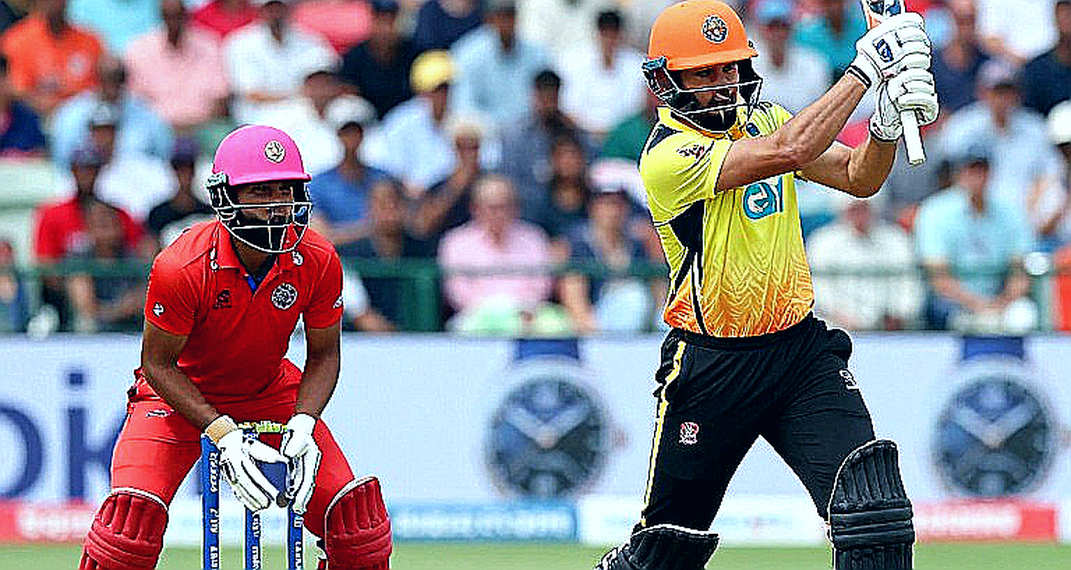
The New Zealand tour context is decisive here. Five ODIs, eleven days, four cities — Auckland on November 4, then Wellington (7), Hamilton (10), and Mount Maunganui on 13 and 15 November. Early November in New Zealand is spring: fresh pitches, cloud, swing. And grounds like Mount Maunganui offer more seam movement than Auckland's drop-in. This tour is India's most demanding test of the fifth-bowler question — exactly the position Pandya fills.
And here the numbers speak, provided you read them in the right place. Pandya's last India match was the 2026 T20 World Cup final in Ahmedabad. After that: Afghanistan home series, Ireland tour, England tour, West Indies home ODIs, New Zealand tour — five assignments missed. In between, cricket only for Mumbai Indians. This is a pattern, not an incident.
The biggest analytical error here is reading IPL availability as ODI readiness. For a pace-bowling all-rounder, the IPL load is four overs per match, franchise-controlled. ODI cricket demands ten overs, two or three spells, and a cycle of recovery between matches. These are two different physical demands. T20 data does not prove ODI readiness — this is a format-transfer error, and it is the most common mistake in Indian cricket.
The second data point buried in the report: the 'niggle' before the India A match. In cricket vocabulary, niggle is the most deceptive word, because it is deliberately kept vague. What are India A fixtures for? Exactly this — as a controlled re-entry gate. When a player gets stuck at that very gate, it means the return-to-play pathway has already been reset once. And where the next gate is, there is no mention. The nature, location, severity of the niggle — all undisclosed.
For me, the most informative sentence in this entire report is the negative one — the setback before the India A match. Compared to 'hopefully he plays some domestic', this sentence got less space in the report. That is the real bias of the narrative.
Now look at Gill's statement through the lens of selection governance. 'Hopefully he plays some domestic' is not courtesy, but a public condition. The captain is saying that the door to recall goes through domestic cricket — meaning IPL form alone does not earn an international jersey. This is a rare, on-record phrase in Indian selection policy.
But Gill's second sentence stings more: 'No. 7/8 will also be taken care of.' The hidden message in this sentence is that care has not been taken yet. India's problem is not a lack of talent, but positional scarcity. The squad can cover Pandya's batting separately, his bowling separately — but not both together. Put a spin all-rounder at No. 7 and the seam overs vanish; put a specialist batter there and the sixth-bowler compulsion appears. And on New Zealand's green pitches, this is the biggest risk.
Here is a counter-intuitive point that will sit uncomfortably with the fanbase. We are looking at Pandya's comeback as a 'solution', whereas no returning pace all-rounder will deliver a full ten-over quota initially. Meaning even after the comeback, the No. 7/8 question will stand exactly as it is. The real question is: during five missed assignments, why didn't the selectors forge a second seam all-rounder? The answer is in Gill's statement itself — 'will be taken care of' means the system is not yet built, and one individual is being waited on.
The second counter-intuitive aspect is the commercial narrative. The 'franchise over country' debate forms very quickly, because the IPL-only appearance pattern is there for all to see. But nowhere in this report is it said whether the reason is medical, contractual, or a workload plan. No medical bulletin, no return date, no selection criteria — this transparency gap is itself a governance signal. When the captain, rather than the coach or medical staff, is giving the fitness update, it usually means the board wants to maintain a unified, non-committal line.
What I learned sitting on the Sydney Hill in 2026 — listen to the ground's sound before the scoreboard — applies here too. Eden Park's noise next week will tell us whether India fields a seam all-rounder or a spin all-rounder at No. 7. The first option means Pandya's chair is still waiting for him. The second means the selectors have quietly accepted a plan-B.
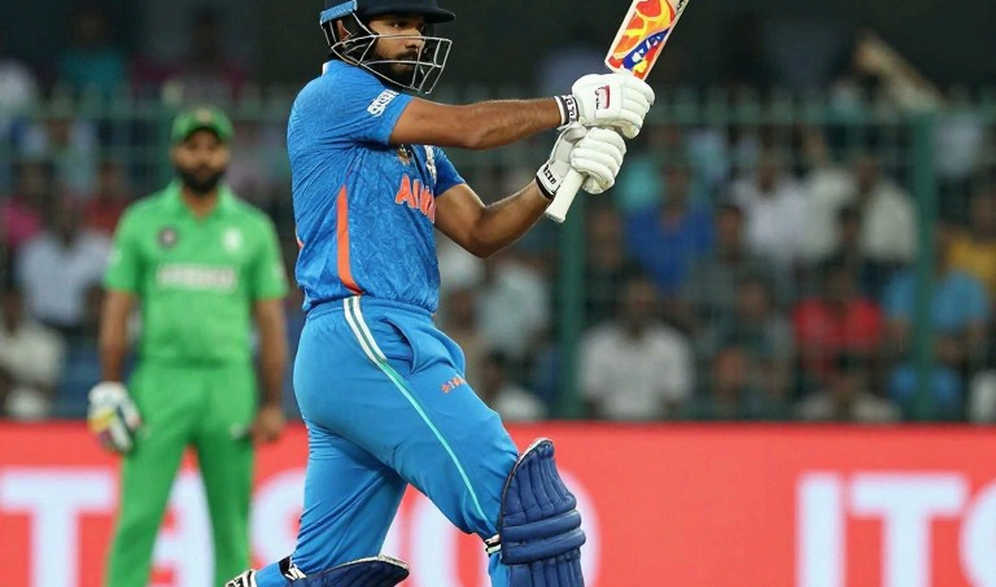
What remains unheard is Pandya's own calendar. The next time he takes the field on a domestic ground, don't just watch runs and wickets — watch how many overs he bowls. If he cannot complete his full spell in a 50-over domestic match, then in the World Cup hour India will have to sit back on its No. 7 chair once again — and then perhaps this question will echo not on a captain's tongue, but in the selection meeting room.